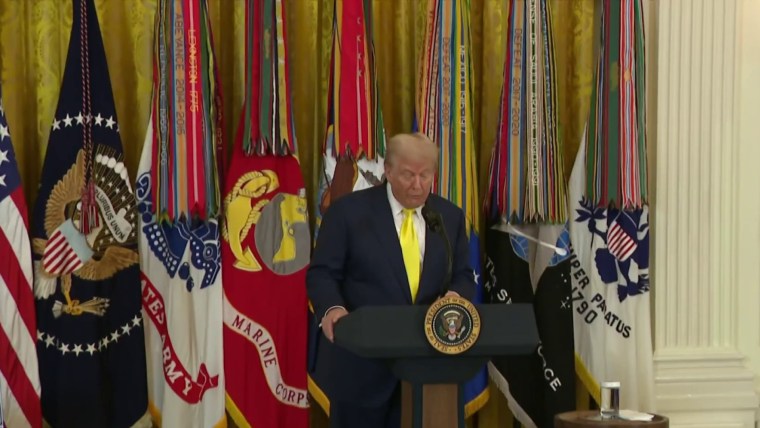
After months of delays and extensions, President Donald Trump’s comprehensive and sweeping tariffs slate took effect Thursday just after midnight ET, shifting his global trade reset into high gear.
Most imports into the United States will now face a baseline 10% duty, with the overall average effective tariff rate rising to more than 17% — the highest since 1935, during the Great Depression — thanks to higher duties on some of the biggest U.S. trading partners, according to the nonpartisan Yale Budget Lab think tank.
A wide variety of products will be hit. Tariffs will be collected on everything from European Union appliances and Japanese cars to food, furniture and toys from China and TVs from South Korea. Selected oil and gas imports, along with some smartphones and a suite of goods covered by a pre-existing trade agreement with Canada and Mexico, are not affected.
Together, the duties are the most significant move yet by a president set on tilting the global economy even more in favor of the United States.
Trump was online to celebrate the moment.
“It’s midnight! Billions of dollars in tariffs are now flowing into the United States of America!” he said in an all-caps post on Truth Social.
So far, the duties have mainly been jostling the U.S. economy instead. Tariffs, which are taxes on imports collected by the federal government, generally tend to raise costs, although there is some debate among economists about whether businesses or consumers ultimately bear the weight of those increased prices.
Yale’s Budget Lab calculates that the inflationary effect of tariffs will cost a typical household an average of as much as $2,400 this year. It forecasts one of the biggest impacts in clothing, with consumers facing 40% higher prices for shoes and 38% higher costs for apparel in the short run as retailers that rely on importing clothes from South and Southeast Asia shift supply chains or grapple with higher costs.
Global markets largely shrugged off the new tariffs, with European and Asian shares mostly higher on Thursday, CNBC reported. U.S. stock futures were also up slightly.
But Thursday is not the end of Trump’s trade offensive.
Trump told CNBC on Tuesday he still plans to impose import taxes on pharmaceutical products and semiconductors. Currently, only about a quarter of manufacturing facilities supplying the United States with key drug ingredients are actually based here, equating to a $116 billion deficit with the rest of the world. As for semiconductors, the United States imports $40 billion worth, though the figure can also include chips produced in the United States, shipped abroad and repackaged inside finished goods.
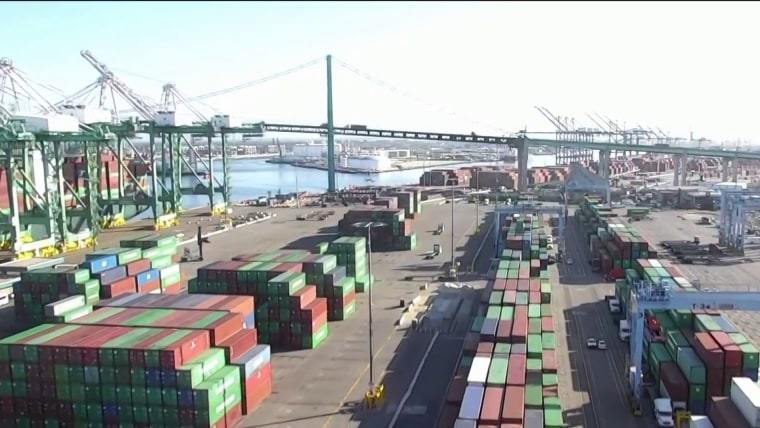
Trump has also shown continued willingness to ratchet up duty levels at a moment’s notice. On Wednesday, he hiked the tariff rate for India to 50% over the nation’s purchases of Russian oil, which he said was allowing Russia to continue to finance its war in Ukraine. Brazil, too, now faces 50% duties as a result of Trump’s displeasure with its treatment of former President Jair Bolsonaro, a Trump ally who has been detained on coup charges.
Trump also told CNBC he could raise the European Union’s tariff level to 35% from 15% if it reneges on an investment commitment. Taken together, the 27-nation bloc is the largest U.S. trading partner.
The Trump administration continues to insist tariffs are working, pointing to billions raised in new monthly revenues for the U.S. government. The White House also notes that nations have pledged hundreds of billions of dollars in investments, though no details about how that money will be spent have been released. Stock indexes have also set all-time highs.
“The markets have seen what we’re doing and celebrated,” Kevin Hassett, director of Trump’s National Economic Council, said Sunday on NBC News’ “Meet the Press.”
Market analysts say those gains have been largely driven by tech and bets on artificial intelligence, offsetting growing signs of weakness elsewhere, like a slowing labor market and softer consumer spending.