Locked in and locked down, American consumers are turning more to their favorite "vices."
With the initial surge of panic buying over, wine and marijuana sales are still way up, presenting an opportunity — and a challenge — for the businesses scrambling to meet the demand spikes and shifts in consumer behavior.
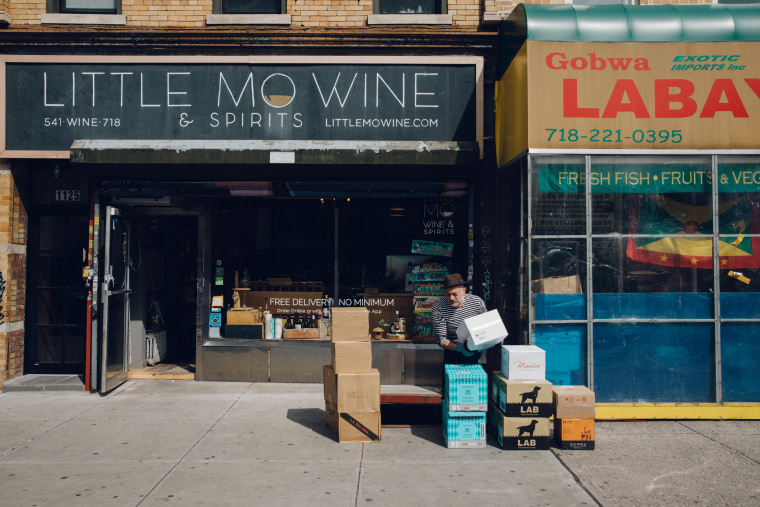
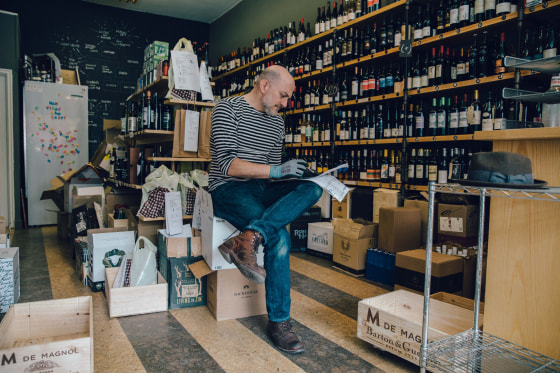
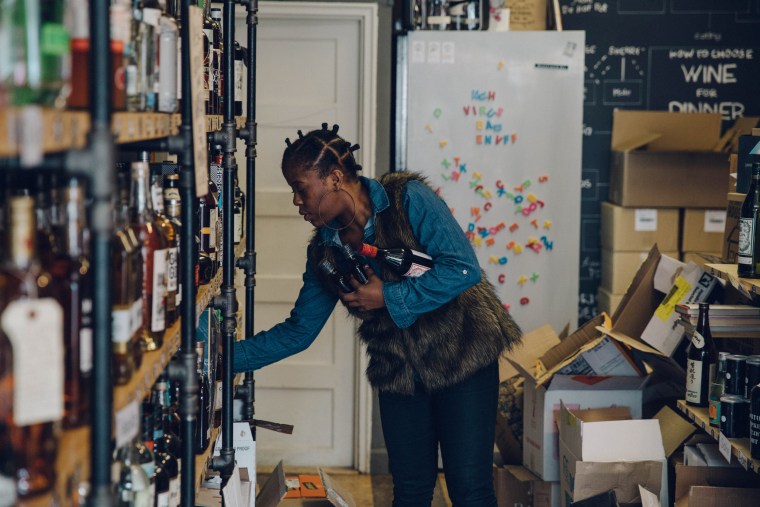
"It's like New Year's every day," said Mark Schwartz, the owner of Little Mo Wine and Spirits in Brooklyn, New York, who has seen alcohol sales shoot up fourfold. While he built his neighborhood shop on personal conversations and recommendations, almost overnight he has had to switch to delivery only, hiring more staff and drivers, and he is caught in an endless cycle of restocking.
Zoom happy hours and virtual cocktail parties are driving sales. Customers who used to come to the store a few times a month now get delivery three to four times a week, Schwartz said. But while he appreciates the ringing cash register and his hard-working, protective-gear-wearing staff, he misses the human connection.
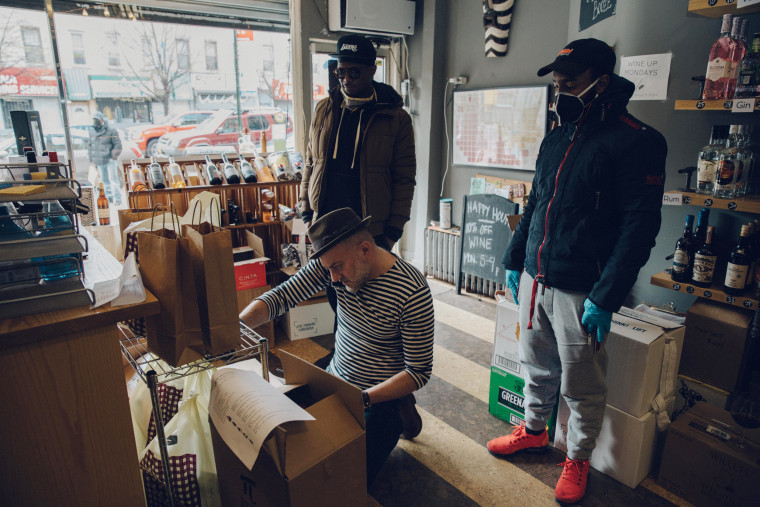
"I've become the last thing I wanted when I opened business," he said. "Amazon."
Adam Kahmann, 37, a finance manager in Lexington, Kentucky, is normally a bourbon sipper, but he and his wife are using the quarantine time to try out some more creative cocktail recipes and explore wine varieties. They also help "police" each other to keep from overindulging and stay on schedule.
"If I get a bottle out for a pour and then I get up for another one, I kind of get an eye from her," he said. "We've got ways to keep each other in a good state."
Full coverage of the coronavirus outbreak
Marijuana dispensaries and delivery services are also experiencing a coronavirus boom. On March 20, after Nevada reported its second death from the coronavirus, the governor ordered all nonessential businesses closed and upgraded his request to shelter in place to a requirement. Dispensaries were ordered to switch to online only.
Business shot up almost 800 percent overnight at the state's largest cannabis delivery service, Blackbird. Within the first few hours, the "Postmates" of pot found itself inundated with more orders than it could handle. Retail outlets closed their storefronts and switched to pick-and-pack crews working in the back.
"People initially saw constraints on our ability to meet consumer demand and a reduction of the number of deliveries and ordered more product," with average orders shooting up from $120 to almost $160, founder Tim Conder said. The company has increased head count by 25 percent and is looking to scale up responsibly.
"It's an opportunity for us to capture short-term revenue. Long term it's scary," Conder said.
The company must walk a fine line between serving customers and protecting front-line drivers coming into contact with an average of 50 customers a day, using as much personal protective equipment as is available.

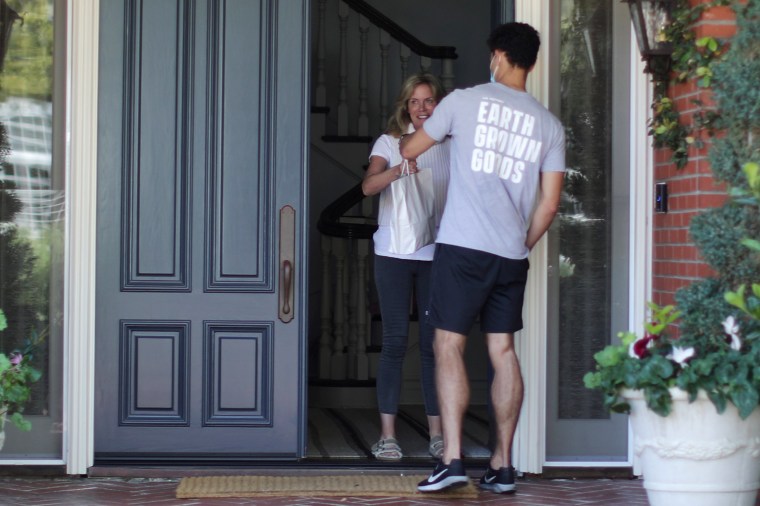
Regulated marijuana delivery presents its own challenges. Delivery drivers, patients and customers must wear masks. ID is checked. A form is signed. Cash and product are exchanged by hand.
"When business is forced to expand in a short period of time, it comes with a lot of unintended consequences. We've done our best to expand responsibly, for business and safety," Conder said. "We have nothing to compare it to. I don't think the world has anything to compare it to."
Meanwhile, because sports betting has virtually dried up with all major sports canceled, online casino and table gaming have also seen surges of new customers and old customers returning.
About the only action right now is table tennis. Leagues are trying to come up with different options, such as the recent NBA HORSE tournament. There's also virtual horse racing. It's just not the same.
But online slot machines are ringing and table games are humming. Online poker revenues were up by more than 100 percent from February, and iGaming revenue reached a record $64.8 million, according to the figures released Wednesday for New Jersey, one of two states that allow online gambling.