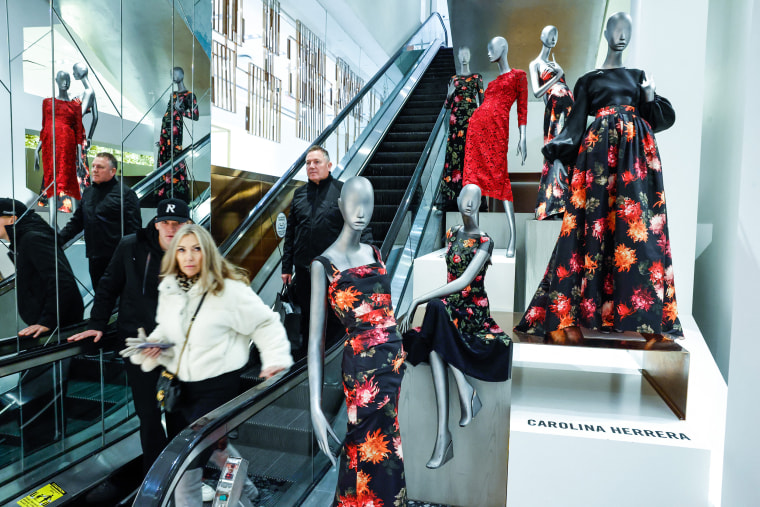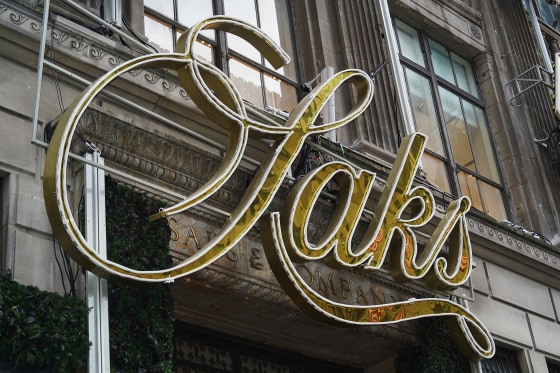
Just eight weeks ago, Saks Fifth Avenue was celebrating the return of its annual holiday lights display at its Manhattan flagship store.
The splashy November premiere, complete with an appearance by the Radio City Rockettes, appeared to be a positive sign for the fortunes of the embattled retailer. The previous year, Saks had canceled its holiday light show as part of an effort to cut costs.
Now, however, Saks’ glittery tribute to diamonds and shopping looks more like a last hurrah than a comeback tour. On Wednesday, Saks Global Holdings filed for bankruptcy protection.
In the end, the parent company of Saks Fifth Avenue, Neiman Marcus and Bergdorf Goodman was unable to dig itself out of more than $2.5 billion of debt that it took on when it bought rival Neiman in 2024. (Amazon, which invested $475 million to help back the Neiman acquisition, objected to the bankruptcy and said its stake is now "presumptively worthless.")
“You had too much debt. You couldn’t pay your bills, and now they have to figure their way out of this in a new format,” said Dana Telsey, a luxury and retail analyst at Telsey Advisory Group.
In a press release Wednesday, Saks Global said it had “secured a financing commitment of approximately $1.75 billion,” and assured customers its department stores will remain open for business while the company undergoes a Chapter 11 reorganization process.
The slow collapse of Saks over the past year has played out against the backdrop of a global market for luxury retail that is finally showing signs of growth after a slump in 2024.
Bank of America reported an 8% jump in spending on luxury fashion during the first half of October, over the same period a year before.
“Recent improvement has been comforting investors that possibly the worst is over for luxury demand,” said Luca Solca, a global luxury goods analyst at Bernstein.
After a boom when the pandemic ended, the luxury market worldwide cratered in 2024, hit by a storm of changing consumer tastes and a sharp downturn in the housing market in China.
As the rest of the market slowly recovered, Saks was increasingly left behind.
The trouble at Saks also appears to be at odds with what has become known as the K-shaped economy. In this scenario, higher-income households insulated by rising home values and stock market returns have kept spending money on non-essentials such as travel and luxury goods.
Confidence in the stock market is so high among people who own shares, McKinsey senior partner Colleen Baum said, that there is “even willingness to splurge — particularly among younger consumers.”
Meanwhile, lower- and middle-income households that lack the financial cushions protecting the well-off are increasingly struggling to pay for everyday necessities. Added pressure from a weakening labor market and stubborn inflation means many of these consumers have sharply scaled back their overall spending.
Saks is a privately held company, so it doesn’t report quarterly financial results the same way publicly traded companies do.
But analysts at Bloomberg Second Measure say that sales at Saks Fifth Avenue stores have fallen by double digits almost every quarter for the last two years. Saks wouldn’t verify those numbers.
“The Saks bankruptcy isn’t really about luxury declining. It’s about the department store model overall struggling,” said Jenna Rennert, a contributing editor at Vogue.
“Department stores really used to be the gateway to luxury,” she said. “Today, they’re kind of the middleman that luxury brands no longer need.”