The price of oil jumped Monday, as the effects of the Iran war hit markets worldwide and stoke fresh worries about inflation.
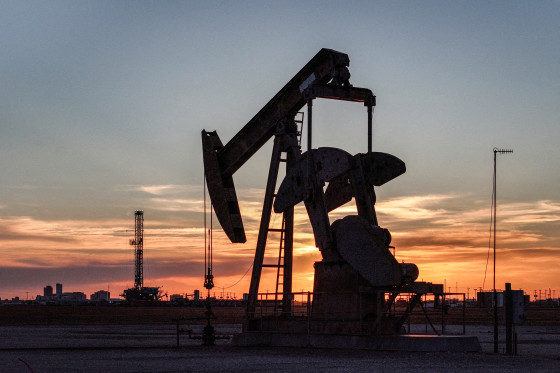
After soaring as much as 31% overnight, U.S. crude oil traded higher by around 5% to around $95 per barrel at midday. International Brent crude oil rose 6% to more than $100 per barrel.
The price of U.S. crude oil has now risen nearly 70% since the start of the year and more than 35% over the course of the last five days.
"The psychological level of $100 oil may just be a short-term price target on its way to higher levels as the conflict drags on, oil production is throttled back as oil storage fills up because tankers are unable to load," oil industry expert Andy Lipow said Sunday.
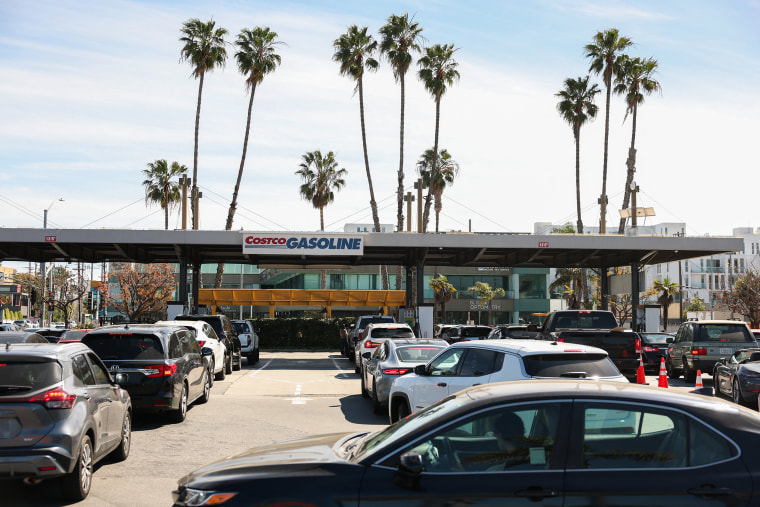
As of Monday afternoon, the average price of U.S. retail gasoline nationwide hit $3.47 a gallon, continuing its sharp march higher. Since the war began, the average price per gallon has risen more than 50 cents, according to price-tracking service GasBuddy.
The staggering pace of the price increases hit stocks. As of early afternoon trading, stocks were off their worst levels of the day, but the S&P 500 was still lower by 0.5%, the Nasdaq Composite was about flat and the Dow Jones Industrial Average tumbled nearly 400 points.
In Japan, the broad Nikkei 225 recorded its worst day since April 2025's tariff-induced selloff, tumbling 5.2%. The index also entered correction territory, which is when a stock or index falls 10% or more from its most recent record high.
South Korea's Kospi index also tumbled 6%, and for one point was halted for 20 minutes on heavy selling. In Europe, the Stoxx 600 index closed down 0.6% as markets in Germany, France, Italy and Spain dropped around 1%.
Bonds also sold off around the world. As a result, the 10-year U.S. government bond yield hit 4.17% and the 30-year bond yield hit 4.78%.
Natural gas prices jumped as well, with futures traded in New York rising about 2% and futures traded in Europe soaring nearly 10%.
Finance ministers of leading industrialized nations held a video conference Monday to discuss a potential joint release of oil reserves in a bid to ease skyrocketing prices.
But at the conclusion of the meeting, the economic coalition decided against a petroleum release, for now.
"We are not there yet,” France's finance minister Roland Lescure told reporters in Brussels, adding that the group will "continue to monitor the situation very closely."
"I want to be very clear on the fact that we are ready to take necessary and coordinated steps in order to stabilize markets," he added.
The White House said it was also "in constant coordination with the relevant agencies on this important issue."
"President Trump and his entire energy team have had a strong game plan to keep the energy markets stable well before Operation Epic Fury began, and they will continue to review all credible options," said White House spokeswoman Taylor Rogers.
The spokeswoman said, without sharing details of the plan that, "as the president said last night, this is short-term change in oil prices, which will drop dramatically once the objectives" of the Iran war are achieved.
A U.S. official separately told NBC News that Trump was reviewing a number of options to drive down prices, including restricting U.S. exports, intervening in the futures market, and lifting some requirements of the Jones Act, which requires that domestic fuel be carried only on U.S. flagged ships.