LGBTQ Pride Month arrives this year as anti-racism protests take place across the United States — and beyond. While the events may seem unrelated, activists and leaders at the intersection of these communities say it has become all the more evident that the fight for lesbian, gay, bisexual, transgender and queer rights cannot be divorced from the struggle for racial justice.
The gay rights movement and the Black civil rights movement have long been intertwined, as evidenced by the overlap of key figures — including James Baldwin, Pauli Murray and Bayard Rustin — and the fact that Black activists, among them the transgender woman Marsha P. Johnson and the butch lesbian Stormé DeLaverie, are credited with being instrumental during pivotal moments in the fight for LGBTQ equality, including the iconic 1969 Stonewall uprising.
Related

Yet it's not just history that makes it clear how both movements are connected. One of the most powerful demonstrations of their interconnectedness was the Black Liberation march in support of Black trans lives held in Brooklyn, New York, on Sunday. The event drew thousands of people who donned white and chanted "Black trans lives matter." At least 15 transgender people have been killed this year, according to a count maintained by the Human Rights Campaign. In 2019, at least 26 transgender people died because of violence, according to the group, over 80 percent of them Black women.
Amid Pride and protests, we asked Black LGBTQ activists, leaders and writers to share their favorite books about the Black queer experience. Here are their recommendations, which are arranged chronologically by publish date.
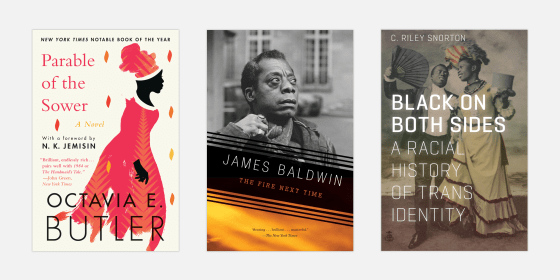
'The Fire Next Time' (1963)
by James Baldwin
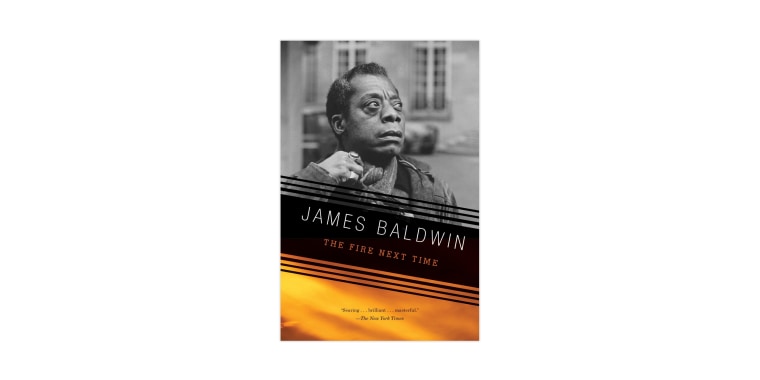
"The point is to get your work done, and your work is to change the world." That, according to Alphonso David, president of the Human Rights Campaign, the country's largest LGBTQ advocacy group, is his favorite quote by the iconic writer James Baldwin.
"That quote, and Baldwin's work in general, remains timely and relevant to the moment we are in, as Pride Month and the movement for Black lives intersect," David said. "Pride is protest, and Baldwin's work shows this — he refused to stay silent in the face of bigotry."
"The Fire Next Time" includes two essays, one about race in U.S. history and the other about the connection between race and religion. After this book, David recommends that readers check out "Conversations With James Baldwin," a collection of interviews with the writer edited by Red Stanley and Louis Pratt.
David recommends shopping at The Lit. Bar, a Black-owned bookstore in the Bronx and the only independent bookstore in the borough.
'The Days of Good Looks' (2006)
by Cheryl Clarke
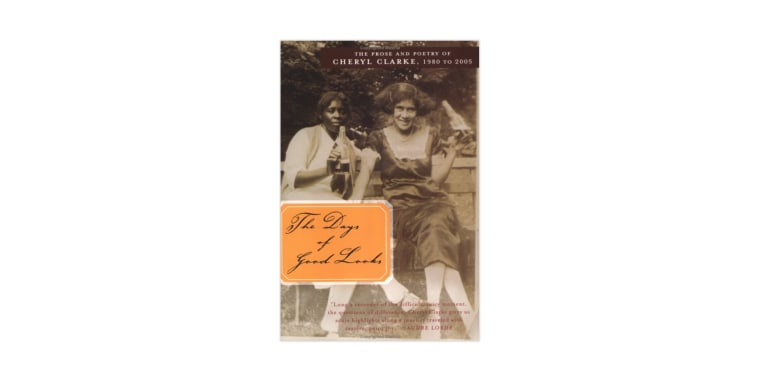
Kendra Johnson, the executive director of Equality North Carolina, said a friend recently sent her an essay from Clarke's "Lesbianism: An Act of Resistance," which reminded her how much Clarke's work resonated with her when she was younger and "how women loving women is still such a radical thing in the face of all our history and our struggles as LGBTQ folks."
"The Days of Good Looks: The Prose and Poetry of Cheryl Clarke, 1980-2005," is a collection of the writer's poems and essays throughout the years, including "Lesbianism: An Act of Resistance" and "Black, Brave and Woman, Too" — essays that established Clarke as a Black lesbian feminist icon.
Johnson recommends shopping at Charis Books in Atlanta, one of the nation's oldest LGBTQ bookstores, which she discovered as a Black queer college student in the '90s.
'Zami: A New Spelling of My Name' (1982)
by Audre Lorde
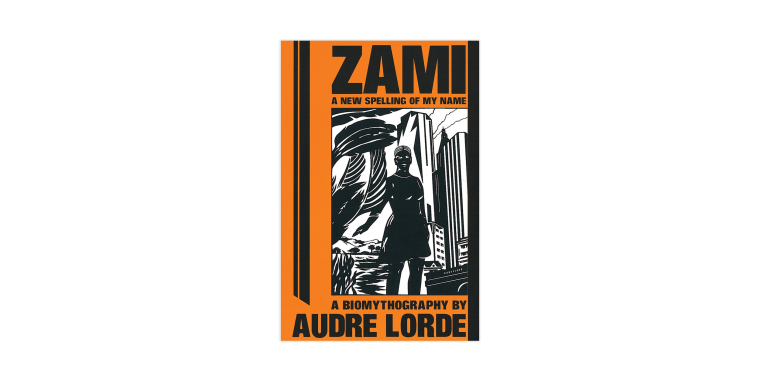
Audre Lorde, a self-described "black, lesbian, feminist, mother, poet, warrior," referred to this book not as an autobiography but as a "biomythography," which combines elements of autobiography, history and myth in chronicling Lorde's life. Eboné Bell, editor-in-chief of Tagg Magazine, said "Zami" was the "perfect 'coming out' read."
"As a young, Black, queer woman, I was desperate to see (or read about) people who looked like me, someone to help validate my feelings," Bell wrote in an email. "'Zami' did that for me. Audre Lorde was ahead of her time. I would recommend any of her work."
'Sister Outsider' (1984)
by Audre Lorde
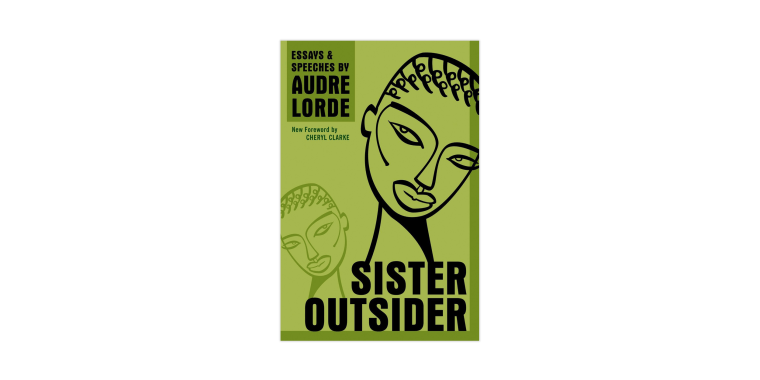
Johnson's second choice, "Sister Outsider," was recommended by a friend after Johnson, then in her 20s, described her experience of "feeling like I didn't belong squarely in the Black community (because of my sexual orientation), nor the lesbian community (because of my Blackness)."
She said that "Sister Outsider" gave her the framework to help her "put word to the why behind that feeling" of not belonging and that it has become one of those books she regularly returns to.
'Parable of the Sower' (1993)
by Octavia Butler
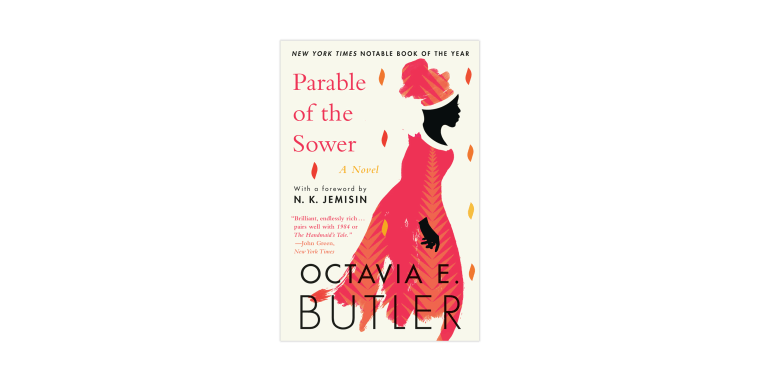
"Welp, this book, which once seemed like a total apocalyptic futuristic fable, now just seems prophetic," Johnson said of her third recommendation, Octavia Butler's "Parable of the Sower," a science fiction novel set in the 2020s during which the world has collapsed amid worsening wealth inequality and climate change.
"There are so many layers that both reflect the long history of white supremacy that the United States is founded upon and the present moment, that it constantly astounds me," she added.
'Coffee Will Make You Black' (1994)
by April Sinclair
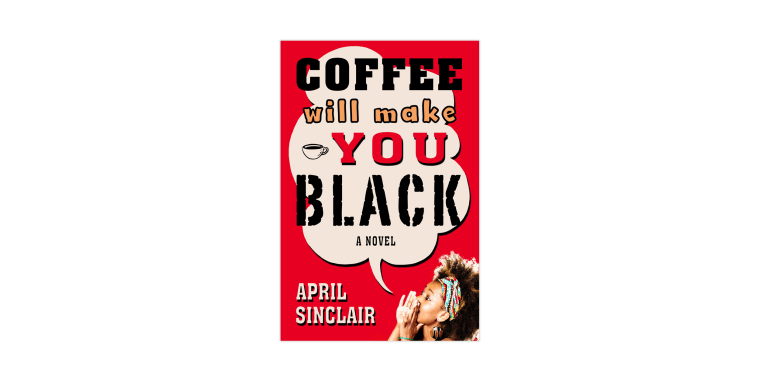
Filmmaker Sekiya Dorsett recommends reading April Sinclair's "Coffee Will Make You Black," the first book in a series that chronicles Jean "Stevie" Stevenson's adolescence growing up in 1960s Chicago. Dorsett said the book "makes you feel very nostalgic and makes you feel seen."