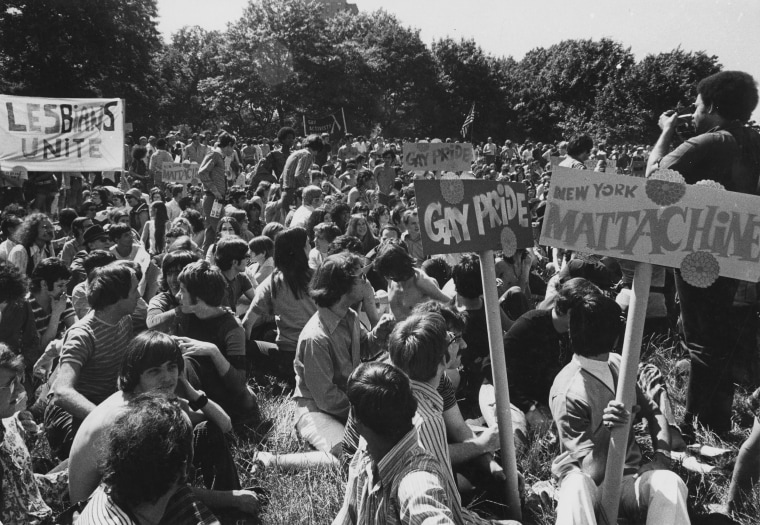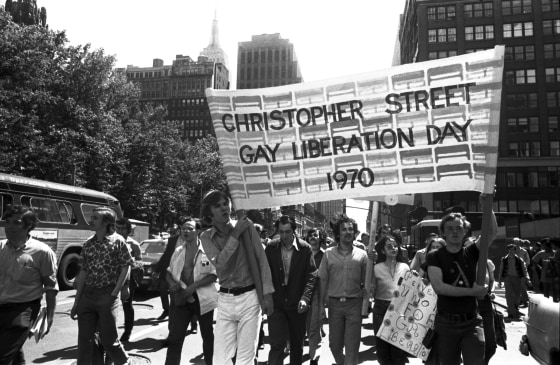
October is LGBTQ History Month, and to celebrate, NBC News will feature an NBC Out #FlashbackFriday review of key moments and people in LGBTQ history. Each week’s feature will include images from the New York Public Library’s LGBTQ archives.
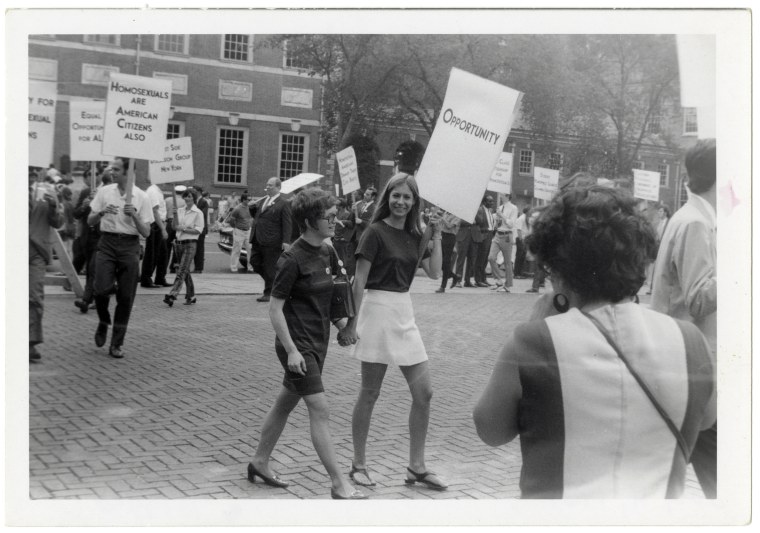
This week, we look back at the country’s first gay pride march — held in New York City on June 28, 1970, the one-year anniversary of the Stonewall Riots — and what led up to that historic event.
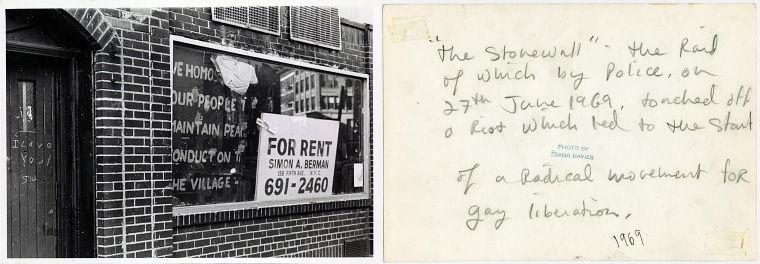
Early Saturday morning on June 28, 1969, police staged a raid at the Stonewall Inn, a mafia-run gay bar in New York City's Greenwich Village neighborhood. Unlike the many previous raids that had taken place at the Christopher Street establishment, this one inspired the bar's patrons to fight back. The Stonewall Riots, as the days-long protest became known, is credited as the spark that ignited the modern-day LGBTQ-rights movement.
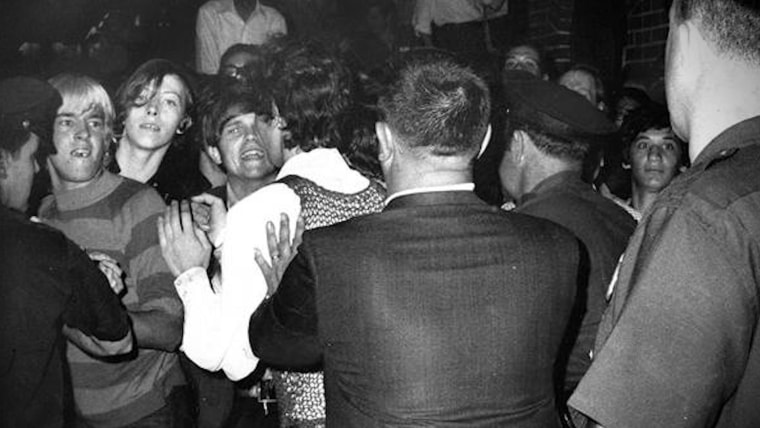
The week following the protests, Village Voice writer Howard Smith described the "strange mood" when when police first ejected Stonewall’s patrons out onto the sidewalk under a full moon.
“Loud defiances mixed with skittish hilarity made for a more dangerous stage of protest; they were feeling their impunity,” Smith wrote. “This kind of crowd freaks easily.”
“The turning point came when the police had difficulty keeping a dyke in a patrol car,” Smith continued. “Three times she slid out and tried to walk away. The last time a cop bodily heaved her in. The crowd shrieked, ‘Police brutality!’ ‘Pigs!’”
What had been a routine crackdown on an illegal bar took a turn when pennies and dimes started to whiz through the air and toward the police. The cops barricaded themselves into the bar, and then the gay mob outside the bar began to throw bricks and rocks toward the door and tried to break through the boarded up windows.