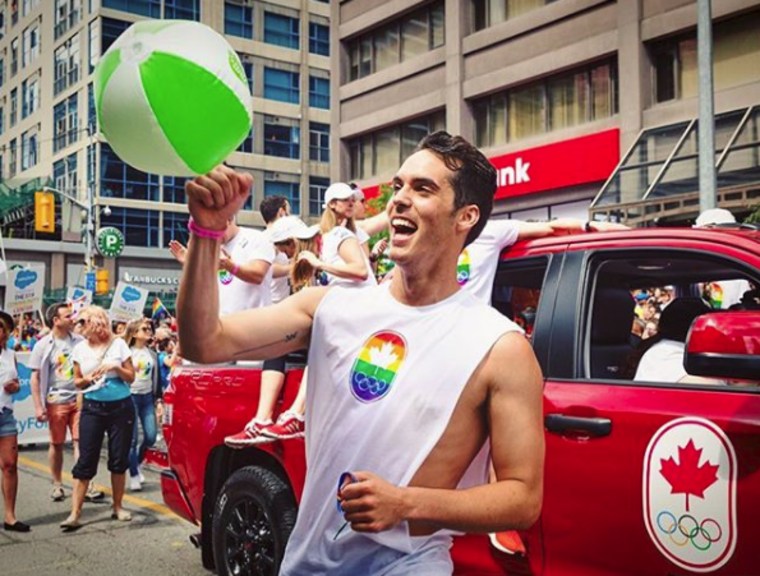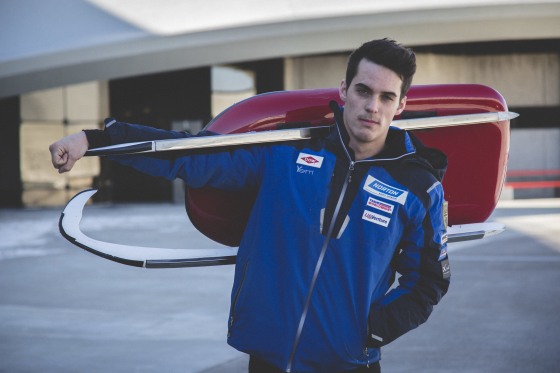
In 2014, John Fennell remained hidden in the metaphorical closet when he competed in the luge for Team Canada in the Winter Olympics in Sochi, Russia.
“LGBT rights heading to Sochi were on everyone’s mind,” Fennell said.
Homosexuality was decriminalized in Russia in 1993, but the country still has a dismal reputation when it comes to LGBTQ rights, thanks in large part to a 2013 law that banned the spread of gay “propaganda.”
“I was really distracted by being a closeted athlete,” Fennell said. “I felt like I had to change who I was.”
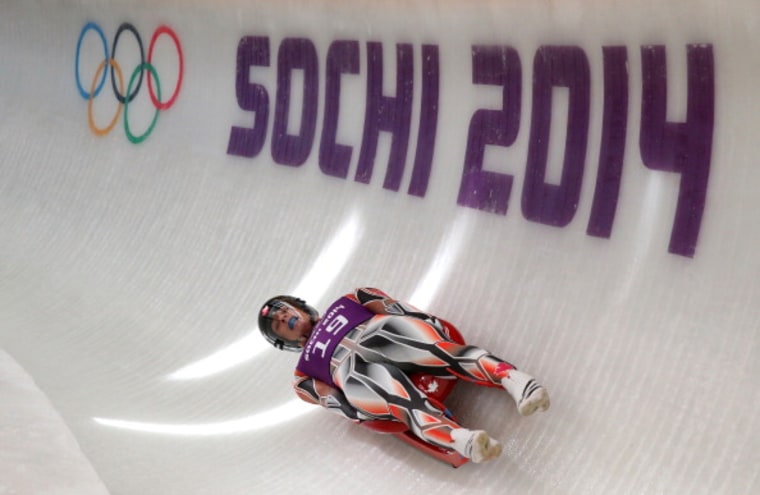
Fennell, who, thanks to dual citizenship, is currently a member of Team USA and hoping to qualify for the Pyeongchang Games in South Korea in February, said the unwelcoming environment for LGBTQ people in Russia wasn’t the only reason he chose not to come out.
“I thought I wouldn’t be accepted by my teammates,” he added. “I changed the way I talked to my teammates. I concealed my emotions.”
Nearly 2,900 athletes from 88 countries gathered in Sochi, but only seven of them were out, according to the LGBTQ sports site Outsports. Of these seven athletes, not one was American, and all were women.
PROGRESS AFTER SOCHI
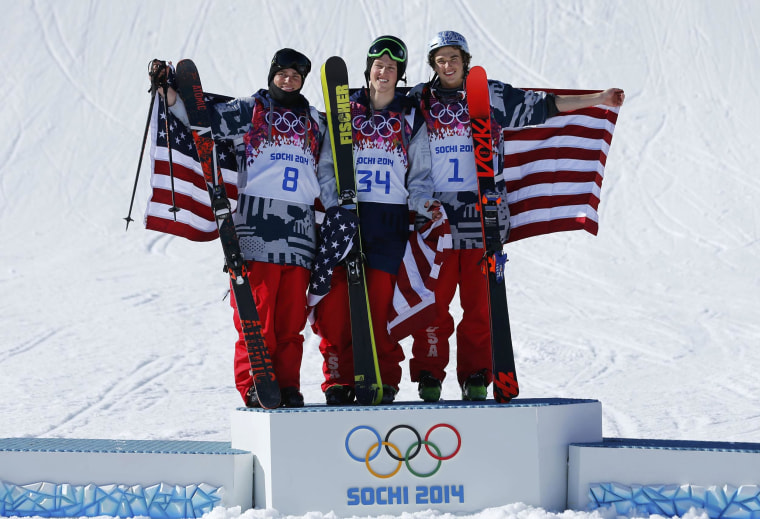
Now, nearly four years later, Fennell is one of three publicly out male athletes competing to qualify for the Pyeongchang Games. He is joined by figure skater Adam Rippon and freestyle skier Gus Kenworthy, who came out publicly after winning the silver medal in Sochi.
An openly gay man has never competed for the U.S. in a Winter Games, and it's been 14 years since one did in a Summer Games.
Fennell will find out if he makes the U.S. Olympic luge team on Friday, and Rippon and Kenworthy will know their 2018 Olympic status by early January.
The 2016 Rio Olympics saw a record number of publicly out LGBTQ athletes, 56 in total. But there were only 11 men — and none on Team USA. The Summer Olympics has nearly four times the participants of the Winter Games, but in terms of the percentage of athletes who are openly LGBTQ, the Rio Summer Games (at 0.5 percent) fared better than the Sochi Winter Games (0.2 percent).
Another promising sign after the 2014 Winter Games was the addition of sexual orientation to Principle 6, the Olympic Charter’s nondiscrimination clause. But while Sochi set in motion the inclusion of lesbian, gay and bisexual athletes to this clause, transgender and intersex athletes are still not protected under the Olympic Charter.
MEN VS. WOMEN
In the 2016 Rio Games, there were nine out U.S. Olympians, all women. This imbalance appears to be global, too. Of the 56 gay athletes in Rio, there were 44 women and 11 men, despite women representing less than half of the approximately 10,500 Olympic athletes that year.
“For men, there’s always been this contradiction or stereotype that being gay means you’re not masculine, and only masculine people play sports,” Jim Buzinski, co-founder of Outsports, explained.
Siri May, the programs coordinator at OutRight Action International, the only U.S. LGBTQ organization to be granted consultative status by the United Nations, agreed.
“Sports tend to be dominated by heteronormative masculine ideals,” which, she added, “tend to hold the myth of what it means to be a true man.”
May, whose wife is former Olympic swimmer Casey Legler, said gay men have historically not found as much sanctuary in sports as lesbians and bisexual women have.
“Most competitive sports are seen as the epitome of achievement for masculinity, which is also assumed to be straight, so there is not a lot of room for difference in those narratives,” she explained, adding that female athletes are often “already transgressing expectations around their gender just in order to compete.”