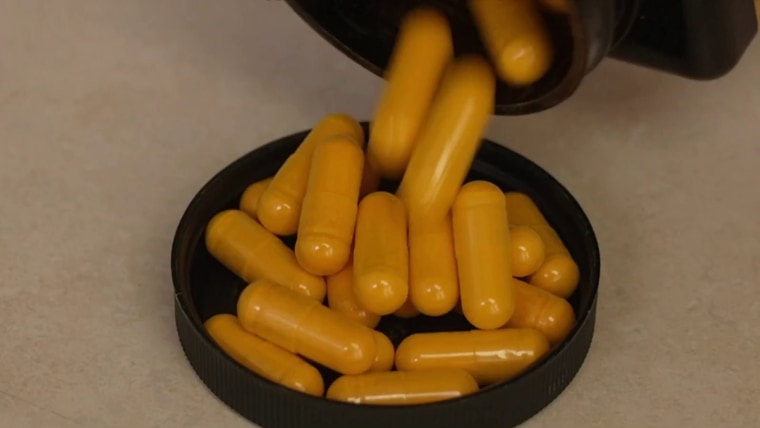
A new clinical trial suggests there are still ongoing questions about the safety of even low doses of cannabidiol, even as CBD capsules, gummies, edibles, oils and lotions have become increasingly omnipresent in the United States in recent years.
Scientists from the Food and Drug Administration’s Division of Applied Regulatory Science carried out a randomized double-blind placebo-controlled trial last year to assess how low-dose CBD affects liver function in a group of healthy middle-aged men and women.
Over the course of four weeks, 201 volunteers received either 5 mg per kilogram of body weight (approximately 2.3 mg per pound or the equivalent of 350 mg for a 154-pound individual) of oral CBD, or a placebo. The goal was to give them a typical amount that might be used by consumers. Participants also underwent weekly laboratory assessments.
While the vast majority of people in the trial were unaffected, 5% showed greatly elevated levels of the liver enzyme aminotransferase, a known marker of liver cell damage or inflammation, according to the study published Monday in JAMA Internal Medicine. Women appeared to be more vulnerable than men. The liver enzyme returned to normal within one or two weeks of stopping CBD.
Seven participants withdrew from the trial because they were showing clinical signs of potential drug-induced liver injury.
The FDA didn’t respond immediately to a request for comment.
“This is a significant finding, as it suggests that CBD itself, even in the absence of other drugs, may pose a risk to liver health,” says Amir Englund, a researcher at King’s College London who studies cannabinoid psychopharmacology, and was not involved in the new trial. “The results have important implications for individuals using over-the-counter CBD supplements. Many may be unaware of the potential for liver injury and assume that CBD is entirely benign.”
Between 2014 and 2022, CBD product sales in the U.S. increased from $108 million to $1.9 billion, after a landmark bill passed by the Trump administration in 2018 enabled the unrestricted sale of cannabis products containing less than 0.3% THC, the psychoactive element which gets users high.
According to various surveys in recent years, the majority of people in the U.S. have now heard of CBD, and around 20% have reported using CBD products in the past 12 months.
While CBD products have become a popular way to self-medicate for conditions including pain, anxiety, insomnia and depression, especially among older adults, there’s been little evidence on how well they work or guidance on how to use the products safely.
Symptoms of liver injury
Signs of liver injury include abdominal discomfort, jaundice or yellowing of the skin and eyes, and fatigue.
However, research has shown that drug-induced liver injuries don't always become immediately apparent. In the FDA trial, only one of the participants with elevated liver enzymes noticed any symptoms within four weeks. The authors suggested that users may not realize that they are incurring harm and that doctors should ask about regular CBD use as part of routine medical screening.
“This was an important observation from the study,” said Paul Watkins, professor of pharmacy at the University of North Carolina at Chapel Hill. “When doctors get liver chemistry results back and they’re out of whack, they should be aware to ask, ‘Were you taking CBD?’ Because a lot of people are.”
The new trial is not the first study to suggest potential health risks relating to cannabidiol and its effects on the liver. Such concerns were initially described following an FDA review of clinical trial data on CBD-based prescription drugs for childhood epilepsy, with raised liver enzymes being observed in 14% of participants.
“In clinical trials involving epilepsy patients, elevated levels of liver enzymes were among the leading causes of withdrawal from the trials due to serious adverse events,” Englund said “However, those participants were concurrently taking other anti-epileptic medications, which could have contributed to the observed liver effects.”
Watkins was subsequently involved in research investigating why CBD can affect liver cells, and he said that certain doses seem to have an effect similar to acetaminophen, or paracetamol.
“It’s interesting because it’s also been shown that healthy adults, when they get recurrent therapeutic doses of paracetamol, also have these liver chemistry abnormalities,” Watkins said.
In the U.S., acetaminophen, when taken in excess, is among the most common causes of drug-induced liver injury, also called toxic hepatitis.
