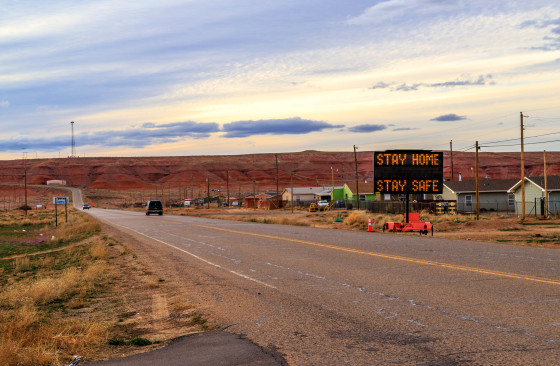
On March 17, when the Navajo Nation saw its first COVID-19 case, the reservation's limited health facilities sprang into action.
"We basically changed our hospital from an acute care hospital and an ambulatory care clinic to one that could take care of respiratory care patients," said Dr. Diana Hu, a pediatrician at one of the reservation hospitals. "And that transition happened over a period of about seven days."
It didn't take long for one case to turn into two, and then 20. As of Monday, the Navajo Nation, which sprawls across three states, had 1,197 positive coronavirus cases. It has a per capita infection rate 10 times higher than that of neighboring Arizona and the third-highest infection rate in the country behind those of New York and New Jersey. Forty-four people have died, more than in 14 other states.
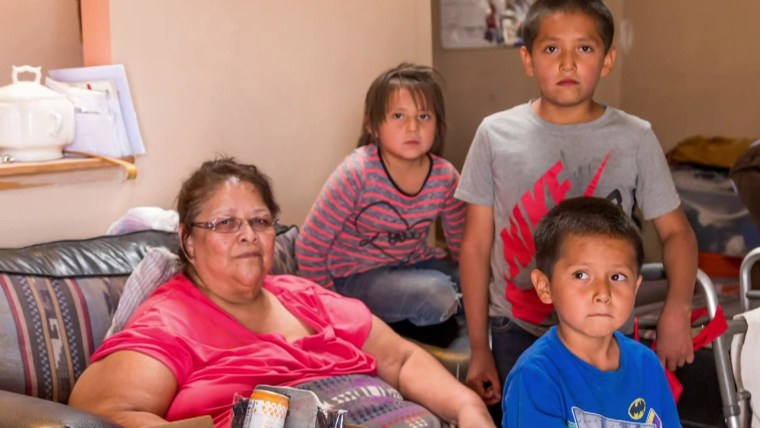
With only 12 health care facilities across 27,000 square miles and a prevalence of chronic health issues like diabetes, the largest and most populous reservation in the U.S. is doing everything it can to cope with an outbreak that is expected to get even worse.
The fear is based on precedent. During the H1N1 flu epidemic in 2009, Native Americans died at four to five times the rate of other Americans.
"We don't know what's going to happen. We don't know if there's lasting immunity. We don't know if you can get re-infected," Hu said.
Hu said that at the Navajo-run hospital in Tuba City, Arizona, where she has practiced for 35 years, there is now a steady supply of personal protective equipment and no shortage of beds, but a 30 percent deficit in critical nursing staff means the hospital has already reached its capacity.
"We have dietitians that are in the screening tent. We have orthopedic surgeons that are doing triage," Hu said.
So far, hospitals in the Navajo Nation's hardest-hit areas have been able to transfer their most critical patients — those needing intubation and potentially weeks of care — to major hospitals in nearby cities like Phoenix and Flagstaff. But doctors worry that if those cities become inundated with their own cases, transfers might not be an option.
Full coverage of the coronavirus outbreak
"I watched the trends very, very early, and quite frankly, I was very concerned. We deal with a tremendous amount of health disparities out here, which leave us with a very vulnerable population," said Dr. Loretta Christensen, chief medical officer for the Navajo Nation at the federal government's Indian Health Service. Christensen said she's expecting a surge of new coronavirus cases in two to three weeks.
The Navajo Nation began educating its citizens earlier than many states about social distancing and hand-washing, but Christensen said part of the problem is that the advice rings hollow for many on the reservation.
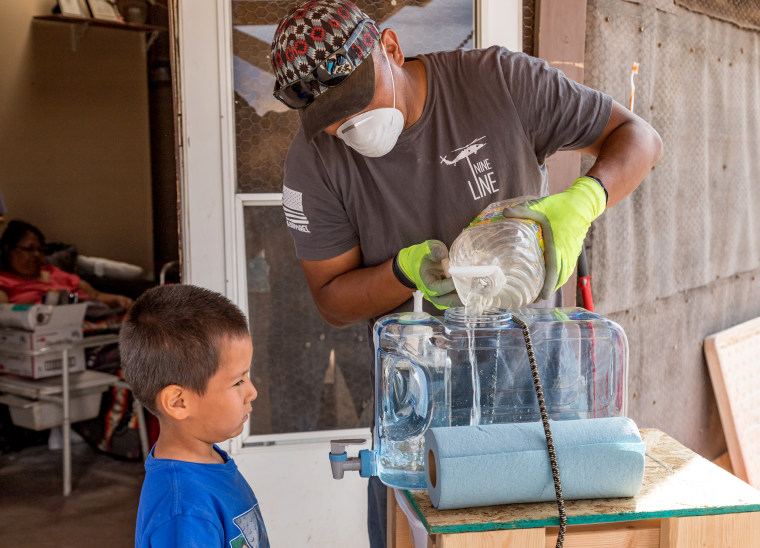
"You're telling people, 'Wash your hands for 20 seconds multiple times a day,' and they don't have running water. Or you're saying, 'Go buy groceries for two or three weeks and shelter in place and don't come out,' but people can't afford groceries for two or three weeks. So it's just a setup for frustration and concern by the population here."
When combined with the comorbidities, or pre-existing conditions, that already plague the Navajo Nation — like heart disease, diabetes and obesity — public health experts worry that difficulty accessing basic needs like food and water is going to compound the crisis.
"Our federal government, since treaties were signed in the late 19th and early 20th century, has broken promise after promise after promise," said Allison Barlow, director of the Center for American Indian Health, or CAIH, at Johns Hopkins University's Bloomberg School of Public Health. "And what we're seeing today is the accumulation of those broken promises and where it has left people."
Related

"There has been chronic underfunding of the health systems and infrastructure, from electricity to plumbing to water supplies. All of these things are inflaming the COVID epidemic right now," Barlow said.
To help alleviate the frustrations, CAIH and other public health groups that have long been active on the reservation are stepping in.
CAIH is building hand-washing stations for citizens without running water and delivering care packages of food, water and cleaning supplies to remote homes and the elderly.