Scientists are finding microplastics everywhere from brain tissue to arteries and warning of the health risks posed by their buildup inside our bodies. They’re also discovering just how easily the tiny particles get there.
Microplastics don’t just shed off of plastic items from overuse, like when a water bottle breaks down over weeks or months of being washed and refilled. They also leach into our food and drinks with even the brief use of a product with plastic components, alarming scientists.
“We’re talking about cardiovascular mortality,” said Dr. Leonardo Trasande, director of the Grossman Center for the Investigation of Environmental Hazards at New York University. “We’re also talking about hormone-sensitive cancers — breast, thyroid, ovarian, not to mention kidney cancer — that have been associated with these chemical exposures.”
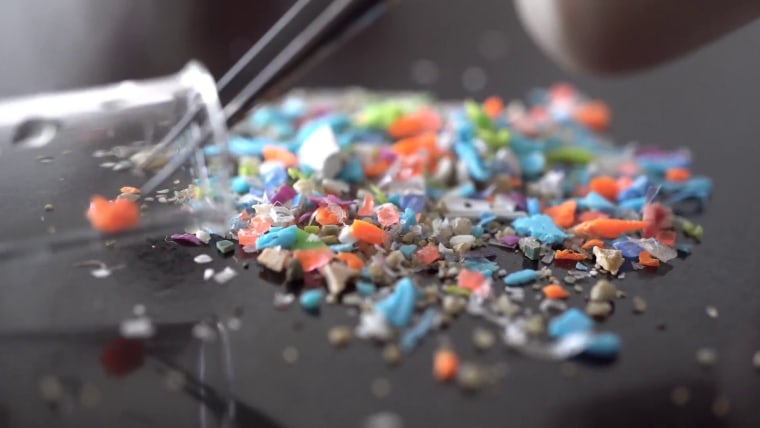
Microplastics are tiny fragments of plastic less than 5 millimeters in diameter, some a fraction of the width of a strand of human hair. And nanoplastics, even tinier plastic particles measuring less than a millionth of a meter, are too small to see with standard light-based microscopes.

Scientists have found these particles across the globe, from Antarctic snow to coral reefs and throughout our bodies, including in babies. They’re raising concerns about how quickly microplastics can build up in humans and ecosystems. And while much remains unknown about their impacts, researchers increasingly fear these contaminants are fueling ecological and health crises.
Microplastics are constantly coming off of everyday items like containers and cups, including products we don’t always think of as plastic, according to Victoria Fulfer, a postdoctoral fellow at the University of Rhode Island studying how microplastics get into water.
“We’re storing a lot of our food in plastic,” said Fulfer, who also works for the 5 Gyres Institute, a nonprofit group researching plastic pollution.
“Not only is it packaged in plastic when we buy it from the store, but then we cook it, and we often put it in plastic containers to store it in our fridge, because it’s easy and it’s cheap,” she said. “And that plastic is leaching into our food.”
Fulfer’s research has shown that even tiny plastic particles can amass in large volumes over relatively short periods, reflecting just how widely used plastic materials have become — and how easily they break down. A paper she published in 2023 found more than 1,000 tons of microplastics have built up on the floor of Rhode Island’s Narragansett Bay in just the last two decades.
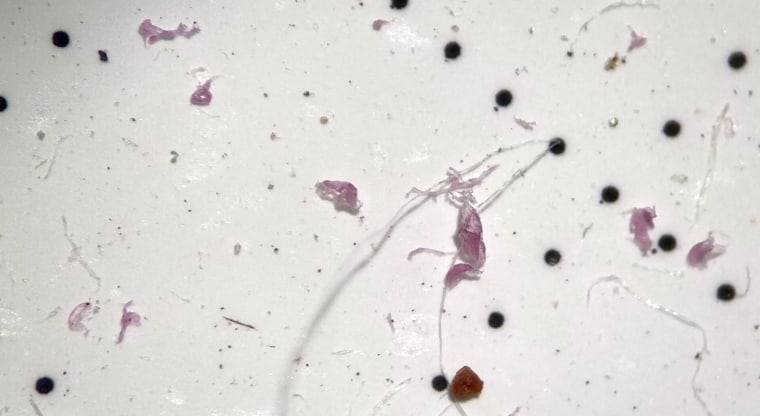
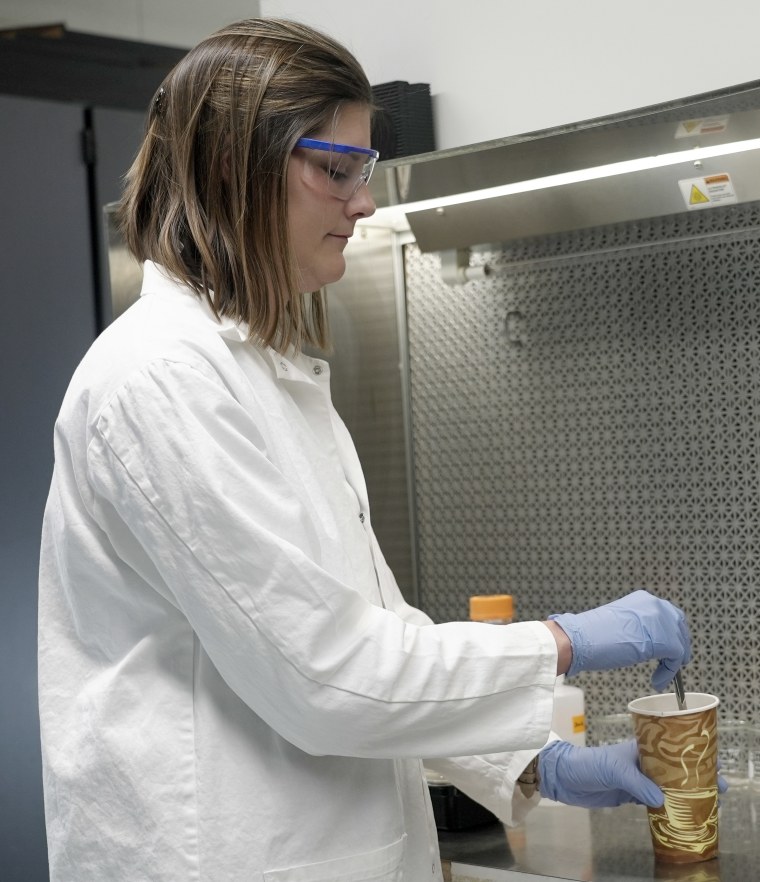
Fulfer gave NBC News a demonstration of how easily microplastics can shed into food and drinks at her university laboratory. She chopped up just two slices of a white onion on a red plastic cutting board, rinsed the slices, filtered the rinsing water and put the filter under a microscope. The slide showed tiny red specks of plastic that had come off the cutting board and onto the onion.