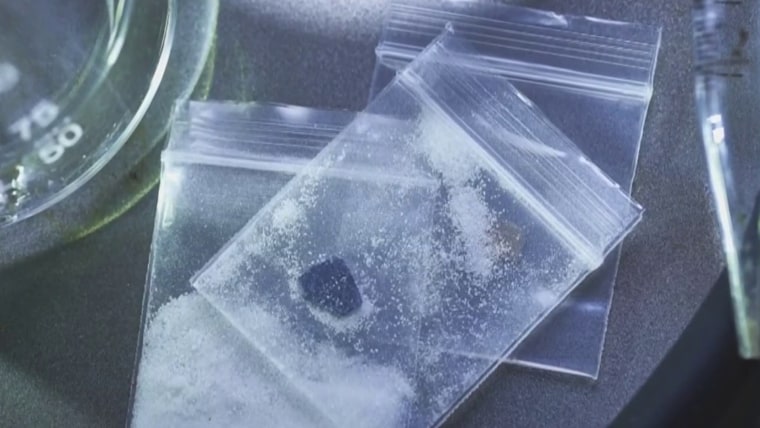
Dr. Steven Corder didn’t think his job treating people addicted to fentanyl in Wheeling, West Virginia, could get any harder, but then he began encountering patients who were addicted to both fentanyl and a second drug with its own destructive power — the livestock tranquilizer xylazine.
“Opioid withdrawal is hard enough,” Corder said. But his usual tools, he lamented, “couldn’t touch the withdrawal from xylazine.”
Xylazine is now present in one out of every nine overdose deaths nationwide involving illicit fentanyl, according to the Centers for Disease Control and Prevention.
But West Virginia, which remains ground zero in the American opioid crisis, with nearly twice as many overdose deaths per capita as its nearest competitor, seems to be taking a disproportionate hit from xylazine as well. It now shows up in at least half of the needles in Wheeling, and between 15% and 20% of the needles used statewide, according to 2023 data from West Virginia University.
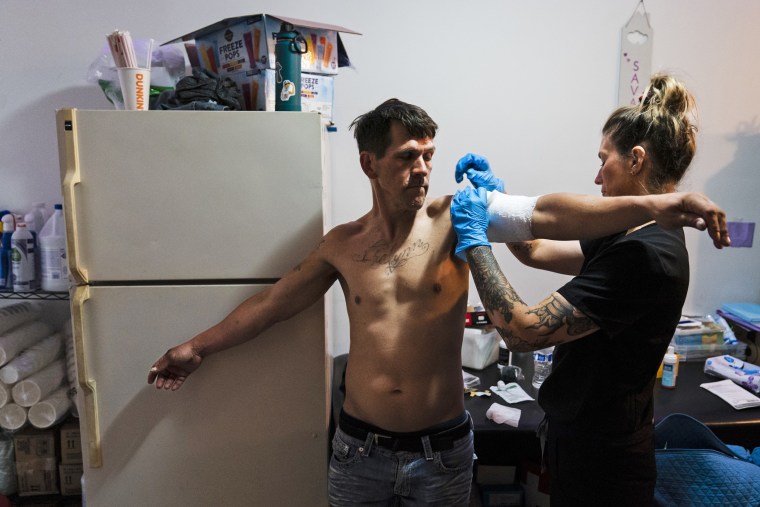
The drug is known for leaving deep flesh wounds that can sometimes lead to amputations. The wounds develop from skin ulcers that can appear at the point of injection or elsewhere on the body.
Laura Weigel, who runs a treatment center for the local YWCA, said one patient recently had her breast and part of her shoulder amputated because of xylazine. “We are not being able to do anything fast enough to get ahead of it,” she said.
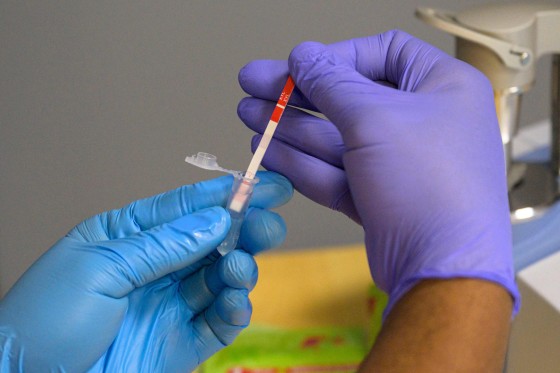
A homeless fentanyl user in Wheeling named Brooke has her wounds dressed twice a day with help from a nurse at Catholic Charities. Brooke, who asked NBC News to withhold her last name, said she is now using xylazine test strips to test for the presence of xylazine in her drug supply.
She also said that in addition to leaving wounds, xylazine threw her into repeat seizures. And she said Narcan, the drug used to reverse overdoses, seemed ineffective against xylazine, which is not an opioid.
“They Narcan’ed me four different times but it didn’t work against xylazine,” she said.
From Puerto Rico to Philadelphia
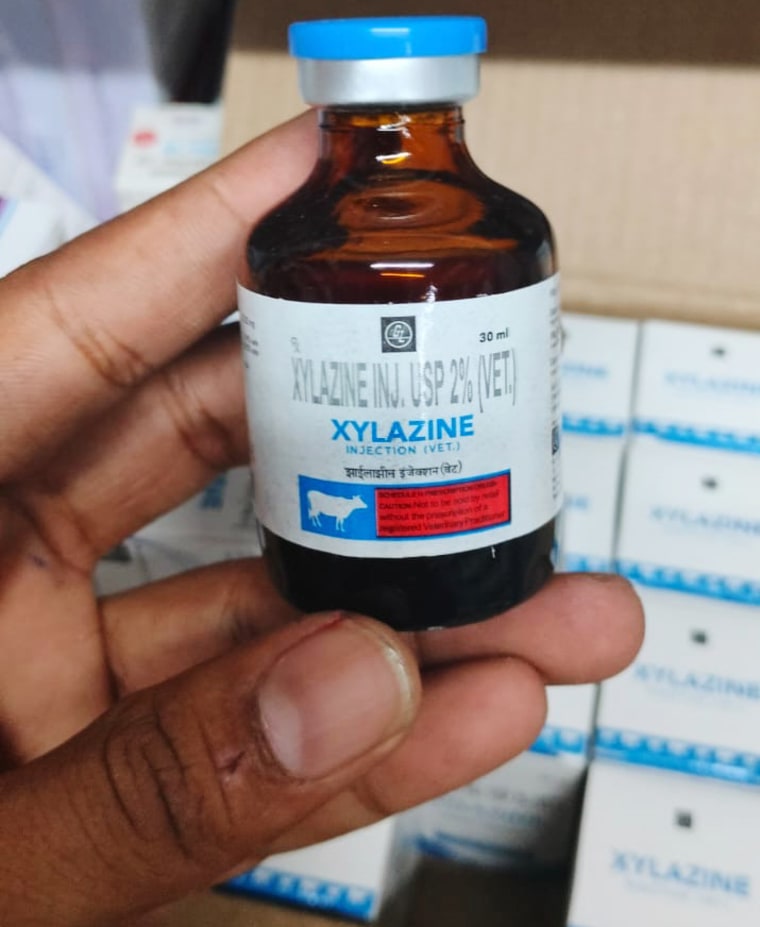
Xylazine is a sedative used by veterinarians to sedate large animals that need surgery. It has never been approved for human use.
There is not much research on what the drug does to people, but addiction and withdrawal from xylazine seems similar to that for another sedative used on humans in intensive care units called etomidate. Said Corder: “The fact that xylazine is mixed in with illegally manufactured fentanyl or [other opioids] is why you get such a severe withdrawal.”
He said his nurses at Northwood Health Systems often have to resort to sedating patients because they “are so ill and their brains are so hijacked by their addiction that our standard protocols with buprenorphine often do not give them much relief.”
He estimated that 90% of the patients he sees who have xylazine in their system struggle to stay in the first phase of treatment.
Experts said they weren’t sure how xylazine came to be mixed with fentanyl, but it is common for drugs like cocaine and opioids to be cut with other substances that are cheaper or widely available.
Why xylazine? “I’m not sure,” said Dr. Ayesha Appa, an expert on fentanyl at the University of California, San Francisco. “This is one of the challenges of our unregulated drug supply. … I imagine cost/availability is one of the factors, but [I’m] not sure. I will say from my work clinically that many patients do not necessarily want to consume the xylazine, it is just what is in a shifting supply.”
From conversations with patients, Corder said he understands that xylazine “augments and intensifies the fentanyl,” making the high stronger and longer-lasting.

According to law enforcement and researchers, xylazine made its U.S. debut in Puerto Rico and then surfaced in Philadelphia and Connecticut. Though it’s now showing up across the country, anecdotal information suggests its biggest early impact has been in Pennsylvania and the Northeast. West Virginia authorities say the drug came into the state from Pittsburgh, Cleveland and Detroit, similar to fentanyl.
While the Food and Drug Administration and the Drug Enforcement Administration have taken steps to stop some imports of xylazine, the drug appears to be easily available from overseas pharmacies.