
Despite previous excitement around a potential link between GLP-1 drugs and a reduced risk of cancer, new research suggests the popular medications “probably have little or no effect” on a person’s risk of developing one of the 13 obesity-related cancers.
The findings, published Monday in the Annals of Internal Medicine, may seem counterintuitive, said co-author Dr. Cho-Han Chiang, who conducted the study earlier this year as an internal medicine resident at Mount Auburn Hospital, a Harvard Medical School teaching hospital in Cambridge, Massachusetts.
“GLP-1 can make people lose weight, and so, if obesity increases the risk of cancer, then, hypothetically speaking, losing weight through GLP-1 may actually reduce the risk of developing cancer,” said Chiang, now a medical oncology fellow at the Northwell Health Cancer Institute in New York. “That was the excitement in this whole research of GLP-1 and cancer risk.”
Accordingly, previous research had suggested the drugs — which include Ozempic and Zepbound — may help lower cancer risk. For example, a 2024 study published in the journal JAMA Network Open showed that people with Type 2 diabetes who took GLP-1s had significantly reduced risks of 10 obesity-related cancers. However, that study was observational, Chiang said, meaning it analyzed existing patient data rather than performed a clinical trial. The patients who took GLP-1s may have had access to better health care and a lower risk of cancer to begin with, he said.
Chiang and his colleagues, on the other hand, reviewed 48 randomized controlled trials with a combined 94,245 patients who had Type 2 diabetes, overweight or obesity. Of those, more than 51,000 took a GLP-1 medication, while nearly 43,000 took a placebo. Patients were observed for a median follow-up period of 70 weeks.
Researchers focused on the 13 types of obesity-related cancers identified by the International Agency for Research on Cancer Working Group and their possible links to GLP-1 drugs, with varying levels of statistical certainty.
Researchers found, with moderate certainty, that GLP-1 drugs had little or no effect on the risk of developing four types of obesity-related cancers: breast, kidney, thyroid and pancreatic cancers.
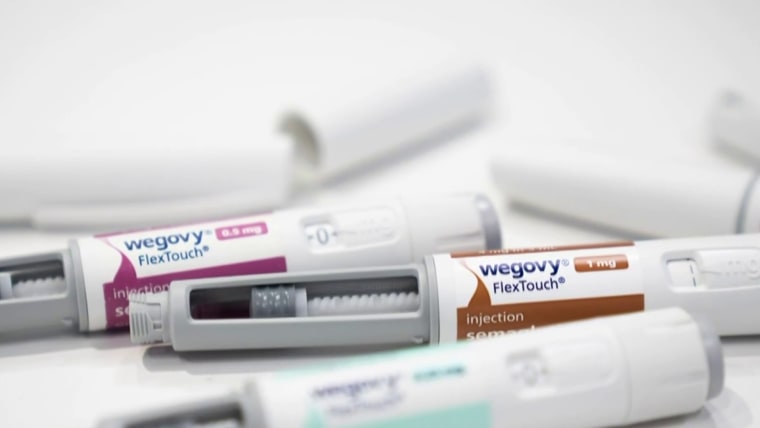
The findings were similar for eight other obesity-related cancers — liver, gallbladder, colorectal, ovarian, endometrial, esophageal, meningioma (a tumor of the brain lining) and multiple myeloma (blood cell cancer) — but with low certainty. The effect of GLP-1s on the risk of gastric cancer was “very uncertain,” the authors wrote.
“It’s not that GLP-1 does not reduce the risk of cancer; I don’t think we can make that conclusion from our study,” Chiang said. “I would say GLP-1 [drugs] probably do not increase the risk of cancer. It’s a little different.”
Longer-term studies needed
The new study has two major limitations, Chiang said. One is that none of the nearly 50 trials his team analyzed was designed to measure cancer outcomes.
Dr. Kandace McGuire, chief of breast surgery at the Massey Comprehensive Cancer Center at Virginia Commonwealth University, said that might explain the counterintuitive nature of the findings.
“When you take a bunch of studies that weren’t looking at cancer risk and you throw them together, sometimes you find things that are contrary to what you would hypothesize,” said McGuire, who wasn’t involved in the research. “Some of that may be just the makeup of the studies, rather than the actual data itself.”
“From a cancer prevention perspective, I think more data is needed,” Chiang said, noting that there’s also a lack of data on GLP-1 usage among patients who already have cancer.
Another limitation of the research was its relatively brief follow-up period of under a year and a half.
Patients prescribed GLP-1s should be monitored for far longer, particularly for slow-growing diseases like breast and thyroid cancers, McGuire said.
“You really don’t know when in somebody’s lifetime they’re going to have a clinically significant cancer,” McGuire said. “While you may not effect a difference in the first two to three years, you may effect a difference five, 10 years down the road with continued use” of GLP-1s.
Can GLP-1s increase risk of some cancers?
The Food and Drug Administration cautions people with personal or family history of a rare form of thyroid cancer, medullary thyroid carcinoma, against taking certain GLP-1 medications. However, such boxed warnings stem from decade-old rodent research, Chiang said.
“Once there’s an association with a drug, it’s hard to repel that,” he said.
