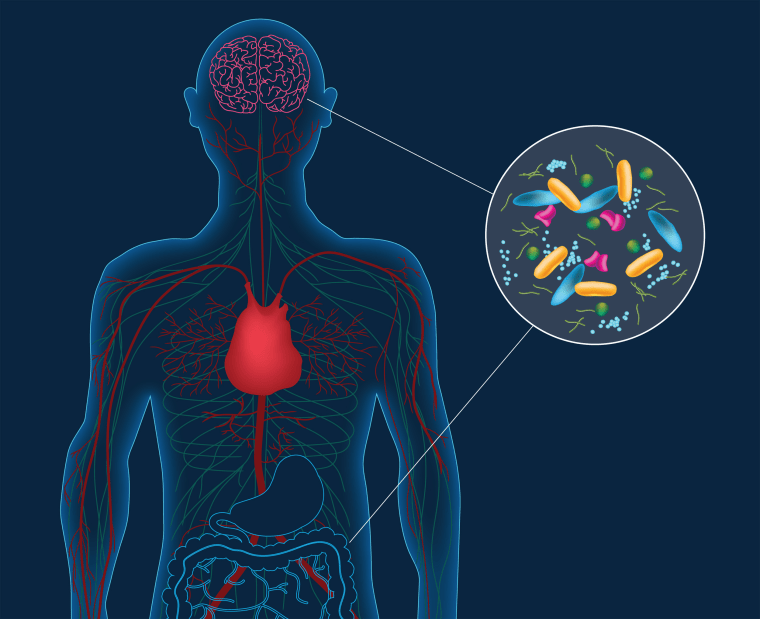
The germs living inside a person’s digestive system may affect symptoms of Parkinson’s disease, researchers reported Thursday.
Tests done on mice showed their symptoms worsened when they were dosed with microbes taken from human Parkinson’s patients but not when they got samples from healthy patients. And other tests on mice that develop Parkinson’s-like symptoms showed they only developed symptoms if they had gut germs to begin with.
The study doesn’t show that gut microbes cause Parkinson’s, but they may suggest a way to treat the incurable condition, which affects up to a million Americans and 10 million people worldwide.
“I think it is going to be one of these groundbreaking pieces of research,” said James Beck, vice president for scientific affairs at the Parkinson’s Disease Foundation, which was not involved in the research.
“It might lead to new therapies.”
Parkinson’s is marked by tremor, rigid muscles and problems with movement. While early treatment can delay the worst symptoms, people almost always get worse. About 60,000 Americans are diagnosed with Parkinson's disease each year.
It’s a brain disease, characterized by the buildup of a protein called alpha-synuclein.
So how could intestinal microbes affect it?
Many studies have shown the bacteria, viruses, yeast and fungi living in and on the body, collectively called the microbiome, directly affect health. Not only do they help digest food, but different balances of the microorganisms may influence diseases all over the body, from cancer to autism.
Sarkis Mazmanian and colleagues at the California Institute of Technology had seen previous studies that showed people with Parkinson’s had gut microbiomes that looked different from those of people without Parkinson’s.
“There are particular classes of bacteria that are selectively missing or depleted in the Parkinson’s population and found in the healthy population,” Mazmanian told NBC News.
"All three of the hallmark traits of Parkinson's were gone in the germ-free models."
There are hundreds and even thousands of different species of bacteria in the intestines, and different people have different balances and, sometimes, completely different populations. It will be years before anyone nails down the precise bacteria that might help or worsen Parkinson’s.
And first, the link must be proven. Mazmanian’s team took a big step by using mice bred to develop Parkinson’s symptoms because they overproduce alpha-synuclein in their brains.
Related: Walking Helps Parkinson's
In one experiment, they showed that mice born in a completely sterile environment and which have limited microbiomes do not develop Parkinson’s symptoms, even as their brains are clogged with alpha-synuclein. Mice raised in normal, germy environments did develop symptoms.
"All three of the hallmark traits of Parkinson's were gone in the germ-free models," said Timothy Sampson, a Caltech researcher who worked on the study.

