Artemis Bayandor, 40, has been trying to lose weight for the last 20 years.
She didn't find success until her doctor prescribed Wegovy, a weight loss drug, in August 2021. She lost 15 pounds in about six months.
But it all stopped in February, when Bayandor's health insurance denied her coverage, forcing her to stop taking the medication. A month later, she had gained the 15 pounds back, followed by 10 more pounds six months later.
"It was kind of a mind f---," said Bayandor, of Naperville, Illinois.

Bayandor's experience isn't uncommon: Widespread shortages of Wegovy, a popular weight loss aid, have forced some people in the U.S. to stop taking it, leading them to gain some — or all — of their weight back. Others have stopped taking it for different reasons, such as cost, unpleasant side effects or unrelated health issues.
Dr. Domenica Rubino, the director of the Washington Center for Weight Management & Research in Arlington, Virginia, said the weight gain in people who stop taking the drug “makes sense.”
Rubino led a 2021 study, published in the Journal of the American Medical Association, that found that people who took Wegovy regained two-thirds of the weight they had lost when they went off the drug.
Obesity is a chronic illness, she said. As with any other chronic illness, most patients will need to take the medication for their entire lives to maintain the benefits, which, in this case, means keeping the weight off.
"They are chronic medications," she said, "which means you basically take them just like you take blood pressure medicine or diabetes medicine."
Wegovy, or semaglutide, is part of a class of drugs called GLP-1 agonists. They mimic a hormone that helps reduce food intake and cuts appetite. In clinical trials, Wegovy was shown to reduce body weight by around 15%.
People who stop taking the drug may notice that their appetites return to the levels they experienced before they took it, said Dr. Holly Lofton, the director of the weight management program at NYU Langone Health. In some cases, she said, their appetites may feel even bigger than they were before they lost the weight.
"When you're at that max weight loss, your body's hunger hormones are the highest," she said. "So if you lose 50 pounds and regain 25, your hunger is the highest when you've lost the 50. And even when you regain the 25, it doesn't go back to baseline; your hunger is higher than prior to losing weight."
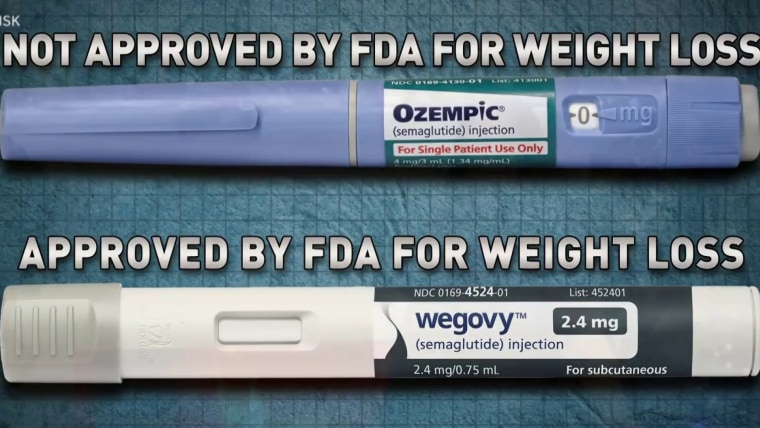
Eli Diaz, 35, of Naples, Florida, said her doctor first prescribed Ozempic in February before switching her over to Wegovy a month later. She also made some lifestyle changes, including altering her diet and exercise. (Ozempic and Wegovy are the same drug, semaglutide. It's sold under the name Ozempic for diabetes and, at a higher dose, as Wegovy for weight loss.)
From February to May, Diaz lost 22 pounds.
In May, an unrelated thyroid issue landed her in the hospital and forced her to stop taking Wegovy.
Over the next six months, she gained all of the weight back.
"It was expected, because I didn’t continue the medication or the diet afterward," she said.
Lofton noted that with or without Wegovy, a healthy diet and exercise are important for weight maintenance.