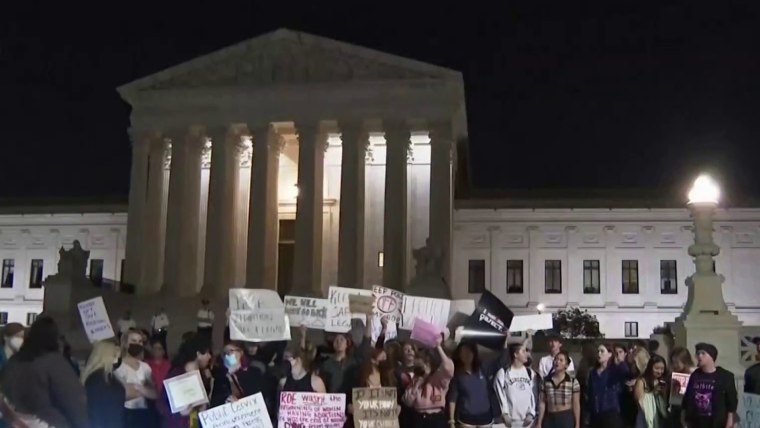
Should the Supreme Court overturn Roe v. Wade, the change would pose a profound threat to maternal health in the U.S., experts said.
A leaked draft opinion published Monday by Politico suggests that the court is likely to reverse the seminal ruling that enshrined the constitutional right to abortion nearly 50 years ago. The court confirmed the authenticity of the draft; the final decision isn't expected until late June or early July.
If Roe is overturned, nearly two dozen states are likely to ban abortions or severely restrict access. Thirteen have "trigger laws" that would ban abortion almost immediately, according to an NBC News analysis of data from the Center for Reproductive Rights.
Research suggests the bans and restrictions would have manifold effects on maternal health. For one, if more pregnant people can't get the abortions they seek, they'd shoulder the risk of the U.S.'s relatively high — and rising — rate of death from pregnancy-related causes, which is particularly elevated among people of color.
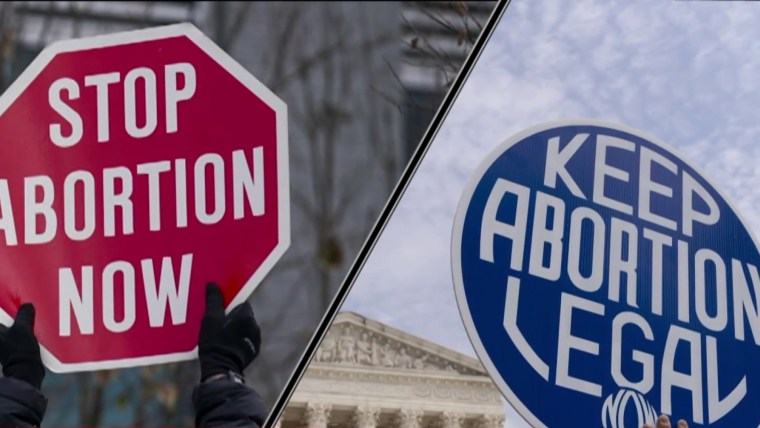
"There are going to be women that will die from pregnancy because of this decision, period," said Dr. Amy Addante, an OB-GYN in Illinois and a fellow with Physicians for Reproductive Health.
In addition, pregnant people would face the risk of prosecution for seeking to end pregnancies in states where abortion is banned, and research has shown that unwanted pregnancies have many harmful long-term consequences for mothers, including a higher chance of financial hardship and a severe toll on mental health.
Experts concerned about rise in maternal deaths
The U.S. has the highest maternal mortality rate of any developed country. In total, about 700 women die every year of pregnancy-related complications in the U.S., and about 3 in 5 of those deaths are preventable, according to the Centers for Disease Control and Prevention.
"One of the things that I worry about the most is that we are going to see an increase in maternal deaths in this country" if Roe is overturned, said Lauren Ralph, an epidemiologist at the University of California, San Francisco.
The U.S. maternal mortality rate in 2020 was 23.8 deaths per 100,000 live births — the highest it had been since before Roe was overturned, according to the Commonwealth Fund, which promotes better health care for underserved communities. The rate was far higher among Black people: 55.3 deaths, which is nearly three times the rate for white people.
A rise in maternal deaths, therefore, would likely "be concentrated among people who are living below the federal poverty line, people of color," Ralph said.
The U.S. maternal mortality rate more than doubled from 1987 to 2017, CDC data show. By contrast, maternal mortality in high-income countries decreased slightly every year on average over roughly the same period, according to a 2016 study.
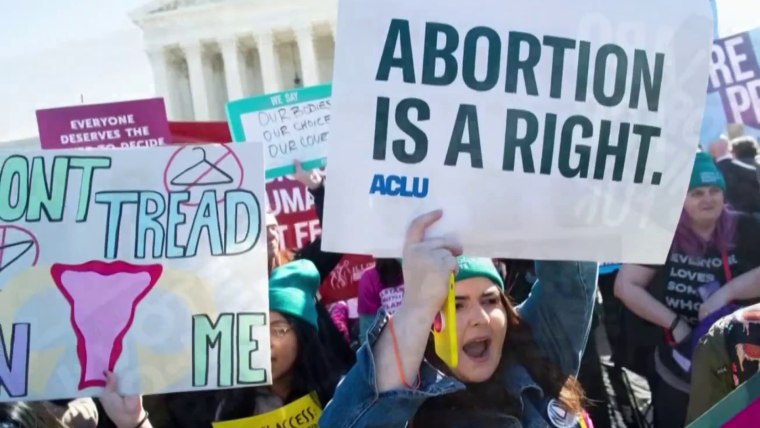
Some research suggests that women who are denied abortions face an especially high risk of pregnancy-related health issues, due in part to an increased likelihood of delaying prenatal care. A study published last year found that although most U.S. states had similar rates of maternal mortality in 1995, states that restricted abortion access had significantly higher rates by 2017 than those with more protective policies.
"Unintended pregnancies are at higher risk for medical complications, which can extend beyond once the baby is delivered," Addante said.
That was also the finding of a five-year research project at the Bixby Center for Global Reproductive Health at the University of California, San Francisco, called The Turnaway Study, which looked at 1,000 women who sought abortions across 30 facilities in the U.S. Of that group, women who were denied abortions had more serious health problems, such as high blood pressure or seizures, than those who had abortions. Two women who were denied abortions died from conditions related to their pregnancies.
"We can definitely say that if these people had been able to get the care that they wanted, those maternal deaths would have been avoided," said Ralph, one of the study's researchers.
Safe abortion options could be hard to access
Experts said it is unlikely that overturning Roe would lead to more unsafe abortions in the U.S., although there is a chance.
"In terms of unsafe abortions, 'back-alley' or unskilled abortion providers and women dying from unsafe abortions, I truly hope that is not what we’re seeing. It's a risk, but I hope not," said Susan Wood, the director of the Jacobs Institute of Women’s Health at George Washington University.
A major difference for women seeking abortions now, compared to the pre-Roe era, are the abortion pills the Food and Drug Administration approved in 2000. The regimen consists of mifepristone, which blocks progesterone, and misoprostol, which induces contractions. The combination can be taken up to 10 weeks after a patient’s last period; FDA regulations require the pills to be dispensed only by registered providers.