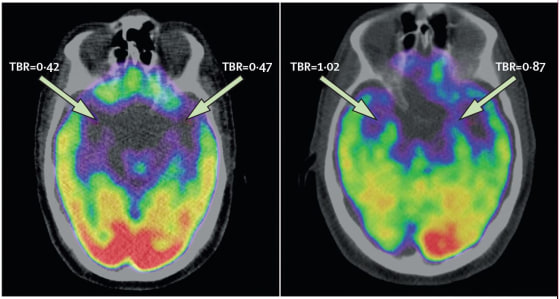
A new study using brain scans shows how stress might cause heart attacks: people whose fear centers are more active also have a higher risk of heart attack or stroke.
The findings point to the amygdala — often called the fear center in the brain. But the amygdala, which are a nut-sized pair of structures, are linked with various forms of stress, not just fear.
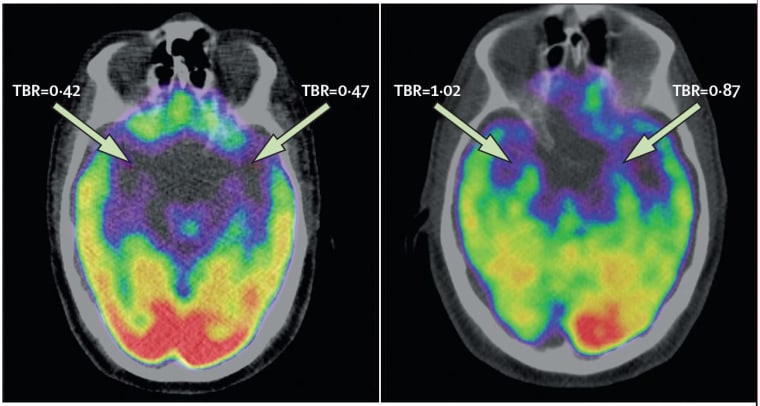
People whose amygdalas seemed more active during brain scans were more likely to have a heart attack, stroke, or other serious heart event over the next three to four years, the team of researchers found.
Not only that, but those with more active amygdalas had more inflammation in their arteries — something that’s clearly linked with heart disease — and bone marrow activity that may be linked with blood clots.
“Our results provide a unique insight into how stress may lead to cardiovascular disease,” Dr. Ahmed Tawakol of Massachusetts General Hospital and Harvard Medical School, who led the study team, said in a statement.
Related: Broken Heart Syndrome Can Be Triggered by Grief
“Eventually, chronic stress could be treated as an important risk factor for cardiovascular disease.”
For their research, Tawakol and colleagues watched 293 patients who were getting PET and CT scans unrelated to heart disease — mostly for cancer screening. All had their brains, arteries, bone marrow and spleen scanned.
“Eventually, chronic stress could be treated as an important risk factor for cardiovascular disease.”
Over the next three to four years, the team watched to see who had heart attacks, strokes or other heart disease. A total of 22 patients did.
Looking at their scans, those whose amygdalas were more active were more likely to have a heart event, the team reported in the Lancet medical journal.
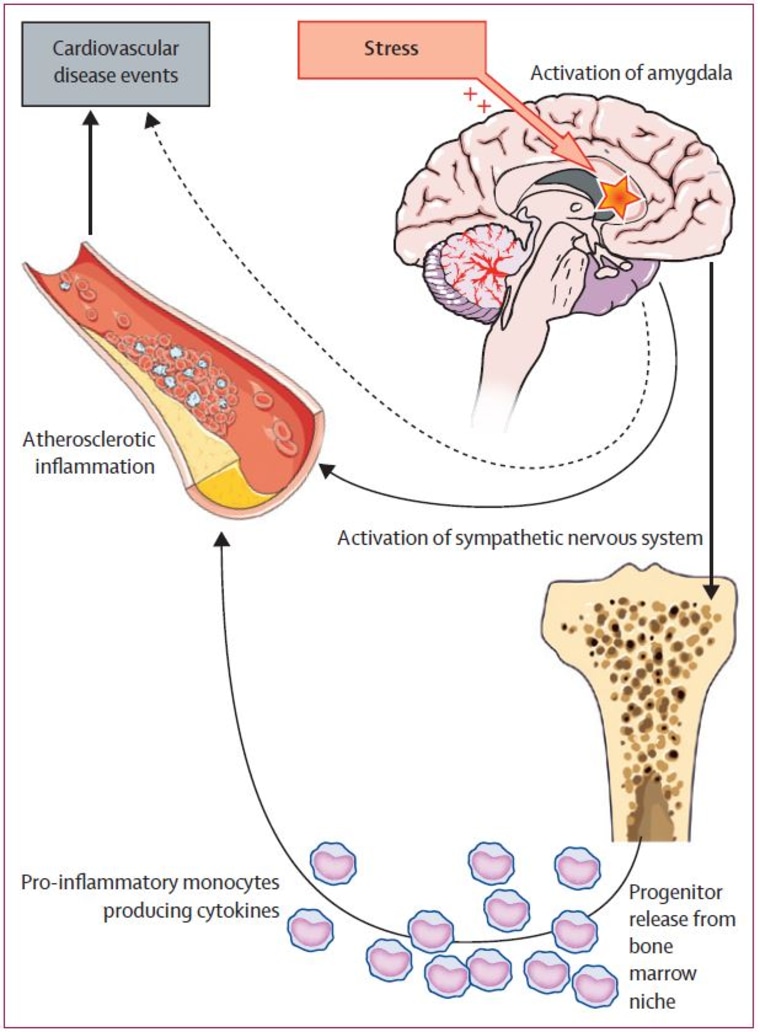
The team also found a potential pathway for how that happens — inflammation and more activity in the bone marrow.
Other studies, including on mice, suggest that extra bone marrow activity includes production of an inflammatory chemical called interleukin 6, as well as production of platelets — the blood cells that stick together to form clots.
Cancer can cause stress and some chemotherapy can also cause damage that leads to heart disease, so more study is needed on a larger group of people who don’t have any signs of any disease, the researchers said.
But there were a few people in the group who had post-traumatic stress disorder (PTSD), and were not being screened for cancer — and the findings held for them, also. Those with busier amygdalas also were more likely to have a bad heart event within four years.
“This is one of very few studies that you can see metabolic activity in response to stress,” said Dr. Nieca Goldberg, a cardiologist at New York University Langone Medical Center who was not involved in the study.
“This is very interesting because it shows a biological connection between the stress and arterial inflammation and cardiac events,” Goldberg told NBC News.
Related: Stress Can Break Your Heart

