TAIPEI, Taiwan — As countries around the world grapple with the coronavirus, Taiwan may offer valuable lessons on how to curb its spread.
The island is just 81 miles and a short flight away from mainland China, where COVID-19 is believed to have originated in the city of Wuhan. As the outbreak took hold in January, many Taiwanese business people and their families based in China were returning to celebrate the Lunar New Year, and up to 2,000 Chinese tourists a day visited the island, potentially bringing the virus with them.
And yet, Taiwan has had only 50 cases of COVID-19 and one death as of Friday night — far fewer than China’s 80,824 cases and 3,189 deaths, a stark contrast even when taking into account the enormous population difference: Taiwan’s 23 million to China’s 1.4 billion. Taiwan’s numbers are also much lower than neighboring countries such as South Korea, which has had more than 7,900 cases, and Japan, with 675. It’s also faring better than countries much farther away from China, such as Italy, with more than 17,660 cases, and the United States, which had 2,167 cases as of Friday night.
Of the 100-plus countries and territories affected, Taiwan has the lowest incidence rate per capita — around 1 in every 500,000 people — for a place that is located so close to China and with so much travel to and from.
What lessons can Taiwan teach the world so other countries can stem the spread of the virus?
Be alert and proactive
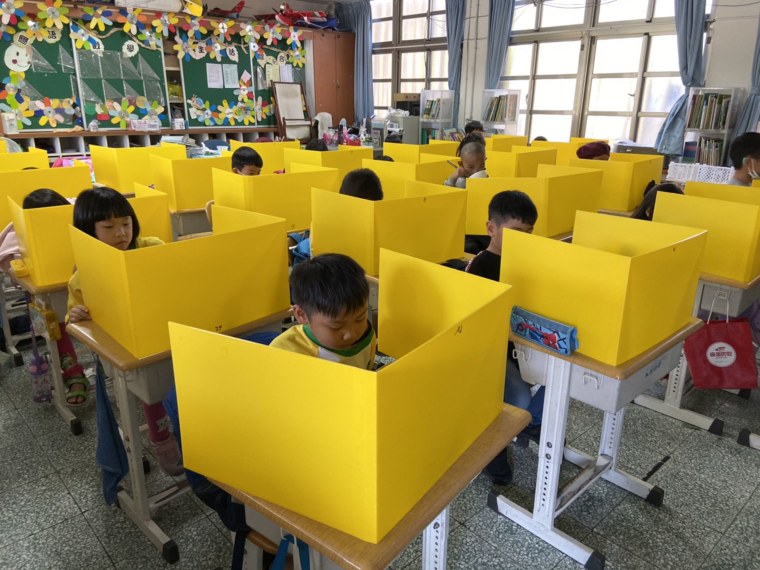
Partly because it’s near China and speaks the same language, Taiwan learned early that a “severe pneumonia” was spreading in Wuhan. But it was the proactive measures the island took that helped it avert a major outbreak.
On Dec. 31, the same day China notified the World Health Organization that it had several cases of an unknown pneumonia, Taiwan’s Centers for Disease Control immediately ordered inspections of passengers arriving on flights from Wuhan.
And despite poor relations with Beijing, Taiwan asked and received permission to send a team of experts to the mainland on a fact-finding mission Jan. 12.
“They didn’t let us see what they didn’t want us to see, but our experts sensed the situation was not optimistic,” government spokesperson Kolas Yotaka told NBC News.
Shortly after the team returned, Taiwan began requiring hospitals to test for and report cases. That helped the government identify those infected, trace their contacts and isolate everyone involved, preventing the virus from spreading to the community.
All this happened long before Taiwan confirmed its first case Jan. 21 and the rest of the world became alarmed.
Related

Set up a command center
Equally important, Taiwan's CDC activated the Central Epidemic Command Center relatively early on Jan. 20 and that allowed it to quickly roll out a series of epidemic control measures, according to Stanford Health Policy’s Jason Wang, a pediatrics professor who also has a doctorate in policy analysis.
“Taiwan has rapidly produced and implemented a list of at least 124 action items in the past five weeks — that’s three to four per day — to protect public health,” Wang said in an email. “The policies and actions go beyond border control because they recognized that that’s not enough.”
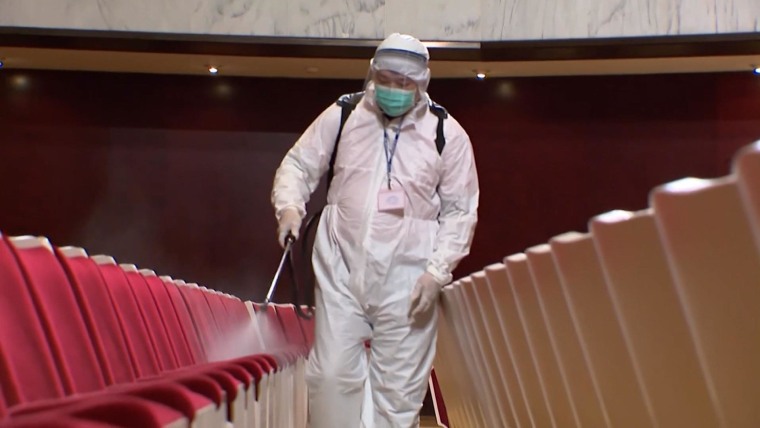
Headed by Health Minister Chen Shih-chung, the command center not only investigates confirmed and suspected cases, it also works with ministries and local governments to coordinate the response across Taiwan, including allocating funds, mobilizing personnel and advising on the disinfection of schools.
Take quick and decisive action
Taiwan also took tough action early. On Jan. 26, five days after it confirmed its first case, Taiwan banned arrivals from Wuhan, earlier than any other country.
Not long after, it did the same for flights from all but a handful of Chinese cities, and only Taiwanese people were allowed to fly in.
Use technology to detect and track cases
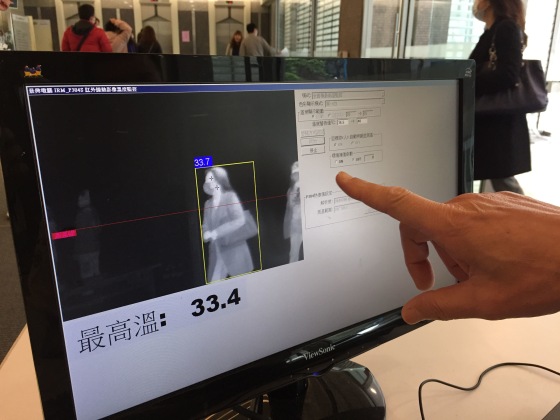
After securing its borders, Taiwan used technology to fight the virus. Temperature monitors were already set up at airports after the 2003 SARS outbreak to detect anyone with a fever, a symptom of coronavirus.
Passengers can also scan a QR code and report their travel history and health symptoms online. That data is then given directly to Taiwan’s CDC.