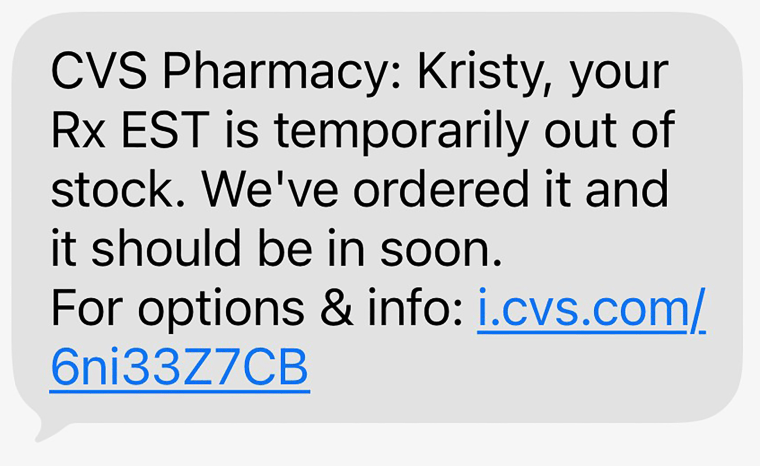
Menopause clinics across the U.S. are hearing from women who are having trouble filling prescriptions for estrogen patches, a common hormone replacement therapy.
“There’s just more demand for these medications, and I think it’s exponentially risen over the last three or four years,” said Dr. Rajita Patil, director of University of California, Los Angeles Health’s Comprehensive Menopause Program. “I don’t think that the supply chain was ready for that.”
Hormone replacement therapy prescriptions for women 50-65 have increased 86% since 2021, according to Epic Research, which analyzes electronic health records nationwide.
In November, the Food and Drug Administration removed the “black box” warning on hormone replacement therapy products. The warning had linked older versions of the drugs to increased risk of breast cancer, heart attack and stroke. Many experts have said that the warning was outdated and that the benefits of hormone therapy outweigh the risks.
“We have seen interest generally rising over the past several years, but that removal of the black box warning, I think, has had a big impact on people who had been hesitant to even talk about it or consider it,” said Dr. Nina Ali, director of the Menopause Center at Baylor College of Medicine in Houston.
“Right away, women who were hesitant were jumping in, making appointments with us,” said Patricia Handler, a nurse practitioner with the Northwestern Medicine Center for Sexual Medicine and Menopause in Chicago. “Our waitlist is well over 1,000 people to be seen.”
Jessica Halem says she regrets every day she spent in menopause not using hormone replacement therapy.

Halem, 53, went into menopause three years ago. Symptoms like hot flashes kept her awake at night and she struggled to do certain yoga poses because she would get dizzy. But last year, her doctor prescribed estrogen patches and progesterone pills.
“I just instantly felt more like myself,” said Halem, the co-founder of a biotech startup focused on hormone therapies. “I will never go off of these drugs.”
When she went to refill her prescription, her pharmacy in Cape Cod, Massachusetts, said the patches she uses weren’t available.
“I call the pharmacy, and that’s when they start to tell me there’s a shortage of estradiol patches. ‘We don’t have any here,’” she said.
The same thing happened to Kristy Martin in Denham Springs, Louisiana.

“I went into a panic,” Martin said. The 41-year-old started using hormone replacement therapy when she found out she was in perimenopause last year.
“My life prior to these patches was so hard to deal with day-to-day activities,” she said. “I couldn’t sleep. I was sweating constantly, the night sweats, the mood swings. It was not conducive to a great lifestyle.”
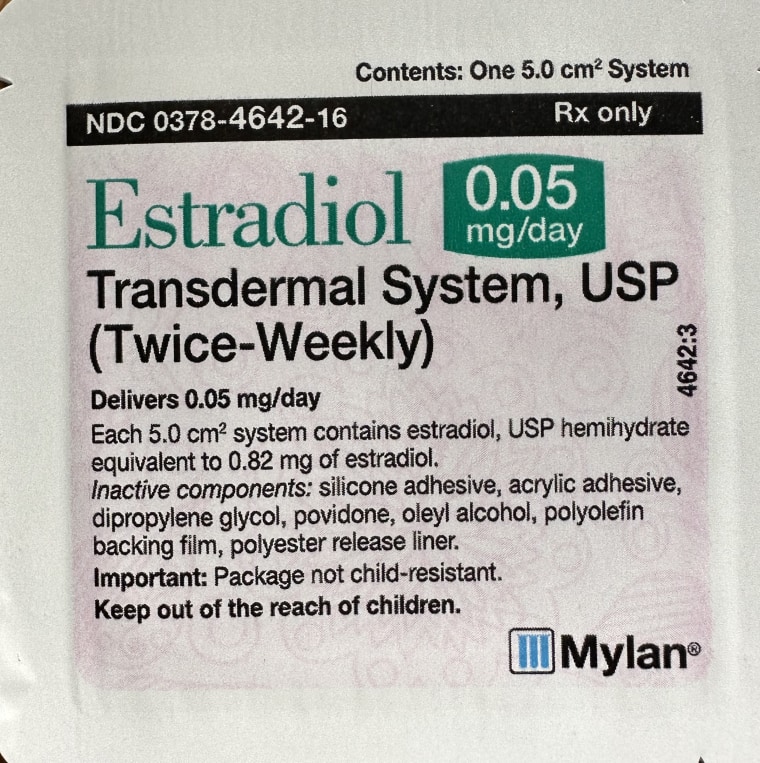
Ali, of Baylor College of Medicine, said the shortages seem to be affecting the twice-weekly estradiol patches, which happen to be the method she most often prescribes.
During perimenopause and menopause, the body produces less estrogen, leading to symptoms including hot flashes, night sweats and mood swings. Estradiol patches replenish the body’s estrogen.
According to the American College of Obstetricians and Gynecologists, estrogen hormone therapy — which includes estradiol patches — is the most effective treatment for hot flashes and night sweats. Other forms of estrogen therapy include pills, gels, injections and vaginal inserts.
CVS said in a statement that there have been supply challenges with select hormone replacement therapies over the last several weeks due to products being on backorder.