Sometimes simple questions have complex answers. Case in point: that bling around your neck. Shiny gold, the flesh of the gods, tears of the sun. Where did it come from?
You get zero credit if your answer is “South African mines.” Or “the Big Bang.” The latter created no elements heavier than lithium.
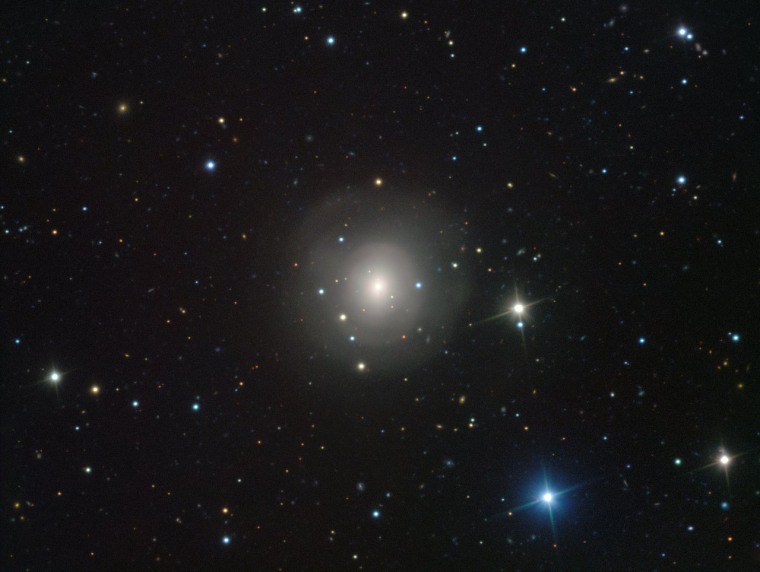
The correct response is colliding neutron stars, a dramatic case of mutually assured destruction that is at the center of one of the day’s biggest science stories. Researchers reported today that the LIGO gravitational wave observatory and its Italian sister, Virgo, picked up yet another twinge in the fabric of space-time last August. This is the fifth since the initial discovery of these subtle perturbations two years ago. But like Sheldon Cooper, this one is a bit of an oddball.
The latest brief ripple wasn’t the death knell of black holes slamming into one another billions of light-years away. It was two neutron stars slamming into one another at a distance of only about 130 million light-years. In case you’re new to neutron stars, suffice it to say that they’re the diminutive corpses of large stars — 10 to 30 times as massive as the sun. In a complex process only an astrophysicist could love, these stellar heavyweights die dramatically, going un-gently into that long dark night with a supernova explosion. The leftover remnant is roughly the size of downtown Baltimore, though far denser than Charm City. One teaspoonful would weigh a billion tons. Not appropriate for airline carry-on.
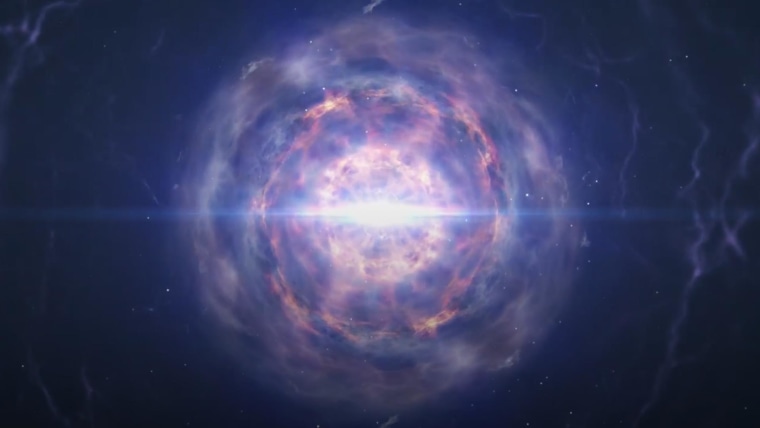
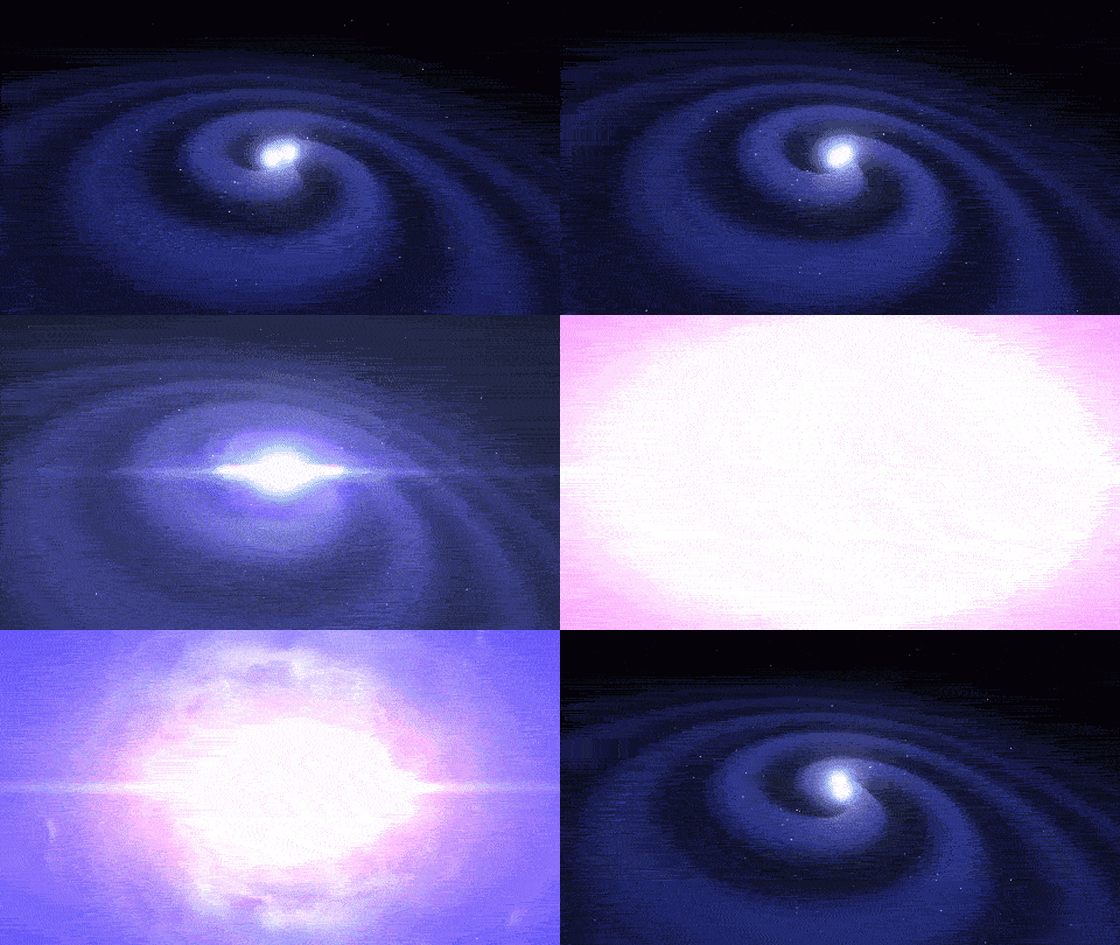
Supernovae belch gravitational waves too. But as vigorous as they are, it’s not clear that LIGO and Virgo could easily detect them. This new event was different. The neutron stars, originally born as massive companions in a double star system, warily circled one another until their dance ended in an explosion a thousand times more energetic than supernovae.