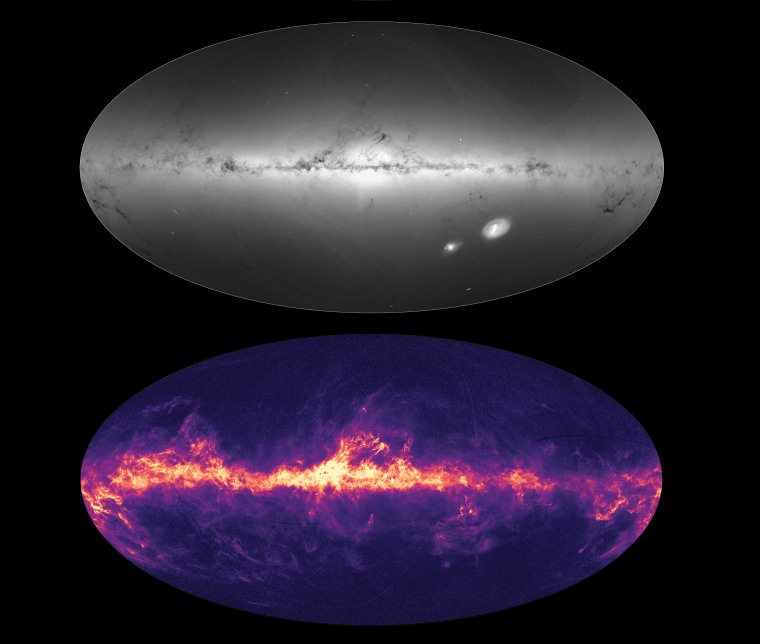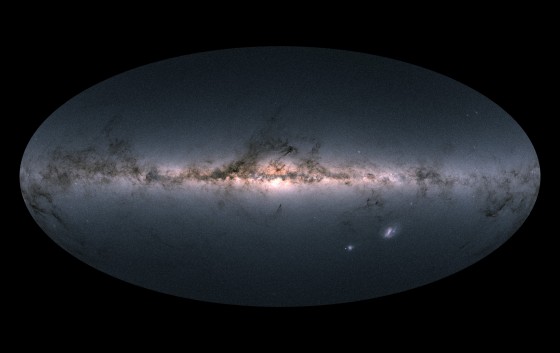
The European Space Agency has now mapped the Milky Way in unprecedented detail, releasing a stunning three-dimensional atlas of more than 1.7 billion stars in our home galaxy.
The new star map, created by ESA’s sun-orbiting Gaia space observatory and released to the public on April 25, was hailed by astronomers around the world as a data gold mine — one that will bring, via a process known as galactic archaeology, a better understanding of how our galaxy and others like it formed and evolved.
“I think it’s fair to say that the data from this release is going to revolutionize our understanding of the Milky Way galaxy,” Dr. Anthony Gonzalez, a University of Florida astronomer who is not involved with the Gaia mission, told NBC News MACH in an email.