Rockets have been the way to get satellites into orbit since the dawn of the space age. But Microsoft co-founder Paul Allen hopes to shake that up with help from the world’s biggest airplane.
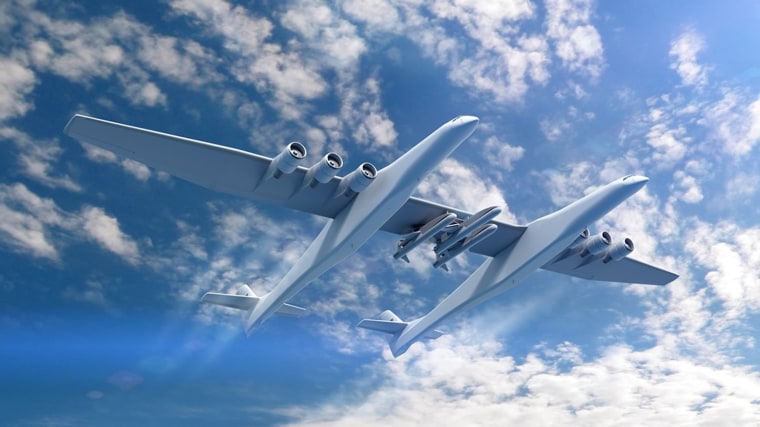
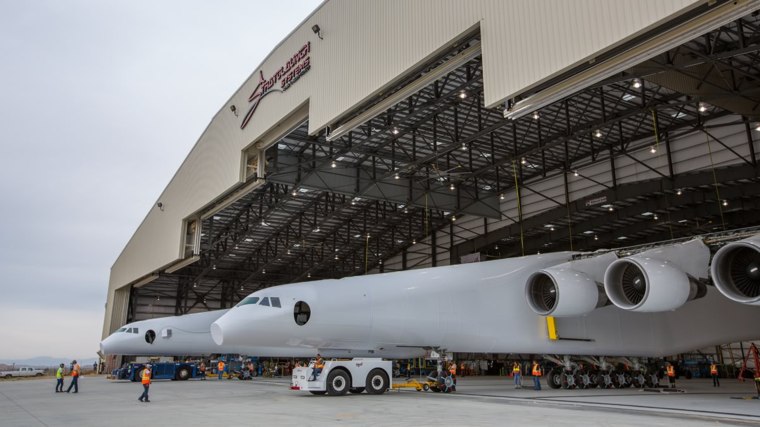
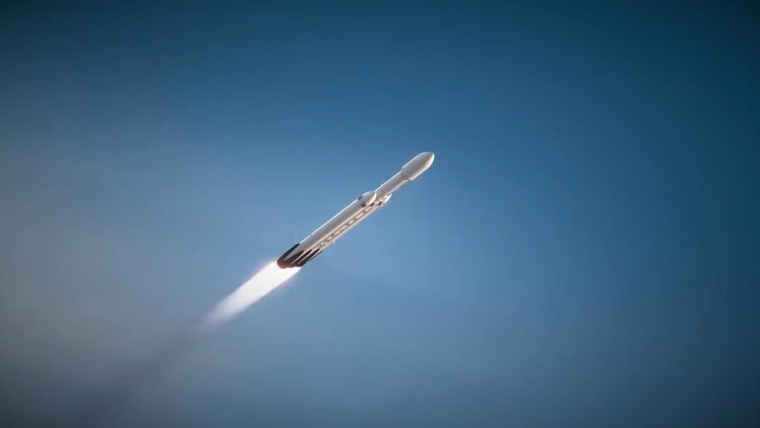
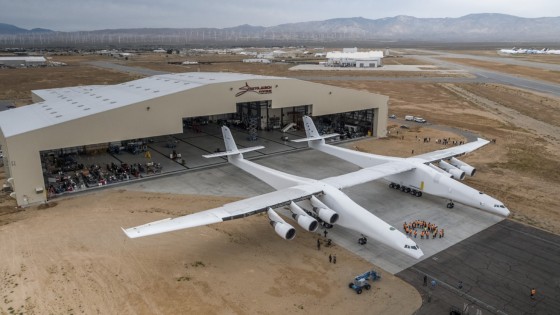
“Stratolaunch” is a 500,000-pound beast with twin fuselages and a wingspan of 385 feet. Allen’s Seattle-based company, Stratolaunch Systems, is developing it as a platform for lifting rockets into the stratosphere before launching them into space. It’s seen as a cheaper, more reliable route to low-Earth orbit (LEO) — the sweet spot for many kinds of satellites.
The plane is still in development and has yet to fly, but last December it taxied out onto the runway at the Mojave Air & Space Port in Mojave, California. In another test last Sunday, it hit a new top taxi speed of 46 miles per hour. If all goes according to plan, the plane will take its first test flight next year. As to when Stratolaunch might begin commercial operations, no date has been given.
New take on an old idea
Air-launching rockets into space isn’t a new idea. The Pegasus XL rocket built by aerospace contractor Orbital ATK launches from a modified Lockheed TriStar jetliner. NASA and Richard Branson’s Virgin Group have similar projects under development, as does the Defense Advanced Research Projects Agency (DARPA).
Related

But none of these other platforms is quite on the scale of Stratolaunch. Powered by six huge Pratt & Whitney turbofan engines, the aircraft is intended to carry up to 550,000 pounds to an altitude of 35,000 feet. It has room between its fuselages to suspend rockets from the central portion of the wing. The company has partnered with Orbital ATK to launch its Pegasus XL rocket and aims eventually to carry three on each mission.
Stratolaunch was designed by Mojave, California-based Scaled Composites, which specializes in concept aircraft. The company won the Ansari X Prize to launch the first private, reusable, manned spacecraft in 2004 with its SpaceShipOne, which was also launched from a plane.
Deep pockets
Despite the ambitious nature of the project, space entrepreneur Gary Hudson thinks it has a good chance of success — in part because of Allen’s deep pockets.
“If they choose wisely, they could provide crew and light cargo services to LEO for considerably less than current prices,” he says. “If they don’t, they will become a footnote to astronautical history for having built the world’s largest plane.” He added that if the plane doesn’t deliver as planned, it could become another ”Spruce Goose” — a reference to the behemoth flying boat built in 1947 that flew only once.