On the night of Friday, Oct. 6th, 24-year-old Yoav Shimoni stayed up late in Toronto to pack his bags for an early morning flight. When he checked his phone around midnight, Shimoni saw a WhatsApp message from his sister directing him to the Facebook page of his 74-year-old grandmother who lived in southern Israel.
When Shimoni opened the page, he found a video of his grandmother, Bracha Levinson, lying on the floor of her home in the Nir Oz kibbutz. A Hamas gunman was standing over the elderly woman, pointing a rifle at her and shouting as she bled to death. “I was in shock," Shimoni recalled in a telephone interview with NBC News. "I was confused about what I’m seeing.”
Shimoni said he learned of the massive terror attack from the video on his grandmother’s Facebook page before Israeli news alerts popped up on his phone.
“She was one of the first people to be murdered on Oct. 7th” he said. “The video was the men pointing guns at her and her covered in blood.”
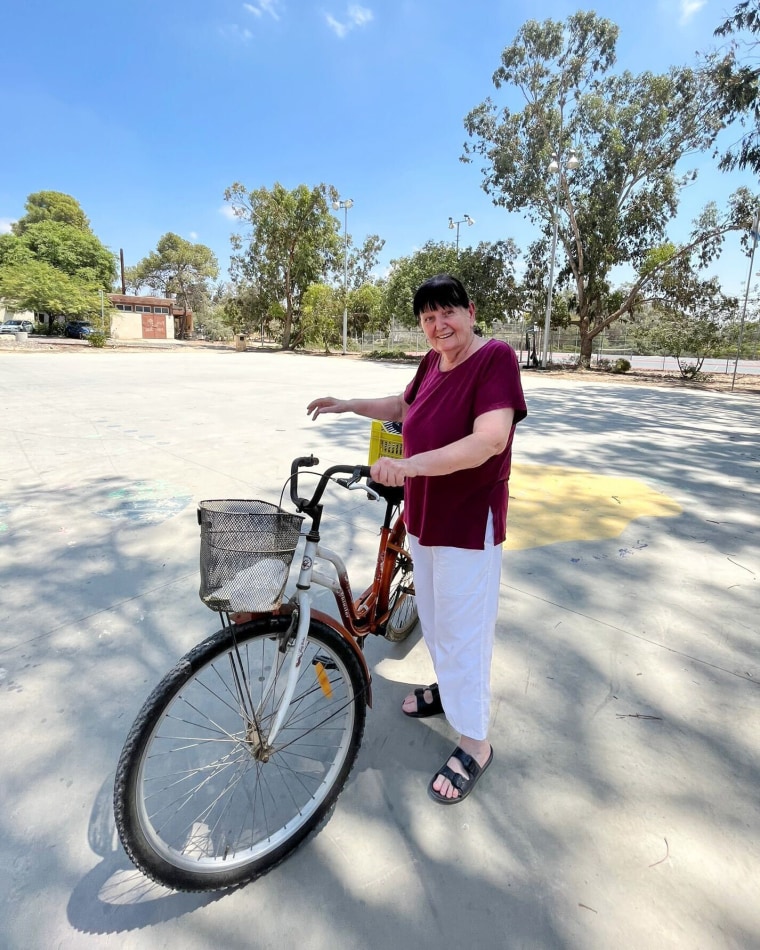
The video, which Shimoni shared with NBC News, showed that Hamas militants apparently used his grandmother's phone to film her death and then used her Facebook account to post it online.
Shimoni said he kept hitting the report tab on the video to alert Facebook and have it immediately taken down. But it took more than three hours for the Facebook Live video to be removed from his grandmother's page.
After a white supremacist broadcast on Facebook part of his attack on two mosques in Christchurch, New Zealand, that killed 51 Muslims in 2019, Facebook and other social media companies increased their efforts to block such content. But Meta and many other social media platforms recently made some cuts to once-robust moderation teams built in the wake of incidents like the one in Christchurch.
Hamas is currently barred from Facebook, Instagram and TikTok, but the group and its supporters have still found ways to post grisly videos of Israeli civilians being killed or kidnapped on Oct. 7 online.
Follow live updates on the Israel-Hamas conflict
A spokesperson for Meta, the parent company of Facebook, declined to comment on specific incidents. They referred to an Oct. 13 statement that the platform had removed or marked as disturbing more than 795,000 pieces of content for violating its standards in the three days following the terrorist attack. The Meta spokesperson said the company does not know how many of the messages were posted by Hamas.
Facebook also added a “Lock Your Profile” tool after the attack that allows users in the region to lock their Facebook profile in one step. “When someone’s profile is locked, people who aren’t their friends can’t download, enlarge or share their profile photo,”the statement said.
Meta is not alone in struggling to moderate content. Soon after the Oct. 7 attack, X, the platform formerly known as Twitter that is owned by Elon Musk, was overrun with falsehoods and extremist content. Researchers at the Institute for Strategic Dialogue, which tracks hate and extremism online, found that in one 24-hour period a collection of posts on X that supported terrorist activities received over 16 million views.
Telegram, a Dubai-based online platform with limited content moderation, has served as Hamas’ main platform for distributing online propaganda, including horrific GoPro and cellphone footage of Hamas members celebrating their barbarism on Oct. 7. Last week, Telegram announced it had placed limits on Hamas content, but it can still be widely viewed on the platform.
Shimoni said that the new efforts by Meta and other platforms to block such content was of little comfort to him after he watched his grandmother die on Facebook. "It’s a video of her dying," he said. "She was bleeding out, clenching her arms on her chest."
Documents found on the bodies of Hamas’ militants suggest that broadcasting atrocities online was a planned part of the attack, which killed more than 1,000 civilians, including children and babies.
A document labeled “abduction manual” was found on the bodies of some Hamas terrorists who had entered southern Israel. It included sections marked “communication” and “live broadcast" that directed kidnappers to broadcast their abductions of Israelis, but to not use up too much battery.
One Hamas terrorist also apparently used WhatsApp, which is also owned by Meta, to spread videos of the atrocities that he committed. Israeli officials recently played audio of a phone call to journalists in which the young man, using a cellphone he had stolen from an Israeli woman he had killed, called his parents in Gaza to brag about it.
“Mom, I killed more than 10 Jews with my own hands,” the Hamas member said. “Please be proud of me, dad.” The Hamas fighter then repeatedly urged his family to look at his WhatsApp feed to see what he had done.