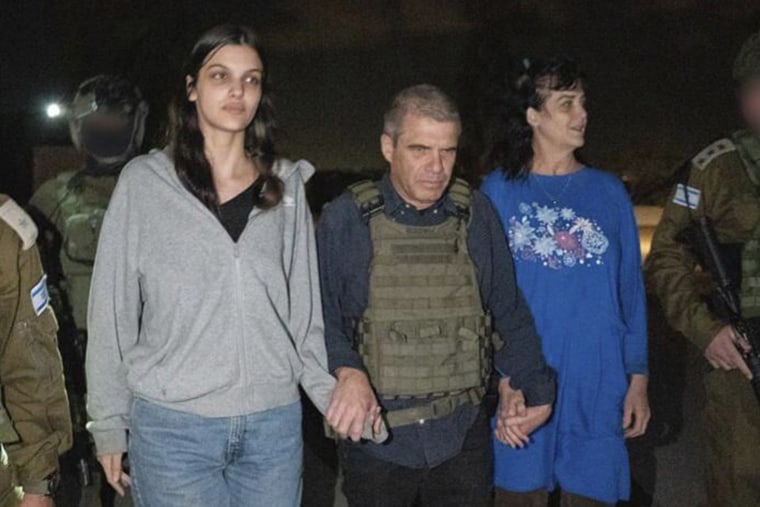
It took weeks of secret negotiations involving U.S., Israeli, Qatari and Egyptian officials, the heads of the CIA and the Mossad, and the personal intervention of President Joe Biden to convince a reluctant Israeli Prime Minister Benjamin Netanyahu to accept a four-day cease-fire that is expected to free 50 hostages from Hamas.
The negotiations, while ultimately successful, revealed the vast challenges that remain in freeing all of the roughly 240 captives seized during the group's Oct. 7 terrorist attack on Israel.
Throughout the talks, Hamas officials maintained that they had taken captive only about 70 Israeli soldiers and 50 women and children, according to a diplomat in the region with knowledge of the negotiations.
Hamas officials said the whereabouts of as many as 100 other captives are unknown but they are pursuing leads. The group claimed that "some Israelis were kidnapped by individual Palestinian gangs or smugglers," according to the diplomat.
The final agreement — the outlines of which had been on the table for weeks — wouldn’t have been accepted by Netanyahu without enormous pressure from Biden, according to a senior Israeli government official.
“This deal was a Biden deal, not a Netanyahu deal,” the official said.
Follow live updates on the Israel-Hamas war
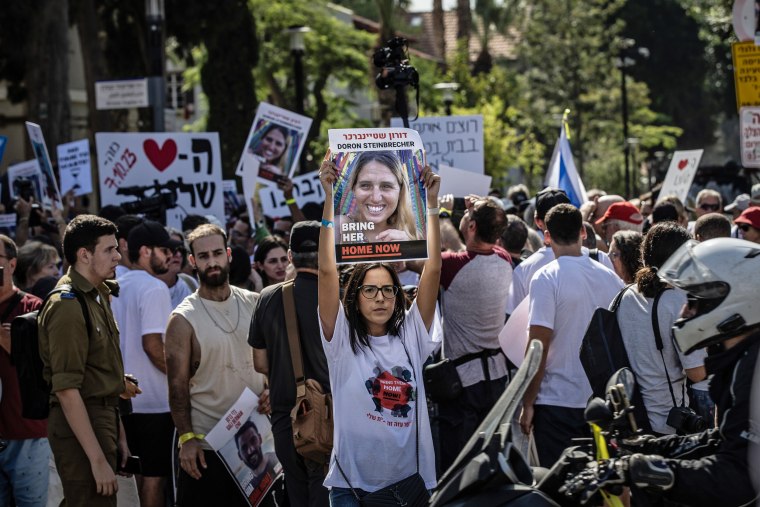
Getting to work immediately
American and Qatari efforts to secure the release of hostages began hours after the deadly Oct. 7 attack, which killed 1,200 people and was the worst terrorist attack in Israel’s history.
The diplomat said Hamas leaders were stunned by the success of the operation. “They said it was a chaotic situation, a lot of people went in,” said the diplomat, referring to Palestinians streaming into southern Israel after Hamas fighters breached a border fence in roughly 30 places.
At the same time, Israeli officials, horrified by Hamas’ killings of hundreds of civilians, said they were “not willing to entertain in any way a conversation with Hamas,” said the diplomat, adding, “there was zero trust between to the two parties.”
A Biden administration official later described the negotiations as an “extremely excruciating five-week process.”
As Israeli airstrikes in Gaza intensified, U.S. officials called for pauses in the fighting so food and aid could be delivered. They later called for the creation of humanitarian corridors so Palestinian civilians in northern Gaza could move south, officials said.
At the same time, representatives from Qatar, the oil-rich Arab nation where many of Hamas’ political leaders are based, again tried to broker talks.
Netanyahu, who was focused on destroying Hamas, put David Barnea, the head of the Mossad, Israel’s foreign intelligence service, in charge of negotiations.
The Israelis wanted the starting point for talks to be the immediate release of all hostages, a demand that Yahya Sinwar, the hard-line leader of Hamas in Gaza, was bound to refuse, Moty Cristal, a veteran Israeli hostage negotiator, told NBC News.
“He has to have some hostages to use as human shields for himself,” Cristal said of Sinwar.
So the Israelis began negotiating, via U.S., Qatari and Egyptian intermediaries, the release of captured women and children, Cristal said.
In Washington, National Security Council officials told Brett McGurk, the White House’s Middle East coordinator, and Joshua Geltzer, the National Security Council’s top lawyer, to secretly participate in the talks.