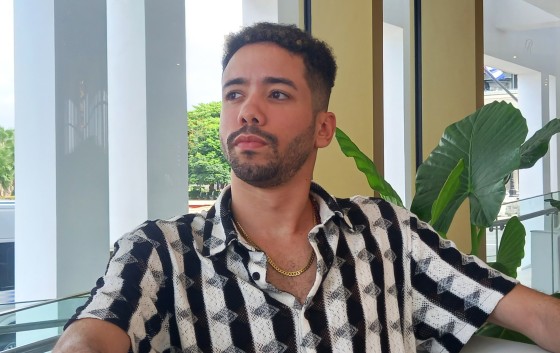
HAVANA — His business was among the first registered in Cuba in 2021 when the communist-run country began allowing private enterprise, banned since 1968.
Now, as the government tightens its grip over the private sector, Gabriel Mosquera Mourlot, 24, fears he may lose the wholesale business he runs, importing items such as pasta, rice, chicken and appliances in a country known for chronic shortages. He then sells them to businesses in the eastern province of Santiago and in the capital, Havana.
“I don’t think private businesses are going to grow,” Mosquera said at a hotel lobby in Havana. “On the contrary, we are going to ‘de-evolutionize’.”
A flurry of new restrictions on Cuba’s fledgling private sector, which has been flourishing since the government permitted private enterprise three years ago, has rattled many entrepreneurs. Privately run stores are a lifeline for those who can afford to buy food there. By some estimates, the private sector has surpassed the state as the largest employer.
Many advocates of the private sector, especially in the United States, have seen it as a vehicle for political change in Cuba, something the government staunchly rejects. Then-President Barack Obama made strengthening its private sector a centerpiece of his engagement policy toward the country.
The Cuban government blames the private sector for galloping inflation and corruption. The regulations on top of the already existing bureaucracy has left many, like Mosquera, feeling uncertain and worried about the future.
Restrictions target a growing area
The last round of restrictions targets the private wholesale industry, an area that has exploded in business in the past three years by limiting whom they can sell to. Previously, the government was the sole source for imports on the island.
But according to the government, the private sector has undergone such rapid growth that it will have imported $1.5 billion worth of goods by the end of the year — which is on par with the state, which is estimated to import between $1.7 million and $2 billion. As it is, private sector entrepreneurs must use a state-run company to import. Soon, they will have to go through another state-run company to sell.
Other recent measures include price caps on six popular products, such as chicken and vegetable oil. Some businesses lost money when these went into effect in July.
Private companies will soon have to pay for goods from Cuban bank accounts, which is nearly impossible. Cuban banks have very limited amounts of hard currency to exchange and many companies around the world avoid using Cuban banks, because of the U.S. embargo. Most Cuban businesses use bank accounts in a third country to pay vendors.
Only Cubans and foreigners with Cuban residency who spend more than six months a year on the island can open a business, limiting Cuban Americans who want to invest. And a new national institute will oversee private businesses.
The wave of restrictions comes as Cuba’s economy has been in a downward spiral with less tourism and tightened U.S. sanctions that began under the Donald Trump administration and continued under President Joe Biden. Inflation, shortages in medicine and food in state-run stores, as well as hourslong blackouts in many parts of the country due to lack of fuel, have made daily life tough.
Privately owned stores offer relief to those who can afford it, like Cubans who receive remittances from their family abroad. They remain out of reach to Cubans who rely on a state salary or pension. The economic crisis has led to the emigration of more than 1 million Cubans, about 10% of the population, between 2022 and 2023, according to government figures.
Many economists agree the private sector already plays a vital role in the economy and is essential for improving economic conditions.
“What the government should be doing is precisely the opposite,” said Ricardo Torres, a faculty fellow at American University in Washington, D.C., who was previously with the Center for the Study of the Cuban Economy at the University of Havana. “They should be taking measures to incentivize the private sector and give them the security they need to invest more, expand and create more employment.”
He thinks restrictions are being taken because in the public eye, the government wants to blame the private sector for high inflation, something many economists disagree with, and show it is doing something about it. He said he believes the government wants to rein in the private sector because it’s undergoing rapid growth at a level the government is not comfortable with. Meanwhile, state enterprises, a fundamental component of Cuba’s economic model, are less productive.
“They fear the private sector because it’s autonomous, they make their own decisions, and they see that as threat,” Torres said.
Cuba’s government did not respond to a request for comment about its new policies. Officials have acknowledged in the past that the country needs the private sector, but have said that regulations are necessary to curb inflation they blame on the private sector, and also to rout out corruption. Prime Minister Manuel Marrero said during a National Assembly session in July that the regulations are aimed to control the private sector and not shut them down. In the past, he has referred to entrepreneurs as being “millionaires,” something the communist government is uncomfortable with.

