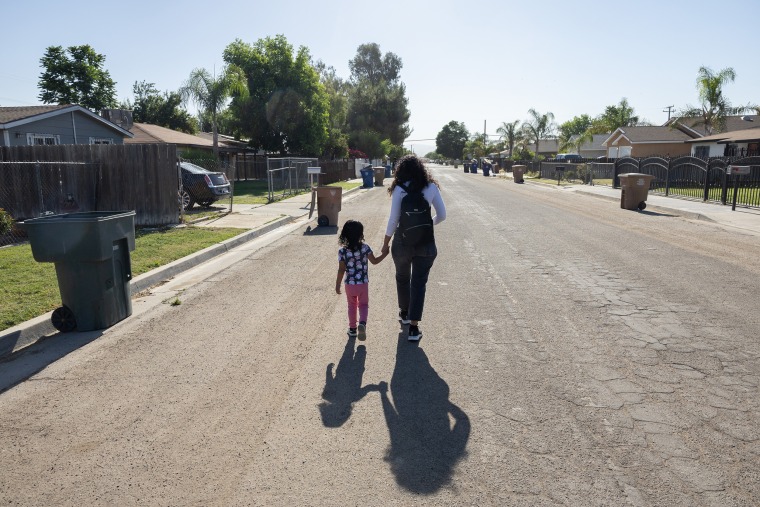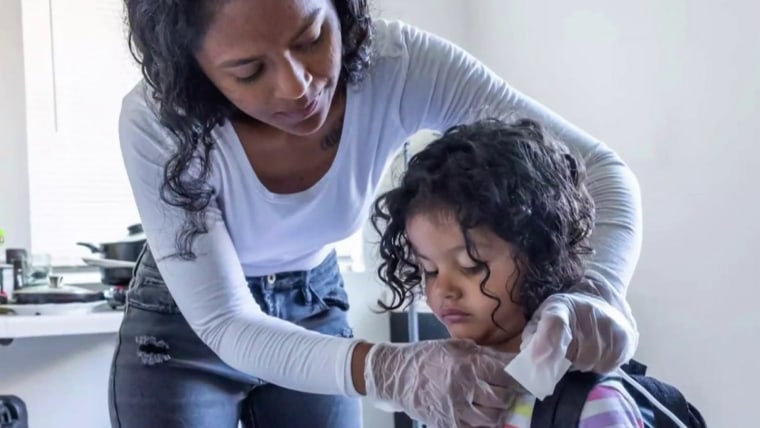
A Mexican girl is at risk of losing access to the lifesaving treatment she has been receiving in Los Angeles after her family's legal immigration status was abruptly revoked.
Her family is now fighting to have their status reinstated.
“If they deport us and take away my daughter's access to her specialized care, she will die,” Deysi Vargas, the girl’s mother, said Wednesday in her native Spanish at a news conference.
Her 4-year-old daughter, who is being identified only by the initials S.G.V., was born with a defect in her small intestines known as short bowel syndrome. The condition does not allow her body to absorb nutrients from regular food.
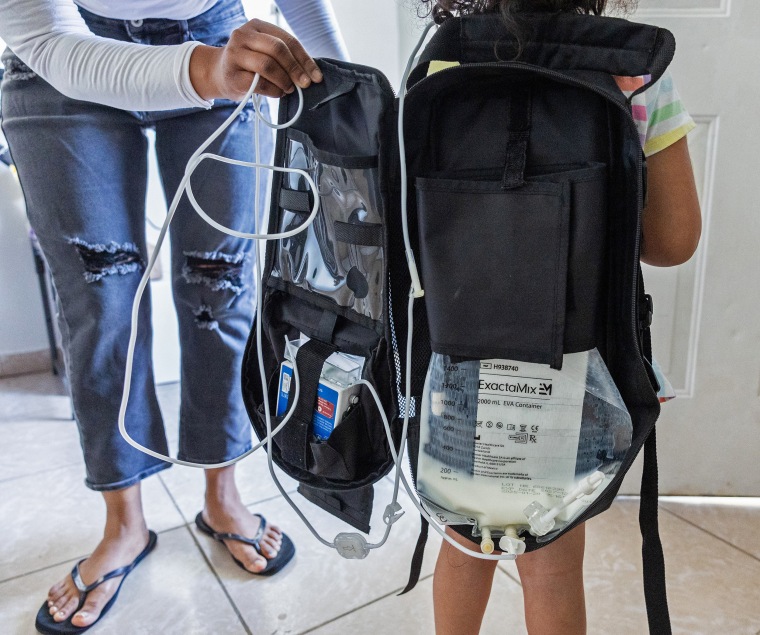
Instead, the girl receives all the nutrients she needs intravenously through a treatment known as Total Parenteral Nutrition, or TPN.
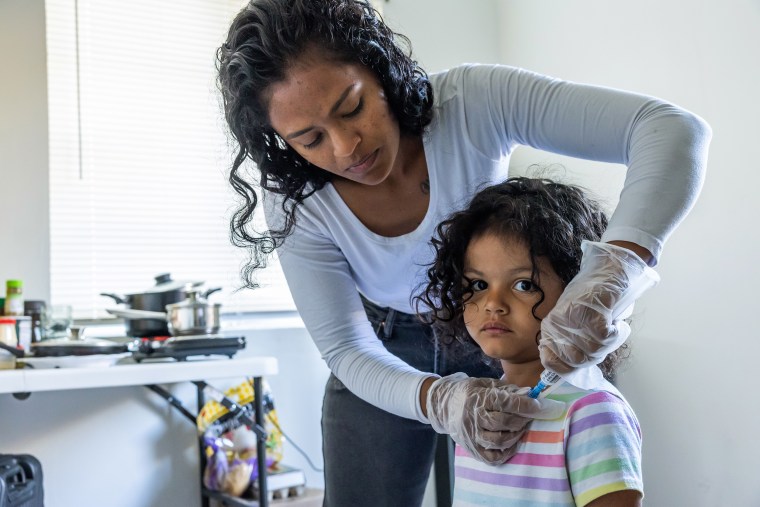
"The doctors that are treating her have stated very clearly that if her treatment is interrupted, she will die within days," Gina Amato, an attorney for the family, told NBC News. "This is a classic example where deportation would equal death for this child. It is a very desperate situation.”
To prevent malnutrition, S.G.V. receives her TPN treatment each night at home for at least 14 hours, the mother and her attorneys said.
During the day, when the girl goes to pre-school or accompanies her mother to the supermarket, S.G.V. wears a portable version of the treatment in a backpack.
At least four times a day, Vargas spends one hour connecting her daughter to gastric tubes that attach to the backpack containing the nutrients she needs.
The company that manufactures the equipment that delivers the intravenous nutrition the girl needs does "not allow the equipment to travel outside the United States," Amato said at the news conference, adding that few places outside the U.S. can safely and effectively administer this treatment.
Before coming to the United States nearly two years ago, S.G.V. “was in really terrible shape and was having a very difficult time surviving,” Amato said.
The girl had been receiving medical care in Mexico, spending many hours in a hospital bed receiving her nutrients intravenously, according to Amato and Vargas.
S.G.V. was "not growing or getting any better," Vargas said.
Desperate to get better medical care for their daughter, Vargas and her partner used the now-defunct CBP One app on July 2023 to legally enter the U.S. through the southern border. The family was then granted humanitarian parole for the purpose of seeking medical treatment for S.G.V.
The girl was quickly taken to a hospital in San Diego upon their arrival because she was in such poor health, the family and their attorneys said. A year later, she was referred to the Children’s Hospital in Los Angeles, which has one of the nation's best gastroenterology programs.
Doctors there have been caring for S.G.V. for the past year, also monitoring the TPN treatment she receives.
"Now, with the help my daughter receives in the United States, my daughter has the opportunity to leave the hospital, see the world, and live like a child her age," Vargas said.
S.G.V. was at the news conference with her TPN backpack. She spent most of the time playing cards and making some arts and crafts to show how the treatment has helped improve her quality of life.