A young barber. A gay makeup artist. A professional soccer player.
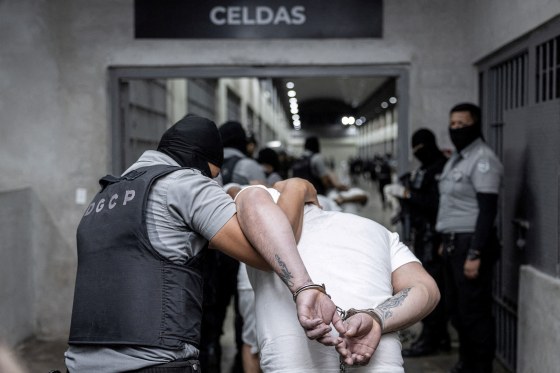
They are all Venezuelan migrants whose families or attorneys have claimed were unfairly deported from the United States to a notorious megaprison in El Salvador after the Trump administration accused them of belonging to the Tren de Aragua gang.
Weeks after the migrants were deported, court documents show immigration officials relied on a scorecard-like system using evidence such as everyday tattoos to accuse those and other Venezuelan men and justify their deportations.
The government's reliance on tattoos and social media posts as sufficient reason for deportation to a third country is what families and legal representatives have been fighting in the courts as relatives worry over the men's fate.
A document the American Civil Liberties Union filed in federal court Friday shows a copy of an “ALIEN ENEMY VALIDATION GUIDE,” requiring immigration officials to act against Venezuelans over age 14 who are not U.S. citizens or permanent residents.
The guide has instructions about how to determine whether a person is removable under the centuries-old Alien Enemies Act of 1798, which President Donald Trump invoked last month to quickly deport over 200 Venezuelan nationals.
It includes a type of scorecard of up to 81 points across 20 items and six categories.
According to the guide, a tally of 8 points or higher — which includes a person's tattoos and social media posts displaying symbols that officials say have been linked to Tren de Aragua — can be grounds for deportation after consultation with a Department of Homeland Security supervisor or legal adviser.
The document and 20 others from Tren de Aragua experts, as well as from attorneys and the deported men's relatives, are part of a federal lawsuit in which the ACLU argues that Trump’s unprecedented invocation of the Alien Enemies Act is unlawful.
“The unreliability of the factors on the checklist reinforces why it is essential that these individuals are given due process to contest their inclusion in this unlawful process,” Lee Gelernt, the lead attorney at the ACLU working on the Alien Enemies Act lawsuit, told NBC News in a statement.

Asked whether DHS considered the scorecard method to be an effective one, an agency spokesperson said in an email: “DHS has thorough intelligence assessments to determine if an individual is a member of one of these vicious gangs. These terrorists are a threat to national security and the safety of Americans. The premise that these individuals are not gang members is based on faulty assumptions.”
A Trump administration official also told NBC News the White House has confidence in the ongoing efforts by immigration agents, saying their intelligence assessments go well beyond single tattoos.
'The only sin'
But after last month's deportations, families and attorneys of seven Venezuelan immigrants sent to El Salvador have told NBC News, Telemundo and MSNBC that their relatives were unjustly targeted based on having ordinary tattoos that do not necessarily signal gang affiliation.
“The only sin my brother has committed is to have tattoos,” Eudomar Chacin said Tuesday about his brother Jhon Chacin, who was deported with the first group of 200 men.
In Venezuela, Jhon was a tattoo artist and displayed samples of his artwork on his body, his brother said, insisting he is not part of Tren de Aragua. “He never drank; he never smoked. He likes tattoos. That’s it,” he said. “It’s incredible how this is being handled.”
Eudomar said his brother entered the United States through the CBP One app in October and was held in detention until he was deported.
The sister of Fritzgeralth De Jesús, who is also in the Salvadoran megaprison, said, “This is very unjust — many people in Venezuela decide to get tattoos because they see it as art.”
She said that when she and De Jesús entered the United States legally through the now-obsolete CBP One app, authorities constantly asked about his tattoos and whether he was a member of Tren de Aragua.


