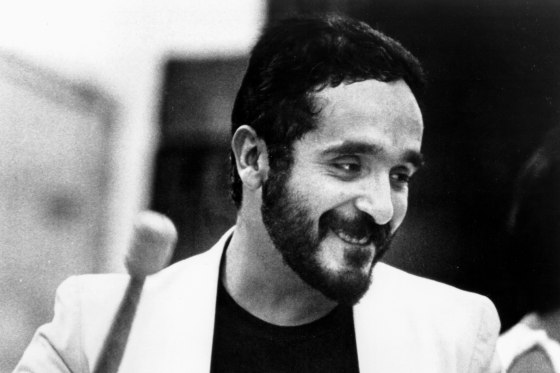
The legendary musician Willie Colón, one of the most iconic figures in salsa and the Nuyorican salsa movement, died Saturday at the age of 75, his family confirmed in a message posted on his social media accounts.
“It is with profound sadness that we announce the passing of our beloved husband, father, and renowned musician, Willie Colón. He departed peacefully this morning, surrounded by his loving family,” the statement posted on Facebook reads.
“Although we mourn his absence, we also rejoice in the eternal gift of his music and the cherished memories it created, which will live on forever,” his family added.
The Puerto Rican artistic community had been asking for prayers for the singer-songwriter on Friday, as he was receiving medical attention for reported respiratory complications.
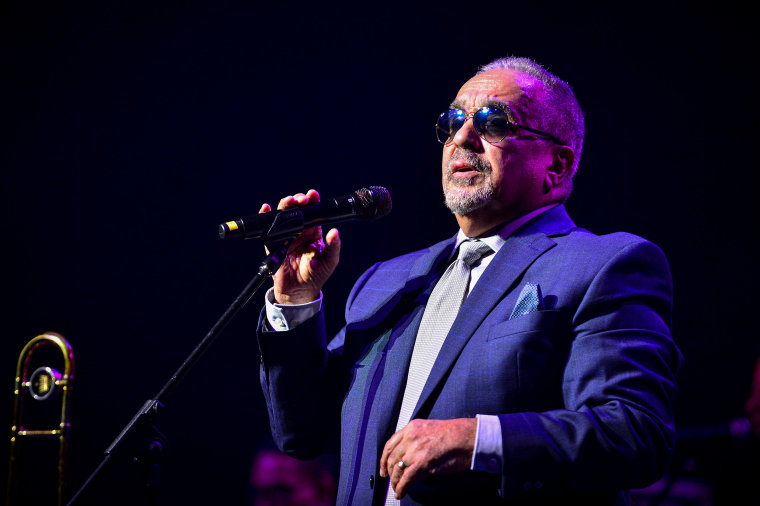
William Anthony Colón Román, a musician of Puerto Rican descent, was born on April 28, 1950, in the South Bronx of New York City. He was a poet, composer, arranger, performer, folklorist, trombonist, producer, and musical director.
It was his grandmother Antonia (“Toña”) who instilled in him the seed of Puerto Rican identity and taught him to speak Spanish, a language that Willie’s own parents had lost on the streets of New York at a time when bilingualism wasn’t even a concept.
At 16, he recorded his first album (“El Malo”) with Héctor Lavoe in 1967. Together, they formed one of the most important salsa duos on the Fania record label.
Lavoe, in particular, provided him with the daring themes of the streets and gave him his first music lessons, as well as the irreverent attitude necessary to experiment with instrumentation and structure. His genius prevailed.
Formal musical education began with the elementary school flute, which he secretly took home. Later, he discovered the bugle, an instrument he began to master as a hearing child at age 11. When he encountered the trumpet at 13, he began taking lessons, and his career began to take shape, as did the distinctive style and sound with which he would forge his path to history.
In 1969, his “Che ché colé” was a pivotal moment in the Afro-Caribbean conquest of popular music in Latin America. Although some resisted accepting it, his famous Ghanaian song with a Puerto Rican bomba rhythm became a salsa classic.
With Lavoe, Willie Colón’s orchestra popularized songs such as “Calle Luna, calle Sol”, “Abuelita”, “Ah, ah, oh, no”, “Ghana’e”, “El día de mi suerte”, “La murga” and “Juana Peña”, among others.
In 1976, he challenged the established norms with his production of a ballet, “El baquiné de los angelitos negros,” which ushered in his symphonic salsa era. After his recording period with Lavoe, Willie decided to launch his own career as a singer, releasing albums such as “The Good, Bad and The Ugly” (1976) and “Solo” (1988).
In 1977, he introduced Rubén Blades to the recording industry with the album “Metiendo mano” and collaborated together in the years to come.
Willie Colón boasts an impressive discography with over 40 albums, earning him nine Gold Records and five Platinum Records. He sold more than eight million records worldwide, with 16 LPs to his credit, including collaborations with Lavoe, six with Blades, and four with Celia Cruz.
In 1979, he launched his solo career. He was nominated eight times for Grammy Awards in the tropical music category. He also acted in film and television productions such as “Vigilante,” “The Last Fight,” “Salsa,” “Miami Vice,” and the telenovela “La Intrusa.”
His record as an activist is equally impressive. Willie Colón is recognized for his sociopolitical activism as readily as his musical genius. His endorsement is coveted among New York politicians. His words on stages in the city’s Latino neighborhoods are as powerful as his music.
He loved aviation, boxing, horseback riding, and computer programming. He was a fiercely self-taught man who, in addition to music, studied everything from physics to business administration on his own. Together with Julia Colón Craig, he fathered three of his four children.
Willie Colón’s last performance in Puerto Rico was on August 9, 2025, in a sold-out concert in San Juan, with the Puerto Rico Philharmonic Orchestra, conducted by Maestro Ángel ‘Cucco’ Peña.
