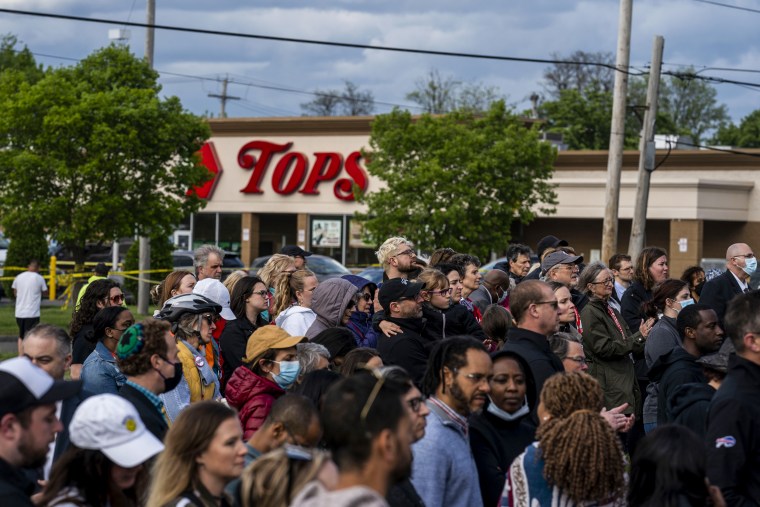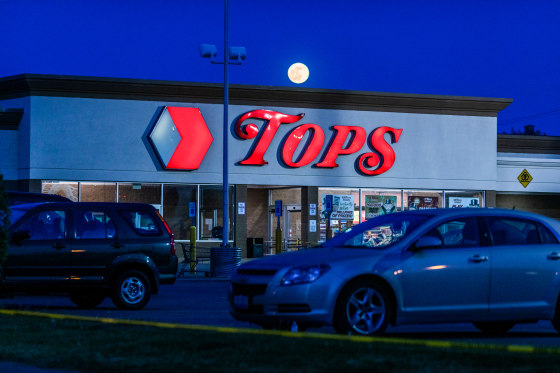
Dakarai Singletary couldn’t sleep Saturday night, after the shooting at Tops Friendly Markets, a grocery store up the street from his home in Buffalo, New York. The shooting, allegedly carried out by an 18-year-old white man, left 10 dead and three injured. Eleven of the victims were Black.
The supermarket is now temporarily closed after the shooting, leaving Singletary’s community with even less access to fresh food. That kept him awake that night, planning what to do.
“I read the news everyday, and when I see mass shootings I always pray,” Singletary, 27, said. “But when it’s in your neighborhood and I’d hop on Instagram and see that it was somebody that I know who was affected, it hits harder.”
Buffalo’s Masten Park is one of the many Black neighborhoods across the country that has limited access to grocery stores selling fresh goods at an affordable price. Now that the supermarket, which opened in 2003, has temporarily closed in the shooting’s aftermath, it poses new challenges for residents — many of whom walk or rely on public transportation and who now must find alternative food stores that are farther away and more difficult to access.
Tops was the only accessible supermarket on the east side of Main Street, where more than 80 percent of the residents are Black and the median household income is less than $20,000.
Singletary said that many of the residents rely on corner stores that do not offer healthy food.
“It’s new Checkers, new McDonald’s, new Taco Bells — all that,” he said. “But no smoothie shops, no fresh fruits … no grocery stores.”
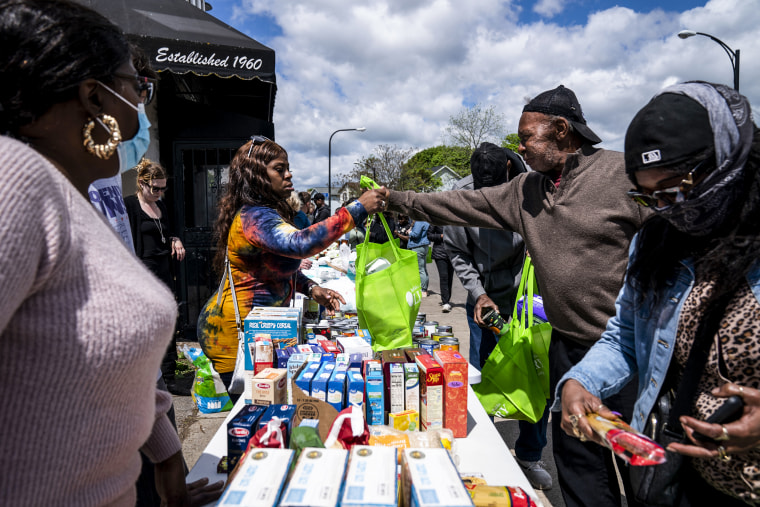
After the shooting, Singletary created the “Free Fresh Produce” initiative, which connects with local farms to provide residents with fresh produce at four stands throughout the area. The organization is also collecting donations for the families of the loved ones killed in the shooting, which will fund travel arrangements and funeral costs. So far they’ve raised more than $6,000.
Singletary is also delivering groceries to the homes of residents, many whom are seniors and traumatized by the shooting, to ensure they get quality, healthy food.
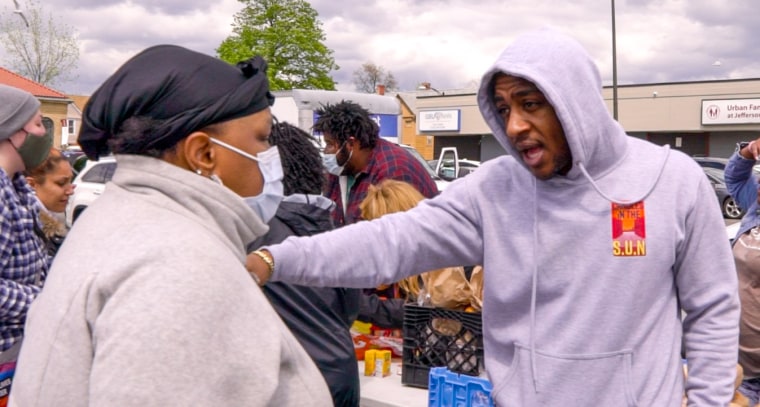
He also said that the closing of Tops would have a ripple effect on his community.
“That’s why I’m setting up initiatives to where we can be active — not just for this week doing this, but we’re going to be doing this regularly because a lot of trust has to be built back up before we can even attempt to think that this store can be as helpful as it once was,” he said.
Singletary, who returned to the area in 2019 after graduating from college, said he has a close relationship with many Black residents in Buffalo, since his nonprofit Candles in the S.U.N. (“Save Ur Neighborhood)” provides resources and mentorship to the community. His recent initiative is part of the organization’s efforts to help the majority Black neighborhood get access to healthy food. In November 2021, the organization distributed more than 2,500 meals to families on Thanksgiving Day.
Singletary said that his city, along with other segregated areas across the country, is labeled “The Mississippi of the North” because of its history of racist redlining and restrictive covenants that prevented Black homeownership and led to segregated neighborhoods. According to a 2018 report by the Partnership for the Public Good, Buffalo’s Black residents are six times more likely than white residents to live in a community that does not have a grocery store. The report also found that in the Buffalo-Niagara region, only 10 percent of Black residents live in areas with opportunity, which includes access to healthy food, compared to more than 60 percent of white people who have such access.
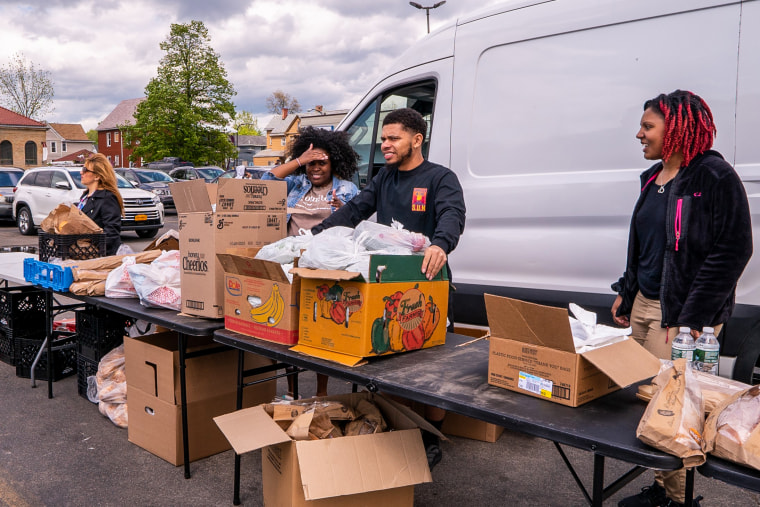
Kathy Sautter, a public and media relations manager for Tops Friendly Markets, said in a statement to NBC News that the store will provide free shuttle buses for residents to local grocery stores and pharmacies and is working with community leaders to provide free food and supplies.
Lyft is also offering free rides to the grocery store for the neighborhood’s residents. Even though many are stepping in to help, Singeltary said some residents are afraid to leave their homes.
“PTSD is real,” he said. “If I’m an older Black resident in Buffalo, New York, I do not feel comfortable going to another grocery store right now.”
Angela Odoms-Young, an associate professor of nutritional sciences at Cornell’s College of Human Ecology, said that the shooting in Buffalo shows the intersections of structural and physical violence. In addition to the loss of lives and ongoing trauma, she said the shooting creates more hardship for residents, such as the loss of jobs with the closing of the store.
“The jobs that Tops provided are not there, and then who wants to go work in a place where you’ve been at the site of white racialized trauma?” Odoms-Young said.
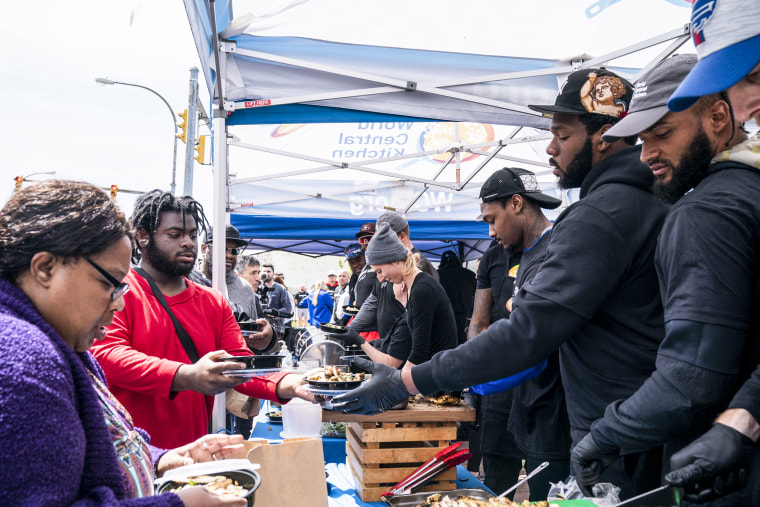
“This conversation is happening all over the country — when one store closes, then all of a sudden people are left again without anything,” Odoms-Young said, “and that is the problem. We need a full ecosystem within Black communities that’s diverse enough to withstand one store closing.”