Robert Duvall, the commanding and supremely versatile actor who earned a lasting place in American movie history as a stoic Mafia consigliere in “The Godfather,” a surf-loving Army colonel in “Apocalypse Now” and a washed-up country crooner in “Tender Mercies,” died Sunday.
He was 95.
Duvall died peacefully in his home in Middleburg, Virginia, with his wife at his side, according to a statement from his family.
He did not want a formal service, so his family encouraged fans to honor his memory by "watching a great film, telling a good story around a table with friends, or taking a drive in the countryside to appreciate the world’s beauty."
In a prolific Hollywood career that spanned nearly six decades, Duvall deftly alternated between leading and supporting roles, delivering performances of coiled fury and quiet gravitas. He fully inhabited each character, whether portraying a ruthless TV executive in “Network” (1976) or a passionate Pentecostal preacher in “The Apostle” (1997).
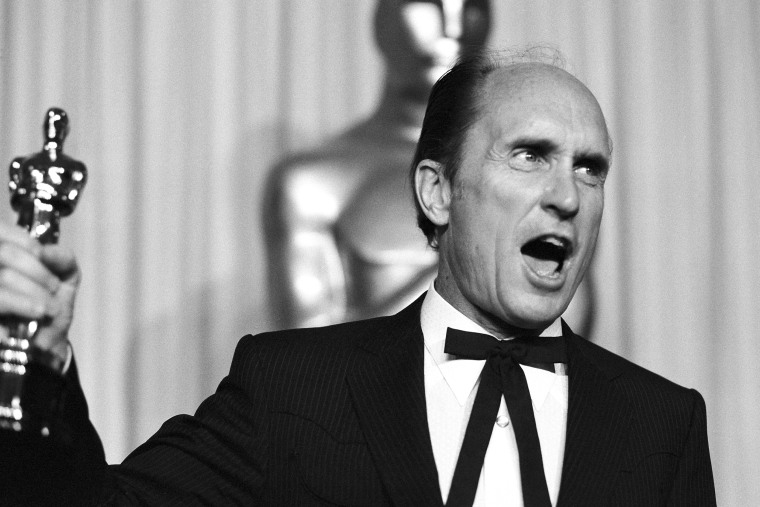
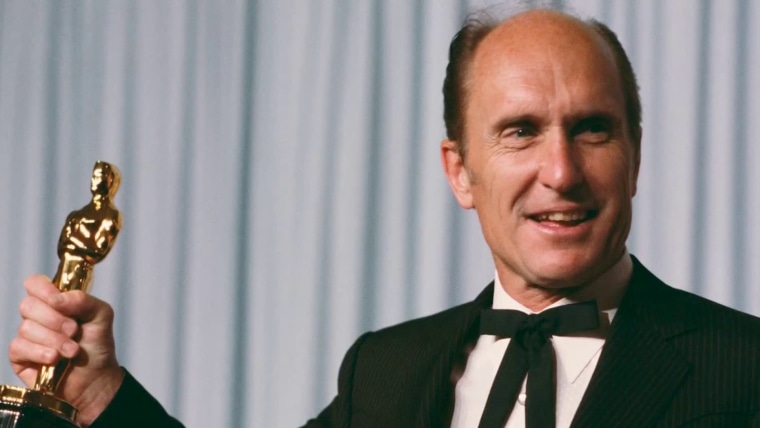
He was nominated for seven Academy Awards and seven Golden Globes. He won the best actor Oscar in 1984 for his turn as alcoholic country singer Mac Sledge in Bruce Beresford’s “Tender Mercies.”
Robert Seldon Duvall was born Jan. 5, 1931, in San Diego to Mildred Hart, an amateur actress, and William Duvall, a U.S. Navy rear admiral. He grew up on Navy bases around the country — including the U.S. Naval Academy in Annapolis, Maryland — and graduated from Principia College in Elsah, Illinois, in 1953.
He served two years in the U.S. Army during the Korean War. When Duvall returned to stateside, he studied drama under the storied instructor Sanford Meisner at New York’s Neighborhood Playhouse, where his classmates included Dustin Hoffman, Gene Hackman and James Caan.
In those years, Duvall made a living working odd jobs around New York and roomed with Hoffman and Hackman. He appeared in various Broadway and off-Broadway plays, including productions of Arthur Miller’s “The Crucible” and “A View from the Bridge,” and landed guest spots on popular television shows such as “The Twilight Zone.”
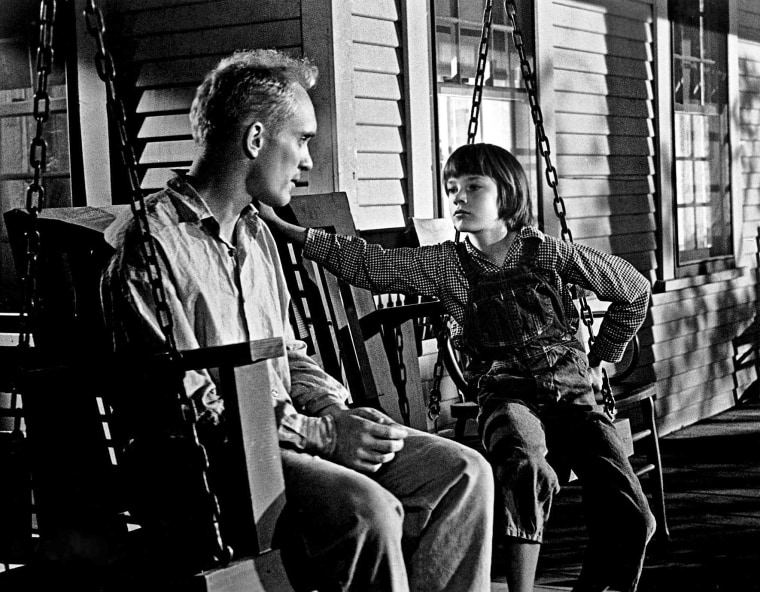
He did not make his film debut until age 31, taking on the small but crucial role of Arthur “Boo” Radley in the 1962 adaptation of Harper Lee’s “To Kill a Mockingbird.” He continued to build his reputation throughout the 1960s, delivering memorable work in the John Wayne flick “True Grit” (1969) and the Francis Ford Coppola character study “The Rain People” (1969).
In the 1970s, Duvall emerged as one of the key figures of the “New Hollywood” movement. He frequently collaborated with visionary directors and helped reshape the face of American movie stardom along with other unconventional leading men — a group that included Al Pacino, Robert De Niro and former roommates Hoffman and Hackman.
He was an important member of Robert Altman’s sprawling ensemble cast in the anti-war satire “M*A*S*H”(1970), playing the comically self-righteous Maj. Frank Burns, and he embodied the title character in George Lucas’ feature debut “THX 1138” (1971), a dystopian sci-fi thriller released six years before the original “Star Wars.”
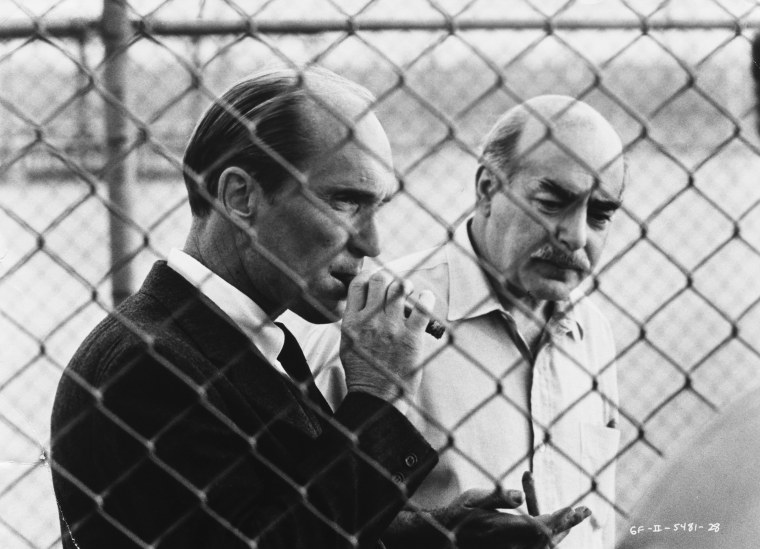
Duvall reached new heights of fame with his indelible performance as the calmly calculating Corleone family attorney Tom Hagen in Coppola’s “The Godfather” (1972), which landed him his first Oscar nomination, and “The Godfather Part II” (1974), which featured an expanded role for his character.
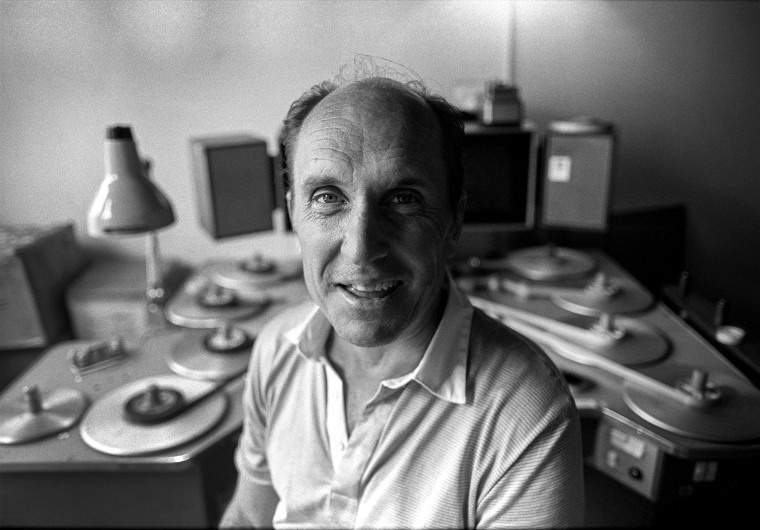
“It always comes back to ‘The Godfather.’ The first ones are two of the best films ever made. About a quarter of the way into it, we knew we had something special,” Duvall told the San Francisco Chronicle in 2010.
He did not show up in the third “Godfather” chapter, released to mixed reviews in 1990, reportedly because he could not reach an agreement with Paramount Pictures over his salary.
Duvall, who was once memorably described by People magazine as “Hollywood’s No. 1 No. 2 lead,” continued to make his mark in the late 1970s and early 1980s. He earned rave reviews as the cruel Lt. Col. Bull Meechum in “The Great Santini” (1979), an adaptation of a novel of the same name by Pat Conroy.
The same year, Duvall portrayed the bellicose, larger-than-life surfing enthusiast Lt. Col. Kilgore in Coppola’s explosive Vietnam War epic “Apocalypse Now,” delivering a world-famous line under the rim of a black Stetson cavalry hat: “I love the smell of napalm in the morning.”
“I don’t know how many people have come up to me over the years and repeated to me, as though speaking a secret, ‘I love the smell of napalm in the morning.’ They act like only the two of us know that line,” Duvall told the Daily Telegraph in 2003.