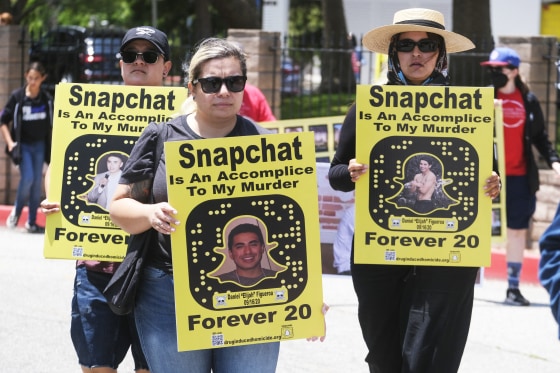
Relatives of more than 60 young people who died of fentanyl overdoses have filed an expanded version of their lawsuit against Snap Inc., arguing that the popular messaging platform Snapchat is a defective product because its disappearing messaging feature facilitates the trade of illegal drugs.
“Snap and Snapchat’s role in illicit drug sales to teens was the foreseeable result of the designs, structures, and policies Snap chose to implement to increase its revenues,” said the new complaint, filed at midnight Tuesday in state court in Los Angeles.
“Snapchat is the go-to means to distribute drugs to children, teens, and young adults through social media, and is involved in a far greater number of fentanyl poisoning deaths of U.S. teens than other social media apps," the complaint said.
In a statement, Snap responded that the complaint “is riddled with false claims about how the Snapchat app works” and about the company’s “ongoing efforts to aggressively combat drug activity on our platform and shut down drug dealers.”

Deputy Attorney General Lisa Monaco and Drug Enforcement Administrator Anne Milgram met in April with Snap executives, a company spokeswoman acknowledged. Monaco told reporters the meeting was with a cross section of social media company representatives to “discuss how they can — how they must — do more to stop the sale of fentanyl on their platforms.” Snap said in a statement it welcomed the meeting. NBC News has previously reported that FBI agents have interviewed parents of children who overdosed after buying drugs using Snapchat, though there is no indication the company is the target of a criminal investigation.
The 205-page complaint — a newer version of a lawsuit filed state court in October 2022 — portrays SNAP as having been born of a desire to conceal inappropriate behavior, noting that its co-founders, who were Stanford students at the time, have described disappearing photos and messages as key factors in their design.
“A motivation for Snapchat’s disappearing feature — not just disappearing as between users but permanently destroyed on the back end as well — was to … provide cover for those engaged in illicit and illegal conduct,” the lawsuit says.