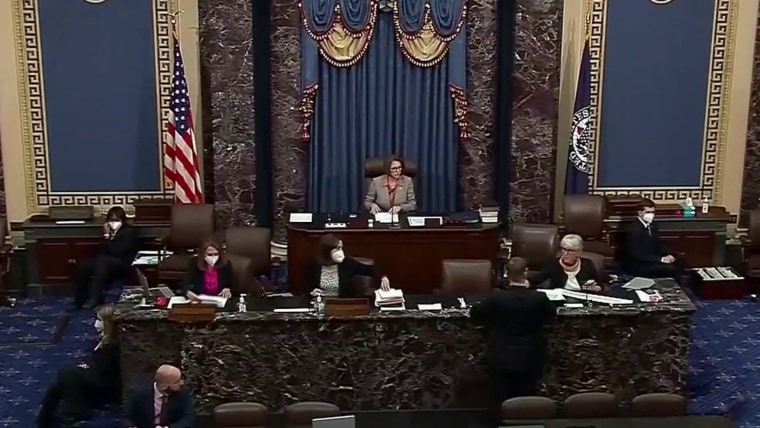
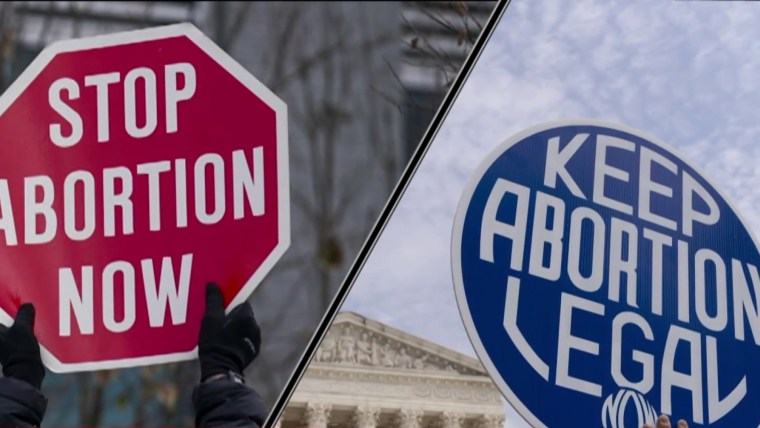
In his leaked draft Supreme Court opinion, Justice Samuel Alito argues that overturning Roe v. Wade would allow “women on both sides of the abortion issue to seek to affect the legislative process.”
If women in a post-Roe era don’t like state laws that restrict abortion access, or laws that preserve the right to have an abortion, Alito envisions a world in which they can step up and change them. Women can vote, he pointed out, and often do so in higher numbers than men. They can lobby and run for office.
But advocates for voting access and civil rights say that Alito’s depiction does not account for the parts of the country, particularly in the South, where laws make it harder for the poor and voters of color to cast their ballots, and where racially polarized voting can make it more difficult for abortion rights candidates to gain ground.
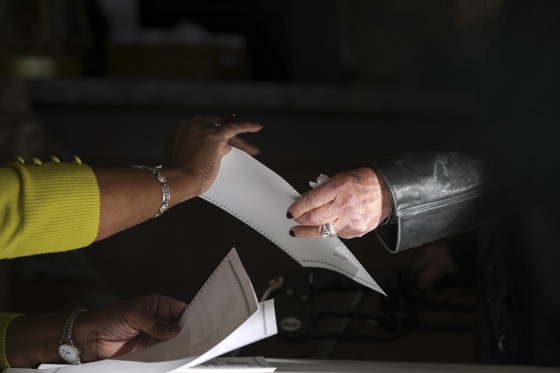
Southern states — including Mississippi, Georgia and Texas — that are poised to significantly limit or outlaw abortion with few exceptions are also some of the toughest places to participate in elections, or have recently passed voting restrictions, according to researchers, civil rights advocates and a review of federal lawsuits.
“Justice Alito has a ‘Schoolhouse Rock’ version of how democracy is supposed to work,” said Michael Li, senior counsel at the Brennan Center for Justice’s Democracy Program at New York University, which supports voting rights. “But when you go to the states that’s not actually how democracy works for a whole host of reasons, whether it’s gerrymandering or laws that make it harder to vote.”
The idea that state legislators are voted out if they do something their constituents don’t like oversimplifies the ways political mechanisms, like gerrymandering, can shield elected officials from blowback, Li said.
Even if 50 percent of a state’s voters believe abortion should be legal, that isn’t always reflected in the legislature, where elected officials have drawn their own districts in ways that might skew representation away from the majority of voters.
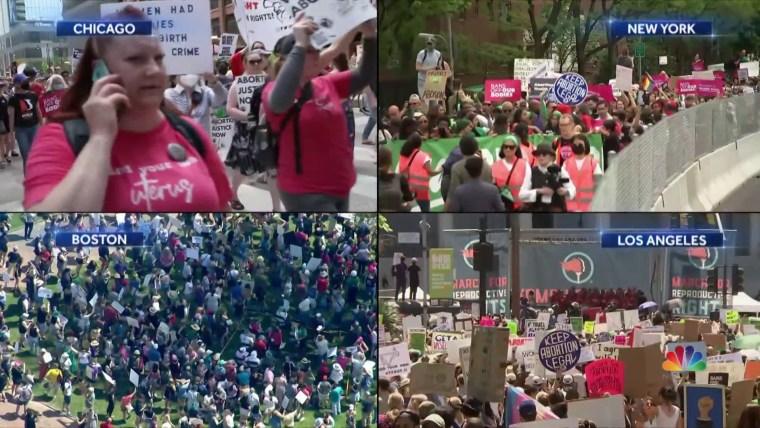
Abortion rights supporters are organizing to fight for access to reproductive health care in the upcoming midterms, though some say that the proliferation of voter restriction laws — both past and recent — means they also need to fight to remove hurdles to voting.
“It’s really important to recognize that the same people that are disproportionately affected by legislation that bans abortion in various ways, or the outright overturning of Roe, they’re the very same people who are disproportionately, or actually intentionally, targeted by voter suppression laws,” said Nita Chaudhary, chief of program for MoveOn, a progressive advocacy group.
“It is women of color, women with less resources, who stand to lose the most and are most impacted. It has been a decades-long strategy on the part of the right to disempower and disenfranchise these very populations. This is what they’re trying to do.”
Black Americans are more likely than non-Black Americans to say that abortion is “morally acceptable,” according to a Gallup Poll conducted from 2017 to 2020. And 32 percent of Black Americans agreed that abortion should be “legal under any circumstance,” compared with 27 percent of non-Black Americans who said the same, the poll found.
Many abortion rights opponents welcome returning the issue to the states.
The Susan B. Anthony List, which endorses legislators in favor of restricting abortion rights, argued in an amicus brief in the Supreme Court case Dobbs v. Jackson Women’s Health Organization, which is the focus of Alito’s leaked draft, that the improved representation of women in political office since 1973 was one reason for the high court to give states the final say.
“The outcome of Roe v. Wade being overturned, if indeed it is, will simply be to return this back to the American people to decide through their elected officials,” said Mallory Carroll, a spokeswoman for the group.
Carroll acknowledged that some states will strengthen access to abortion services, as has happened in California and New York.
“That is certainly a policy outcome that we don’t want, but it will be balanced by the ability of what we want, which is to pass as many laws, ambitious laws pro-life laws that save as many lives as possible,” she said.
In the draft opinion, Alito cites the voter turnout rates of women in Mississippi, whose 15-week abortion limit is at the center of the Supreme Court case, to bolster his position that “women are not without electoral or political power.” In the 2020 general election, women made up about 52 percent of the state’s population but accounted for 56 percent of those who cast ballots.
But Nsombi Lambright-Haynes, the executive director of One Voice, a voting rights group, says robust participation doesn’t erase the hurdles she saw in 2020 — including restrictions on voter registration, polling site moves without adequate warning and a lack of widespread access to early voting. For Lambright-Haynes, Alito’s assertion places too much faith in an electoral process fraught with roadblocks.