
The Trump administration last year moved to roll back regulations aimed at preventing infections from spreading in nursing homes, a decision that is facing renewed criticism for endangering the elderly amid the coronavirus outbreak.
With older, vulnerable residents living in close quarters, nursing homes face a heightened risk from the coronavirus — a majority of the nine deaths reported in the U.S. so far from the virus were residents of a long-term care center in Washington state. But over the last three years, the Trump administration has advanced — with the support of the nursing home industry — an effort to ease regulations on long-term care facilities and has taken significant steps to reduce fines for violations.
Of particular concern in nursing homes is what experts call “infection control” to halt or prevent the spread of disease within health care facilities. Last July, the Trump administration proposed rolling back regulations requiring all nursing homes and other long-term care facilities to employ infection prevention specialists at least part time, citing “excessively burdensome requirements” on the industry. Under the proposal, which is still working its way through federal rule-making, nursing homes would be allowed to use consultants for infection prevention rather than hiring staff.
“These are frail, medically compromised people, and they need to have someone focused on infection,” said Toby Edelman, a senior policy attorney at the nonprofit Center for Medicare Advocacy who opposes the proposed change.
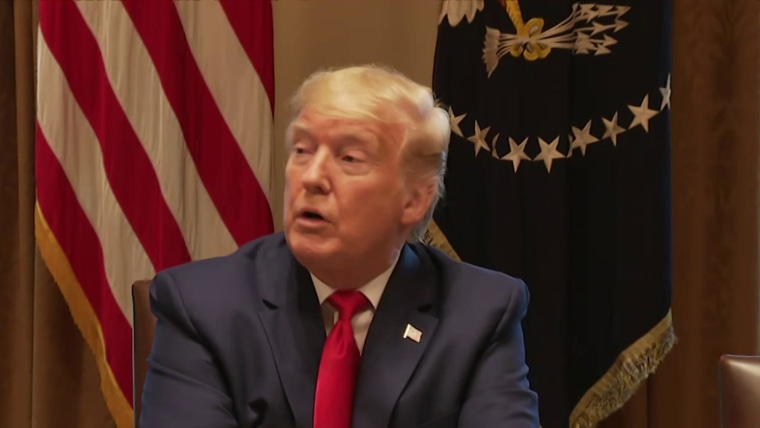
The Trump administration defended its oversight of nursing homes and its infection control and prevention efforts. “The health, safety and welfare of America’s patients — including nursing home residents — and our provider workforce in the face of [coronavirus] is our highest priority,” Seema Verma, administrator of the Centers for Medicare and Medicaid Services, which oversees regulation of long-term care facilities, said in a statement.
“The agency works daily with states and other partners to make sure nursing homes meet rigorous safety and quality standards as a condition of their participation in Medicare and Medicaid," Verma said. "These longstanding federal regulations require facilities to prevent the spread of any infectious agent or organism."
Full coverage of the coronavirus outbreak
The requirement for infection prevention specialists was part of an Obama administration effort, finalized in 2016, requiring all long-term care facilities to develop infection control and prevention plans to detect, report and contain communicable diseases. Nursing homes manage from 1.6 million to 3.8 million infections each year, according to the Centers for Medicare and Medicaid Services.
The 2016 provision also requires that infection preventionists receive specialized training and that all long-term care facilities employ a specialist at least part time. The specialists are responsible for ensuring that nursing home staff properly clean their hands, disinfect surfaces and follow other protocols, helping to prevent both residents and health care providers from becoming infected.
The provision took effect in November despite the Trump administration’s objections, but the administration has continued working to reverse it.
In a plan unveiled last July, the administration proposed eliminating the requirement that nursing homes employ infection specialists at least part time, citing the “excessive administrative burden” on long-term care facilities, as well as potential confusion about the definition of “part-time.” Instead, the administration proposed requiring only that infection preventionists spend “sufficient time at the facility.”
Life Care Center of Kirkland — the skilled nursing and rehabilitation facility linked to at least five coronavirus deaths in Washington — declined to specify whether it had an infection prevention specialist on staff. A spokeswoman for Life Care Center referred NBC News to a statement released Monday that said the facility was “following infection control recommendations, including proper hand-washing techniques and wearing masks, gowns and gloves when caring for any symptomatic patients.”
Life Care Center of Kirkland has a five-star rating from the federal government’s Nursing Home Compare website, making it a top-rated facility. However, CMS cited the nursing home last year for failing "to consistently implement an effective infection control program," according to an April 2019 inspection report.
"The facility failed to ensure staff consistently performed hand hygeine [sic] and change gloves as needed while washing dishes," the report said. "These failures placed resident's at risk for harm and transmitting/acquiring infections." CMS said that Life Care of Kirkland had corrected the problem by May 2019.
Last year, the Centers for Medicare and Medicaid Services also proposed reducing the frequency of facility-wide assessments that nursing homes are required to conduct to determine the resources they need for emergencies, as well as day-to-day operations. Nursing homes would only be required to conduct them every two years, instead of annually.
Industry groups have defended the proposed changes, which are in the process of being finalized through federal rule-making. “This gives greater flexibility to hire and find an infection preventionist and share between facilities, if needed,” said Cristina Crawford, a spokeswoman for the American Health Care Association, a trade group for nursing facilities.
Download the NBC News app for full coverage of the coronavirus outbreak
But leading epidemiologists and long-term care experts have opposed changes to the part-time requirement for infection preventionists, stressing the importance of having trained specialists on staff at nursing homes to prevent infection outbreaks. That’s crucial given threats like the coronavirus, they said, which appears to have a significantly higher mortality rate among the elderly.

