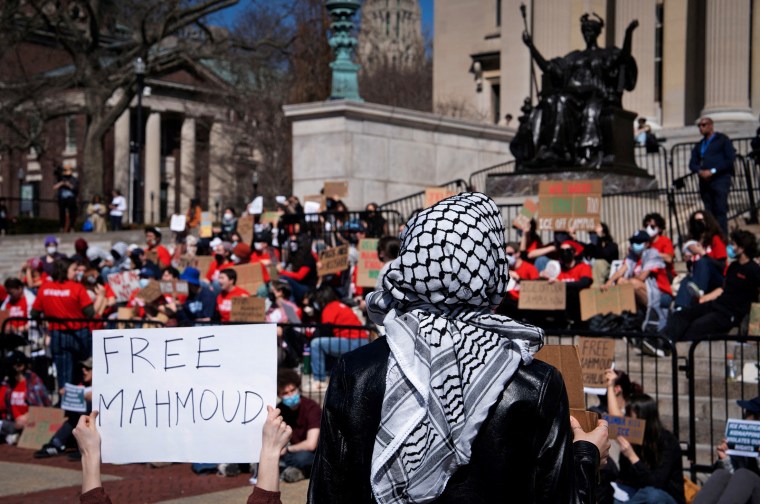
Columbia University has agreed to a list of demands by the Trump administration in order to start negotiations on restoring $400 million in federal funding that was stripped from the university earlier this month, representing a striking concession by the private university to the federal government.
The Trump administration canceled the university’s federal grants on March 7, accusing the New York school of "inaction in the face of persistent harassment of Jewish students." The abrupt cancellation of funds will end dozens, if not hundreds, of the university’s cutting-edge medical and scientific research projects.
But last week, the administration sent a letter to the university laying out nine demands that Columbia needed to accept to potentially restore funds and save the research.
In a document the university provided to the federal government and published online Friday, it appears the Trump administration got much of what it asked for.
The university has agreed to ban students from wearing masks at protests, hire 36 new campus security officers — who, unlike previous security officers, will have the ability to arrest students — and appoint a new senior vice provost to oversee the department of Middle East, South Asian and African Studies.
Columbia also committed to “greater institutional neutrality” and said it is “working with a faculty committee to establish an institution-wide policy implementing this stance.” The university added that it will review its admissions procedures to “ensure unbiased admission processes,” as the Trump administration requested.
Columbia's interim president, Katrina Armstrong, said Friday that the school responded to the Trump administration to "ensure uninterrupted academic activities."
“We have much to be proud of as a community, and it has been a privilege to share our progress and plans,” she said in a statement. “In the spirit of great American universities, we expect Columbians to engage in robust debate and discussion about our way forward, and we welcome it as an opportunity to shape the future of Columbia.”
The concessions by one of the nation’s oldest and most prestigious universities represent an unprecedented shift in how the federal government exerts leverage in the affairs of higher education institutions in the U.S.
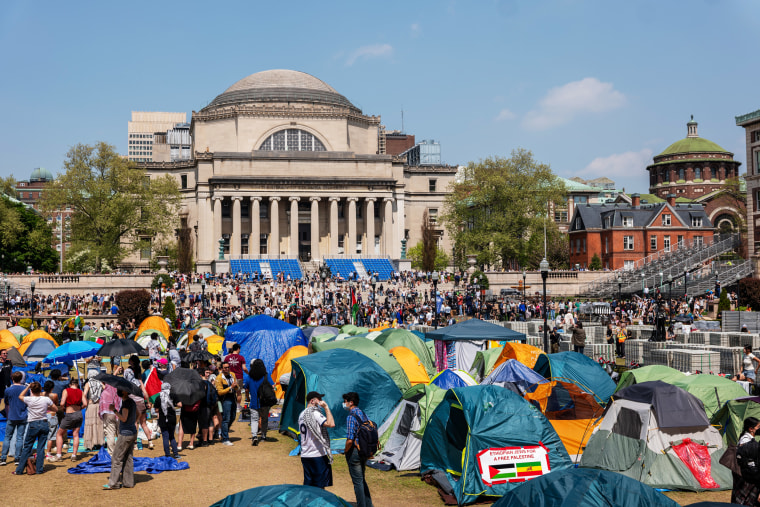
On Thursday, a student-led group that organizes and leads school protests, Columbia University Apartheid Divest, slammed the notion of Columbia striking a deal with the Trump administration.
"Columbia’s refusal to divest from, and even doubling down on, the genocide of the Palestinian people these past 17 months has made its expected response to the Trump Administration’s ransom note incredibly clear," the group wrote on Instagram. "Columbia has no intention of defending its students or faculty from the government’s crackdown on Palestinian activism, instead it actively joins hands with the fascist state to sell out its community."
On Thursday, 41 of the roughly 100 members of the university's history department warned the university against allowing the administration to interfere in its policy. They compared the administration's actions to attempts by "authoritarian regimes" to seek control over independent academic institutions.
"Such interventions jeopardize our ability to think honestly about the past, the present, and the future, and to do so with our students, who deserve every opportunity to learn and to think for themselves," the history department members wrote. "Should this control be realized, here or elsewhere, it would make any real historical scholarship, teaching, and intellectual community impossible.”
The Trump administration's demands are the latest hit for the Ivy League school, seen as the epicenter of student-led pro-Palestinian demonstrations that eventually overtook life at college campuses across the nation.
The protests were prompted by the Israeli government's fierce response to the Oct. 7 Hamas terrorist attacks. Israel's military has killed nearly 50,000 people living in Gaza and displaced millions. Student activists staged the demonstrations in an attempt to get their universities to divest from companies linked to the Israeli government.
For weeks last spring, Columbia students staged daily protests, established an encampment of several dozen tents on university lawns and at one point occupied a university building. Dozens of students were arrested in demonstrations that regularly featured controversial political slogans, including "from the river to the sea," which some have criticized as antisemitic.
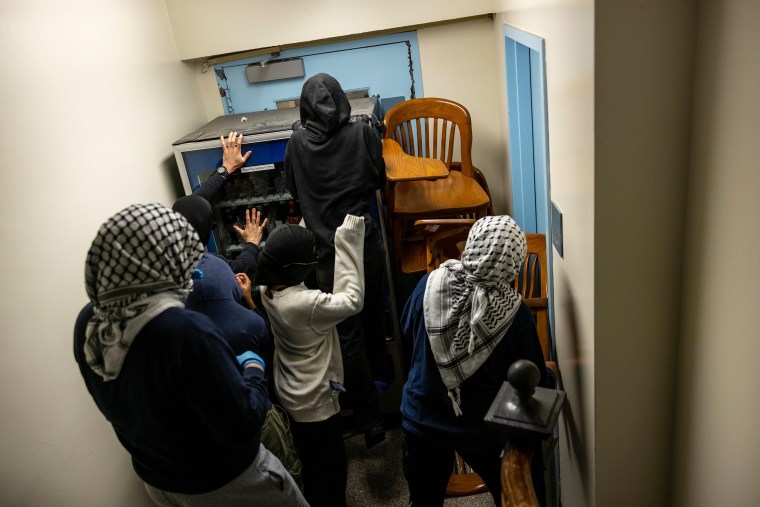
Some Jewish students joined the protesters on college campuses, while others said they felt like the demonstrations were hateful. Several Jewish students also reported being assaulted at other universities.
Allie Wong, a Ph.D. student who was arrested while protesting on campus in April of last year, said that while the protests were divisive, she believes the challenges facing Columbia unite students around a common cause.