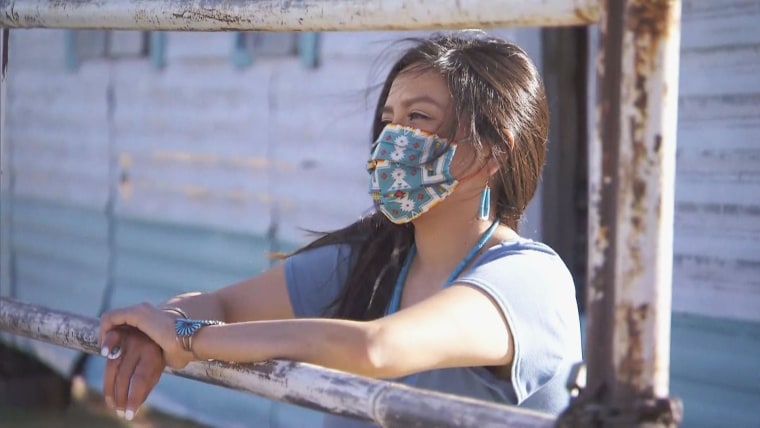
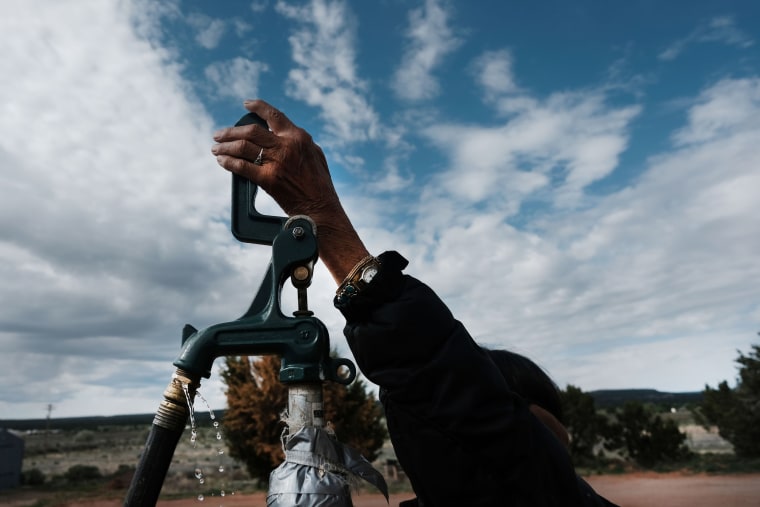
Every third day, someone from Dr. Michelle Tom's family navigates their pickup truck 14 miles over the pothole-pocked dirt roads of the Navajo Nation to a community center. There, for about $95 a week, her family fills their water tank and hauls it back home to the double-wide trailer she shares with seven relatives in northeastern Arizona.
Or at least that's how Tom was getting water before she had to cut off physical contact with her family because of the coronavirus pandemic that has raged across tribal communities. For now, she is living with a co-worker to maintain her distance and prevent spread.
Full coverage of the coronavirus outbreak
"I haven't hugged anyone in weeks," said Tom, who spends her days treating COVID-19 patients at the Winslow Indian Health Care Center urgent care facility in Winslow, Arizona, as well as on the Navajo reservation.
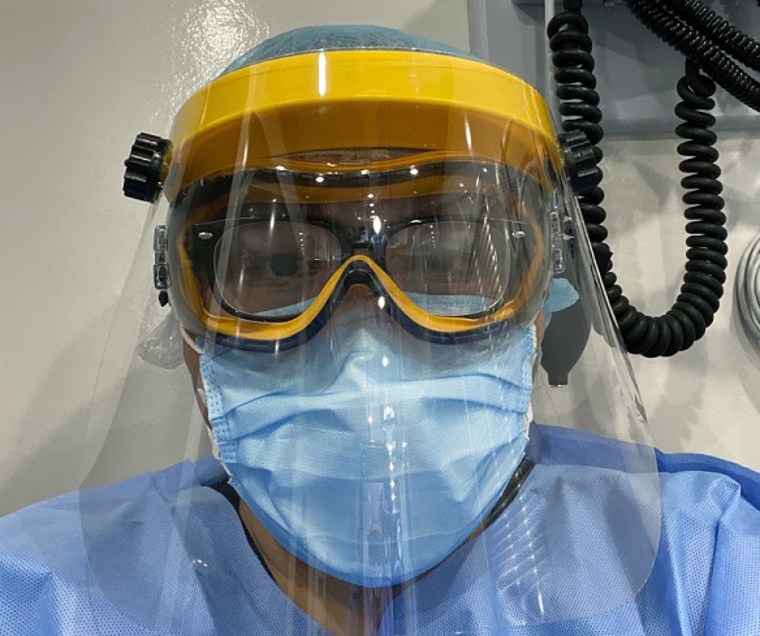
Tom is one of the few doctors in her Navajo community on the front lines of the pandemic, and she has taken every precaution to try to stay healthy, including buying her own protective suit, goggles and face shield. But long before the virus started threatening her people, she was already facing a different sort of crisis: limited access to running water, a severely understaffed and underfunded health care system and underlying health conditions among her patients.
Now, a month after the tribe's first confirmed case of the coronavirus, the Navajo Nation, which stretches across parts of Arizona, New Mexico and Utah, has reached a grim milestone. At least 1,197 Navajo residents have tested positive for the coronavirus, while 44 have died, officials said.
With a steady increase in cases, people on the Navajo Nation are testing positive for the coronavirus at a rate more than nine times higher than people in the entire state of Arizona, based on reported cases and 2010 census data.
The coronavirus is exposing underlying fractures in the infrastructure of Indian Country, including health care and basic needs, like water, that have long been underfunded and, some say, ignored by the federal government.
"You're saying 20 seconds of wash your hands with water," Tom said recently. "We have to haul our water. ... We do not have plumbing. And that's how I grew up."
An estimated 30 percent of homes on the Navajo reservation, which has roughly 175,000 residents, don't have access to clean, reliable drinking water and have to haul it from local utilities, according to the Navajo Nation Department of Water Resources.
"There are times when it is closed for three days," Tom said.
When that happens, her family has to make another trip on another day. That is no small task, as the Navajo Nation is under curfew orders to curb the spread of the coronavirus.
"I feel fortunate that my family can do that," Tom said. "There are some families who don't have a water truck."
Tom, who practices family medicine, says that even without the strain of the pandemic, she doesn't have the resources she needs to provide adequate medical care and has access to only two ventilators.
"We cater to 17,000 Navajo, and people come from Apache, Hopi, as far as three hours away," Tom said. "Our resources are limited. Rural medicine is hard enough. We've always been short-staffed in general."
As stipulated in treaties with Indian tribes, the U.S. government has an obligation to provide health care to all Native Americans.
"Because of the land that the tribes ceded to the United States, the United States has a trust responsibility to Indian tribes, and health care is one of those," said Rep. Deb Haaland, D-N.M., who fought to include Native American tribes in the Coronavirus Aid, Relief, and Economic Security (CARES) Act, a $2 trillion stimulus package passed in March.
The legislation provides $8 billion for Native American and Alaska Native tribes, although the National Congress of American Indians, a public education and advocacy group, estimated that tribes would need $20 billion. Initially, Haaland said, the White House allocated no direct relief for tribes.


