BRISTOL, Tenn. — As volunteers at a high school-turned-donation center in Unicoi County, Tennessee, worked to organize emergency supplies in the aftermath of Hurricane Helene, the need for more resources was apparent Thursday.
“There isn’t anything that we don’t need right now,” said Tim Love, a volunteer at the center.
Love’s team is one of many across the region working to bring aid to the hardest-hit areas in Tennessee, coming face to face with the devastation. His team helped load Black Hawk helicopters for a delivery to a particularly damaged area in the state.
“Our county has been cut in half by this,” he said. “We’ve lost a hospital, we’ve lost life, but we’re banding together in this.”
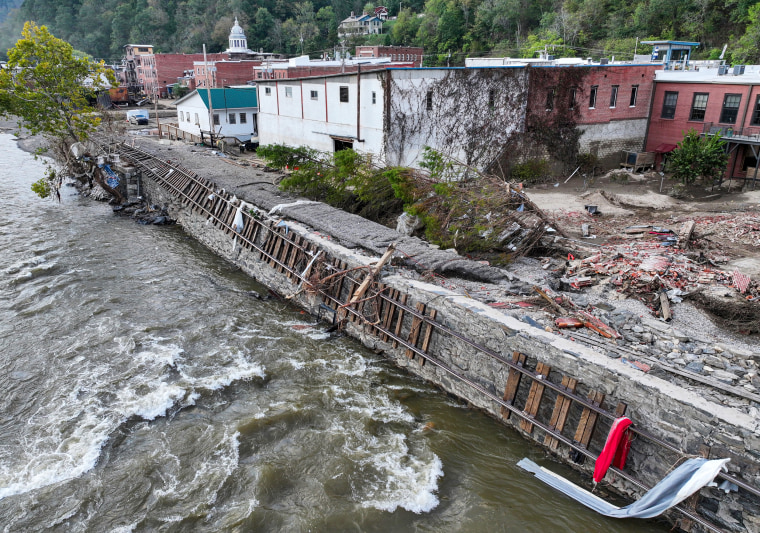
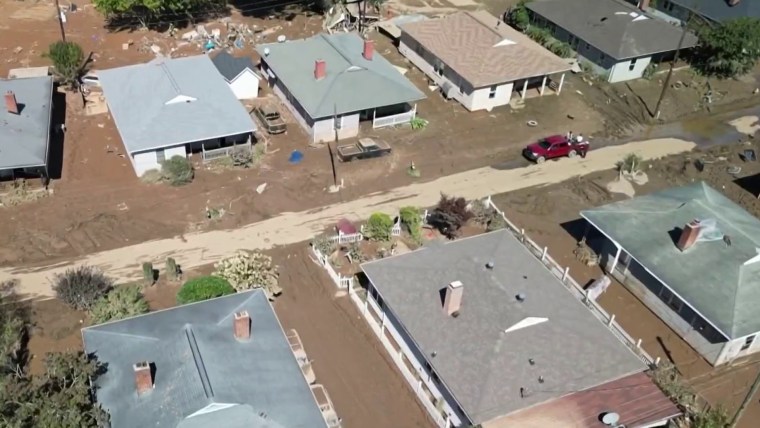
Almost a week after the remnants of Hurricane Helene caused widespread flooding and destruction in multiple states, many survivors remain isolated and in serious need of help. The destruction of major roads, combined with the natural terrain of the southern Appalachians, have made the rapid distribution of aid an ongoing challenge.
Chris Spear, president and CEO of the American Trucking Association, told NBC News that critical throughways used for freight shipping are completely overrun with debris, cutting off in-need communities from truckers.
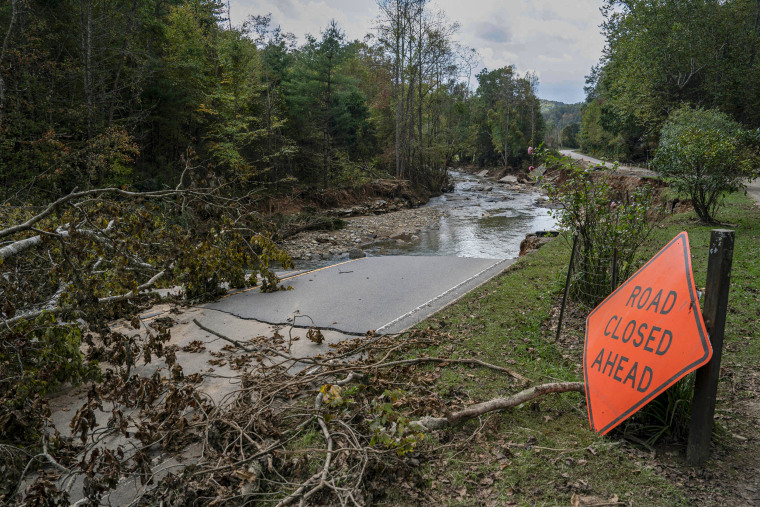
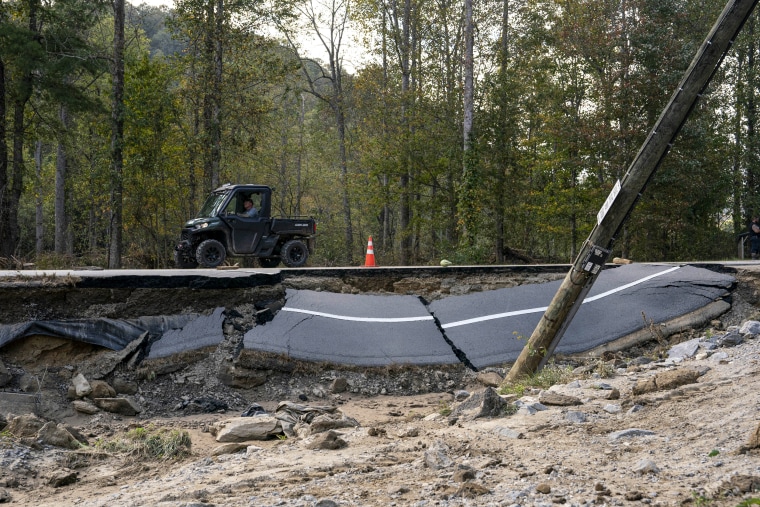
“These areas that are really rugged terrain are heavily dependent on roads and bridges, and as we saw from the amount of flooding that they got, a lot of that has been either washed out or completely covered with debris and mud,” Spear said.
The devastation in North Carolina and Tennessee has left two major interstates, Interstate 40 and Interstate 26, largely closed down and inaccessible. According to data from the North Carolina Department of Transportation, the entire western border of the state has limited access. Hundreds of road incidents across the region have made numerous roadways blocked and inaccessible due to the damage.