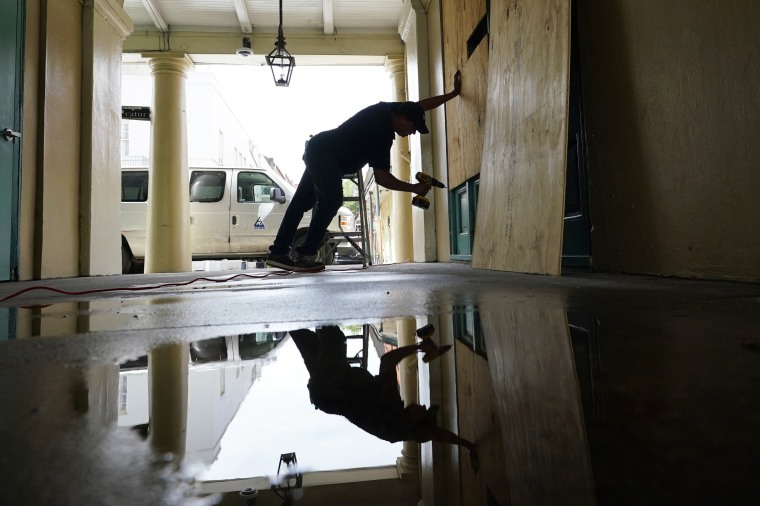
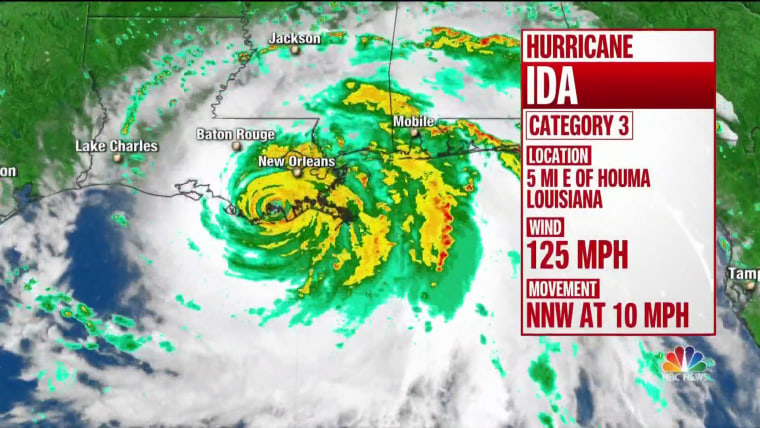
A man was killed and federal authorities reported "catastrophic" damage in parts of southeast Louisiana on Sunday night after Hurricane Ida crashed into the state as what the governor said was "one of the strongest storms to make landfall here in modern times."
All of New Orleans was without power, the city's electric utility said, threatening its sewage system.
The state Health Department said a 60-year-old man died in Ascension Parish after a tree fell on his home. The parish sheriff's office said deputies who were dispatched at 8:30 p.m. for a report that a person may have been injured in Prairieville, about 15 miles southeast of Baton Rouge, confirmed that a person was dead.
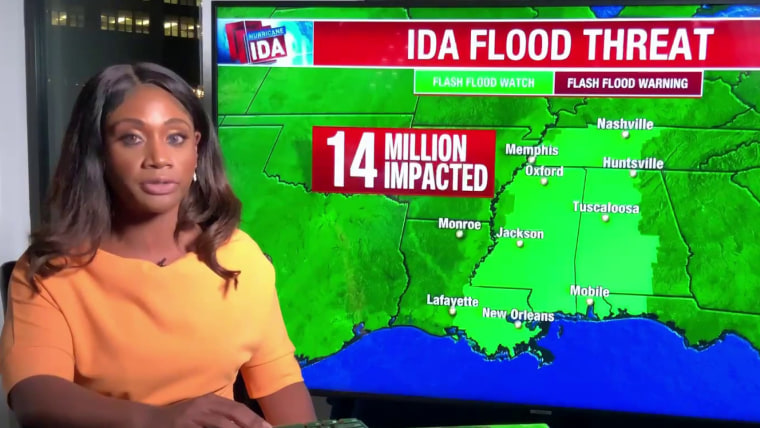
Citing local law enforcement, the National Weather Service office in New Orleans said over 200 people were in "imminent danger" in the town of Jean Lafitte and the unincorporated community of Lafitte, in Jefferson Parish, after a levee failed.
"Move to higher ground now!" the weather service said. "This is an extremely dangerous and life-threatening situation."
The latest on Hurricane Ida:
- Hurricane Ida made landfall Sunday, the 16th anniversary of Hurricane Katrina, as a Category 4 storm near Port Fourchon, Louisiana. Gov. John Bel Edwards described it as "one of the strongest storms to make landfall here in modern times."
- Ida weakened to a Category 1 storm with top sustained winds of 95 mph late Sunday. The National Hurricane Center reported "catastrophic damage" and warned of "extremely life-threatening" storm surges. Authorities said a 60-year-old man was found dead after a tree fell on his home. A levee failure was reported in Jefferson Parish, threatening 200 people, authorities said.
- All flights were canceled at Louis Armstrong New Orleans International Airport. A little over 1 million homes and businesses were without power across the state; Entergy New Orleans, the city's main power utility, said all of Orleans Parish was without service.
- Find more up-to-the-minute updates at our live blog.
At midnight, Ida had weakened from a Category 4 to a Category 1 storm, with sustained winds of 95 mph, but authorities said it would remain a hurricane overnight. The National Hurricane Center said tornadoes were expected into Monday from southeast Louisiana to the western Florida Panhandle.
Electric utilities reported that slightly more than 1 million homes and businesses were without power. Entergy New Orleans, the main power utility in New Orleans, with nearly 200,000 customers, said the entire city lost electricity early Sunday evening because of "catastrophic damage" to its transmission system. It said power wouldn't be restored Sunday night.
The city's sewer and water board said the power loss could affect a "very significant" number of its 84 sewer pumping stations. The board said that it had obtained backup generators for some but that "in order to prevent sewage backups, we have asked residents to limit water usage at home, thus decreasing the amount of wastewater we must remove."
The board said the city's water was safe to drink.
'This is going to be devastating'
Ida made landfall over Port Fourchon, Louisiana, at about 11:55 a.m. CT as the storm moved into the mouth of the Mississippi River, the National Hurricane Center said.
"This is going to be devastating — a devastating, a life-threatening storm," President Joe Biden told reporters after he was briefed by officials of the Federal Emergency Management Agency. "So please, all you folks in Mississippi and in Louisiana ... take precautions, listen, take it seriously."
Biden said he signed emergency declarations so Mississippi and Louisiana can use the "full resources and support of the federal government."
Louisiana Gov. John Bel Edwards told residents who didn't evacuate to keep loose mattresses within reach — in case powerful gusts ripped off home's roofs, which he said in a news conference was likely because "this is one of the strongest storms to make landfall here in modern times."
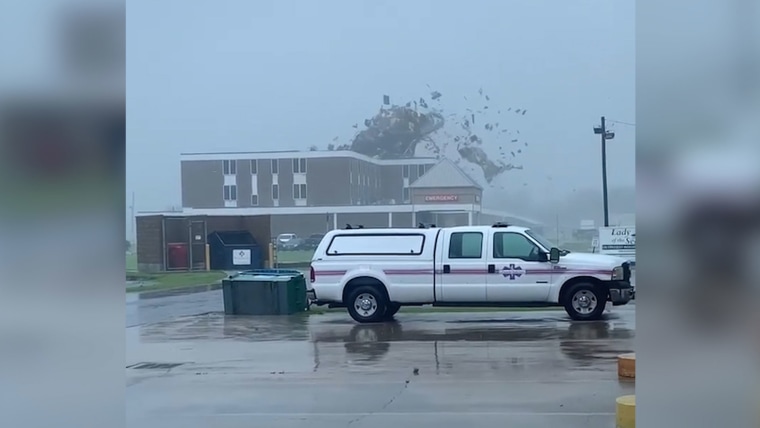
At landfall, the storm's winds were just short of 157 mph, the level considered a Category 5 hurricane on the Saffir-Simpson hurricane wind scale, which rates storms from 1 to 5 based on maximum sustained wind speed. Only four storms have made landfall in the continental U.S. as Category 5 hurricanes in the last century: the Labor Day Hurricane in 1935, Camille in 1969, Andrew in 1992 and Michael in 2018.
The storm began weakening as it started to move inland, where it was expected to track over parts of Louisiana and western Mississippi, but forecasters said it would still be a tropical storm well into Monday afternoon.
Related

With rainfall projections topping 2 feet in some parts of southern Louisiana, Collin Arnold, director of the New Orleans Office of Homeland Security and Emergency Preparedness, warned residents that emergency services wouldn't be able to reach them until Monday.
St. Bernard Parish President Guy McInnis said: "We've really taken a pounding here in St. Bernard Parish. I haven't seen anything like this here, and I lived through Katrina."