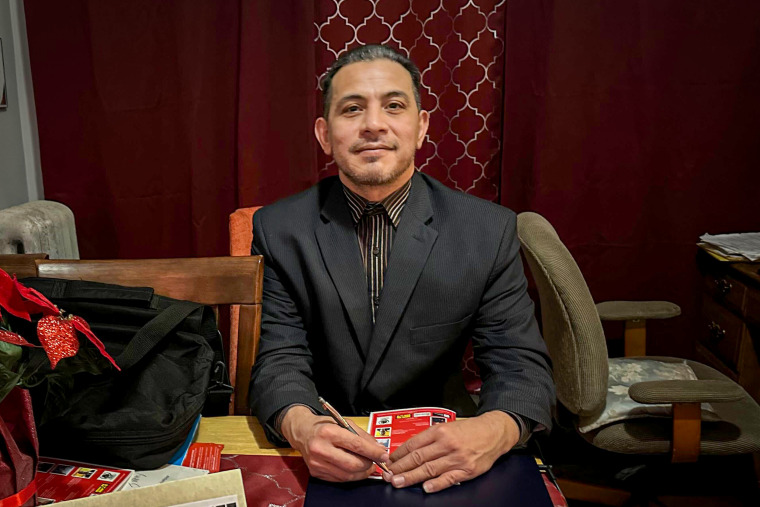
CHICAGO — For the last two years, Carlos Carpio has created a life for himself in Chicago, a city he now loves. He works at a factory, rents an apartment and has made friends. He goes to church every Sunday and is a part of the community here.
But for Carpio, who is a Venezuelan immigrant in the country legally with temporary status, that stability shattered this week when Donald Trump became president, riding into office on a campaign promise to carry out the largest mass deportation the United States has ever seen.
“There’s so much fear over what Trump has been saying, and now what he’s doing,” said Carpio, 50. “Since the day Trump became president, I live in fear.”
Carpio is among the roughly 1 million people in this country who have what’s known as temporary protected status, or TPS, which gives them the right to stay in the U.S. temporarily due to civil unrest and natural disasters in their home country. His was set to expire this April, but the Biden administration earlier this month extended those protections for another 18 months for people from Ukraine, Sudan, Venezuela and El Salvador.
The TPS program has been used by administrations going back to George H.W. Bush. People with TPS do not have pathways to legal residency, a precursor of citizenship, without leaving the country.
In an executive action on Monday, Trump called for a review of TPS and for federal officials to consider if the program is “appropriately limited in scope.” In his first administration, Trump also made ending TPS for some countries a target, arguing that most countries in the program have recovered from the related disasters or conflicts and that the status has been renewed for years beyond its need.
'We are all afraid'
Venezuelan migrants with TPS told NBC News their lives have become ruled by fear. Others said they want to focus on living one day at a time, but ultimately are still deeply afraid of being ordered back to their home country.
“I feel like what I’ve accomplished here so far doesn’t mean anything. I’m so sad and frustrated,” Carpio said.
Trump revoking TPS would face legal challenges. He could also decline to continue those protections beyond the 18-month extension Biden ordered and thus make people like Carpio potentially eligible for deportation. Complicating the matter is that Venezuela does not currently accept deportees from the United States.
Carpio has withdrawn from his once vibrant life. Now, every day is full of dread and uncertainty. He prays that no strangers come knocking on his door. He used to hang out with his friends after work and enjoyed running errands, but now “we always go directly home” and avoid taking the train or bus, he said. They now bring all of their documents everywhere they go.
When he needed to go to the bank this week, Carpio said he was counting down the seconds and looking over his shoulder, trying to leave as quickly as possible. He stocked up on groceries before the inauguration, hoping to delay the next time he has to go shopping.
At the factory where he works, there are constant whispers about what Trump is doing and what he could do next.
Even church doesn’t feel safe anymore. He and his friends are worried about going to their usual Sunday service after the Trump administration said it was ending a long-standing policy that prevented federal immigration authorities from arresting migrants in churches, schools and hospitals.
“We are all afraid. We all carry that fear and anxiety,” he said.
Living in limbo
Daisy, a 36-year-old Venezuelan migrant who has been in Chicago for about two years, said the city has changed her life for the better and she is grateful she “has met so many people here” from a variety of countries.
“I feel like this is my home. I love Chicago,” said Daisy, who asked that her full name not be used for fear of immigration reprisal. “This is where I want to be.”
She also has TPS said she’s felt “anguished” since seeing Trump’s executive orders on immigration. She wishes she could return to the calm and security she felt before this week.
“I’m so afraid I don’t even want to go out. I was really scared about going to work. I’ve been praying to God to get me through,” she said.