The war with Iran is quickly becoming an economic problem for the United States — and a policy dilemma for the Federal Reserve.
Rising oil prices, shipping disruptions in the Middle East and fresh signs of weakness in the U.S. labor market are creating a complicated backdrop just as inflation had begun to show some signs of improvement. For policymakers, the risk is a familiar but unwelcome scenario: higher prices paired with slowing growth — a dynamic known as “stagflation” — that could make it harder for the Fed to cut interest rates and ease pressure on American consumers.
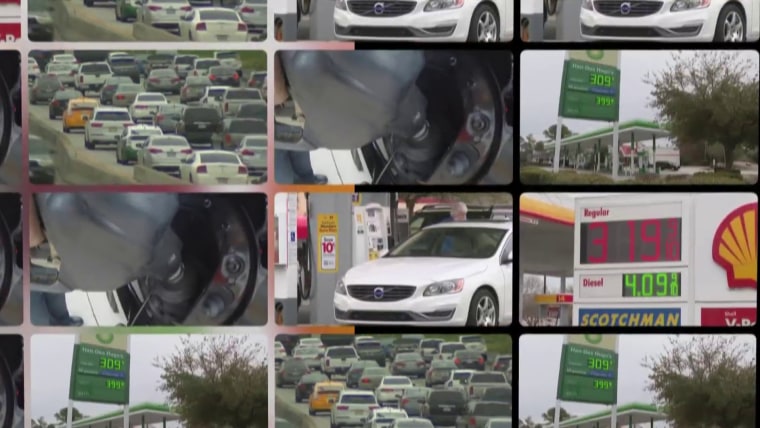
The national average for gas prices hit $3.41 a gallon on Saturday, according to AAA, rising $0.43 in just the past week. Meanwhile, U.S. crude oil logged its biggest weekly gain on record in data going back to 1983, a sign that gas prices could continue rising in the coming days and weeks.
This comes as the Federal Reserve is already grappling with signs of a weakening labor market. New data from the Bureau of Labor Statistics released Friday showed the U.S. economy lost 92,000 jobs last month, while revisions to December and January revealed 69,000 fewer jobs than originally estimated.
Impacts of shipping disruptions
Typically, signs of a softening labor market would push the Federal Reserve to consider cutting interest rates to achieve maximum, sustained employment — one half of the central bank’s dual mandate, which also includes maintaining stable prices and keeping inflation near its 2% target.
But the war in Iran is complicating that calculus. Rising oil prices and shipping disruptions threaten to push energy costs higher across the global economy, potentially fueling inflation, which is already running above the Fed’s target at 2.4%.
That dynamic leaves policymakers balancing competing risks.
“The February report and latest geopolitical developments complicate the Fed’s job by raising risks on both sides of the dual mandate,” Gregory Daco, chief economist at EY, wrote in a client note Friday. “The sharp pullback in payrolls, rising unemployment rate and weaker labor supply backdrop heighten concerns around downside to growth and employment, while the conflict in the Middle East raises inflation risk.”
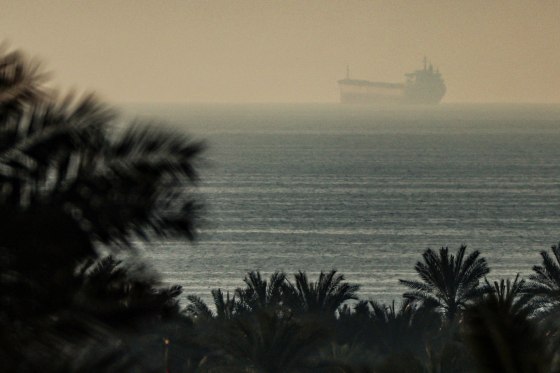
Much of that risk centers on the Strait of Hormuz, a narrow waterway along Iran’s southern coast that carries roughly one-fifth of the world’s oil supply. The passage is also a key shipping route for commodities including aluminum, sugar and fertilizer.
With more than 80% of global trade moving by sea, according to the World Bank, disruptions there can ripple through global supply chains. Slower shipping can raise freight costs, delay deliveries of raw materials and manufactured goods, and push up production expenses for companies — pressures that often filter through to consumers in the form of higher prices.
And the longer disruptions in the Strait of Hormuz persist, the greater the potential impact on oil prices.
Goldman Sachs warned that “upside risks” to crude are “growing rapidly,” noting prices could climb above $100 per barrel if shipping flows through the waterway remain heavily disrupted in the coming weeks.
Crude settled just under $91 a barrel on Friday. Typically, every $1 increase in oil translates to about $0.02 to $0.03 per gallon at the pump, meaning sustained gains could continue pushing gasoline prices higher.
“The jump in oil prices comes at a time when other indicators of near-term inflationary pressures are also beginning to look a bit more concerning,” wrote Stephen Brown, deputy chief North America economist at Capital Economics. “Even if oil prices fall back sooner rather than later, it is getting harder to envisage Fed Chair nominee Kevin Warsh persuading the rest of the [Fed] to support further interest rate cuts until there is firmer evidence that inflation is on a path back to 2%.”
All eyes on energy prices
Federal Reserve officials say they are watching both sides of the economy closely. San Francisco Federal Reserve President Mary Daly told CNBC on Friday that February’s weak jobs data added to an already difficult policymaking environment, noting it’s “a balance of risks calculation” moving forward.
Other Fed officials believe the impact of the Iran war on inflation may ultimately prove temporary. Federal Reserve governor Christopher Waller told Bloomberg that policymakers are unlikely to overreact to higher gas prices in the near term.
But gas prices are one of the few areas where American consumers have seen some relief — and a key talking point in President Donald Trump’s affordability agenda.
Lower gas prices in recent months helped offset rising costs for essentials like groceries and housing, as well as higher prices in goods categories such as apparel and furniture, where tariffs have already pushed costs higher. That cushion, though, is quickly disappearing.

