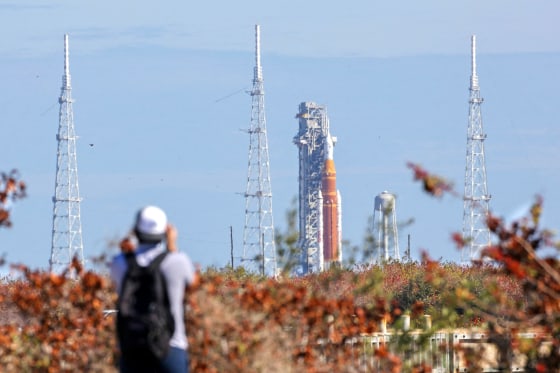
CAPE CANAVERAL, Fla. — NASA's new moon rocket suffered another setback Saturday, putting next month's planned launch with astronauts in jeopardy.
The space agency revealed the latest problem just one day after targeting March 6 for humanity's first flight to the moon in more than half a century. Overnight, the flow of helium to the rocket's upper stage was interrupted, officials said. Solid helium flow is required for launch.
This helium issue has nothing to do with the hydrogen fuel leaks that marred a countdown dress rehearsal of the Space Launch System rocket earlier this month and forced a repeat test.
NASA said it is reviewing the data and preparing, if necessary, to return the 322-foot (98-meter) rocket to the hangar for repairs at Florida's Kennedy Space Center. It's possible the work could be done at the launch pad; the space agency said engineers are preparing for both options.
"This will almost assuredly impact the March launch window," NASA said in a statement.
Hydrogen fuel leaks had already delayed the Artemis II lunar fly-around by a month. A second fueling test on Thursday revealed hardly any leaks, giving managers the confidence to aim for a March liftoff. The four astronauts went into their two-week quarantine Friday night, mandatory for avoiding germs.
The interrupted helium flow is confined to the SLS rocket's interim cryogenic propulsion stage. This upper stage is essential for placing the Orion crew capsule into the proper high-altitude orbit around Earth for checkout, following liftoff. After that, it's supposed to separate from Orion and serve as a target for the astronauts inside the capsule, allowing them to practice docking techniques for future moon missions.
During NASA's Apollo program, 24 astronauts flew to the moon from 1968 through 1972. The new Artemis program has completed only one flight so far, a lunar-orbiting mission without a crew in 2022. That first test flight was also plagued by hydrogen fuel leaks before blasting off. The first moon landing with a crew under Artemis is still at least a few years away.

