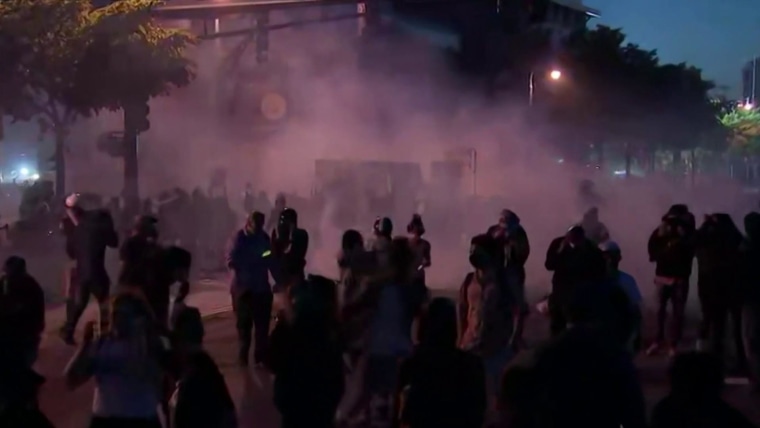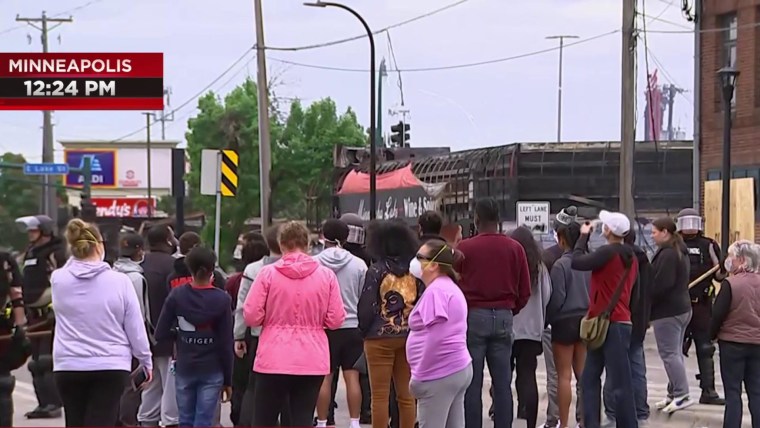
Minneapolis remained on edge Friday after another chaotic night when a police station and other buildings were torched, and protesters there and in neighboring St. Paul hit the streets in demonstrations marred by violence, vandalism and looting.
But it wasn't only the Twin Cities where emotions have run high in reaction to George Floyd, the 46-year-old black man heard crying out "I can't breathe" during a police encounter on Monday and whose death has become the latest flash point in a string of fatalities involving African Americans.
While the arrest Friday of Derek Chauvin, one of the Minneapolis police officers involved in Floyd's death, on charges of third-degree murder and manslaughter may blunt some of the initial anger that has boiled over, tensions will remain fraught as long as there's a lag in charges for the three other officers in the case, black activists and community members say.
"This is a young rage, the same way young people took to the streets in the 1960s, 70s and 80s," Saje Mathieu, a history professor at the University of Minnesota who lives in suburban Minneapolis, said. "They're saying, 'We're already cut. We're already hurt. We're already bruised. There's no other way to communicate my pain and rage than to take to the streets.'"
That pain has resonated in major cities across the country, where protests were expected to unfold Friday night and over the weekend from Atlanta to Oakland, California, and Denver to Dallas.
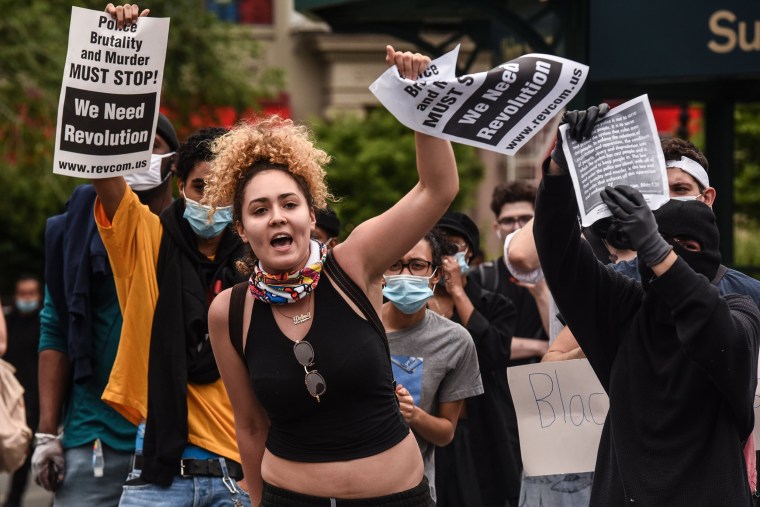
On Thursday night, protesters in Los Angeles surrounded a California Highway Patrol vehicle, while others hurled water bottles and chanted, "We want justice."
In Louisville, Kentucky, seven people were shot as hundreds of people converged downtown to protest the death of Breonna Taylor, a black woman killed during a police raid at her home earlier this year.
New York City saw about 70 protesters arrested and two officers injured in a wave of demonstrations.
Mike Freeman, the prosecutor of Hennepin County, Minnesota, who announced the charges against Chauvin, hinted that further charges may be forthcoming against the other officers and acknowledged the frustration felt by people who demanded more immediate action after the officers were fired Tuesday.
"I'm not insensitive to what's happening in the streets," Freeman told reporters. "My own home has been picketed regularly."
Civil rights attorney Benjamin Crump, who is representing Floyd's family members, said they still want a first-degree murder charge against Chauvin and "fully expect to see the other officers who did nothing to protect the life of George Floyd to be arrested and charged soon."
Related

But legal experts say Freeman had to walk a delicate line: determine what charges, if any, he believed could withstand the scrutiny of a grand jury and trial and also not wait potentially weeks or months to announce charges, which would only fan the flames of unrest.
Attorney Lee Merritt, who is representing the family of Taylor, said the cases involving her, Floyd and Ahmaud Arbery, a black man in Georgia who was fatally shot during a struggle with an armed white man in February, are emblematic of the systemic racism and bias that have persisted in America despite the civil rights movement.
Like Floyd's, Arbery's death was captured on cellphone video. His family says he was out jogging when he was pursued by three white men — a father, who was a former police officer, his son and their neighbor — who were all arrested and charged with murder more than two months after the incident and following a national outcry. The men said they were executing a citizen's arrest when they chased Arbery in their cars and shot him during a struggle, according to police. The men told police they believed Arbery was a burglary suspect.
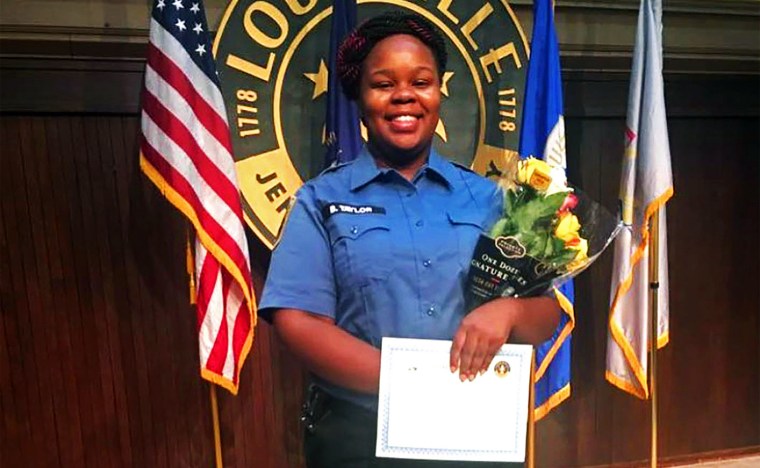
In Taylor's case, she had been sleeping in the early hours of March 13 when Louisville police stormed her apartment on a no-knock drug warrant, according to a lawsuit filed by her family. The officers started "blindly firing" into the apartment after Taylor's boyfriend, a legal firearm owner, grabbed his gun amid the confusion, and Taylor was killed by police, the complaint said. The suit added that police had already apprehended the suspect they were looking for at a different home.
Louisville police have not commented amid the ongoing investigation, but the officers involved have been reassigned pending the outcome of the review.
Floyd's death occurred after Minneapolis police responded to a report of a forgery at a grocery store on Monday evening. After officers encountered Floyd at a nearby car, he was placed into handcuffs and then eventually put on the ground, where a bystander's video showed Chauvin with his knee on Floyd's neck for about eight minutes even as he appeared unresponsive. Floyd was declared dead at a local hospital, police said.
The circumstances surrounding the deaths of Taylor, Arbery and Floyd — all at the hands of police or people linked to law enforcement — were the catalyst for communities of color to unify through national protests, Merritt said, in ways not seen since the 2014 and 2015 police-involved deaths of Michael Brown in Ferguson, Missouri, and Freddie Gray in Baltimore.