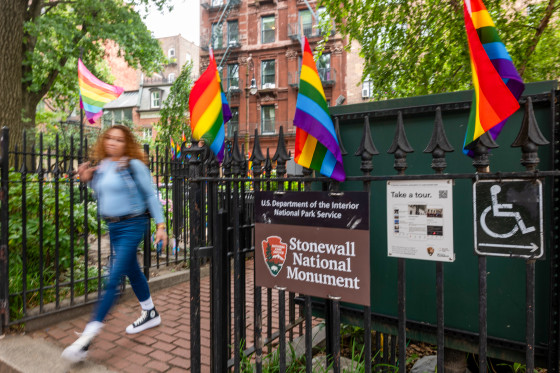
The National Park Service removed a Pride flag from the Stonewall National Monument in New York City on Monday — the latest in a series of actions from the Trump administration that remove recognition of LGBTQ people from the historic site.
The monument recognizes The Stonewall Inn, a Manhattan gay bar that was the site of a 1969 uprising widely considered a turning point in the modern LGBTQ rights movement. Former President Barack Obama designated Christopher Park, which is across the street from the bar, a national monument in 2016. NPS has flown Pride flags within the park since then.
In a statement emailed to NBC News on Tuesday, a spokesperson for NPS cited Department of Interior guidance issued last month, which requires that “only the US flag and other congressionally or departmentally authorized flags are flown on NPS-managed flagpoles, with limited exceptions,” the spokesperson said.
The spokesperson added, “Any changes to flag displays are made to ensure consistency with that guidance. Stonewall National Monument continues to preserve and interpret the site’s historic significance through exhibits and programs.”
New York officials criticized the flag’s removal, which was first reported by Gay City News, a New York City-based LGBTQ news site.
Mayor Zohran Mamdani blasted the move and vowed to protect the LGBTQ+ community in the city.
"I am outraged by the removal of the Rainbow Pride Flag from Stonewall National Monument. New York is the birthplace of the modern LGBTQ+ rights movement, and no act of erasure will ever change, or silence, that history," Mamdani said in a statement on social media.
"Our city has a duty not just to honor this legacy, but to live up to it," he said. "I will always fight for a New York City that invests in our LGBTQ+ community, defends their dignity, and protects every one of our neighbors—without exception."
Senate Minority Leader Chuck Schumer, a Democrat, called the decision “a deeply outrageous action that must be reversed right now.”
“Stonewall is a landmark because it is the birthplace of the modern LGBTQ rights movement, and symbols of that legacy belong there by both history and principle,” Schumer said in a statement on Tuesday. “New Yorkers are right to be outraged, but if there’s one thing I know about this latest attempt to rewrite history, stoke division and discrimination, and erase our community pride it’s this: that flag will return. New Yorkers will see to it.”
State Sen. Erik Bottcher, whose district includes the park, said in a statement on social media that “Stonewall is where our community fought back and demanded to be seen. You cannot separate that place from the symbol that grew out of it.”
The flag’s removal marks the administration’s latest effort to remove and censure parts of the monument’s history. Last year, following an executive order in which Trump declared there are only two, unchangeable sexes, references to queer and transgender people were erased from the Stonewall National Monument’s webpage.
The page used to say “LGBTQ+,” according to an archived version of the website. Last February, the page was changed to only mention lesbian, gay and bisexual people, with related pages using “LGB” as the acronym for the community. A similar change was rolled out across federal agency websites.
The Trump administration has rolled out a list of policy changes targeting the trans community. In the first few weeks of his presidency, Trump issued executive orders prohibiting trans people from enlisting and serving in the military; barring trans girls and women from competing on female sports teams in federally funded K-12 schools and colleges; and barring federal funding from going to hospitals that provide transition-related care to minors.

