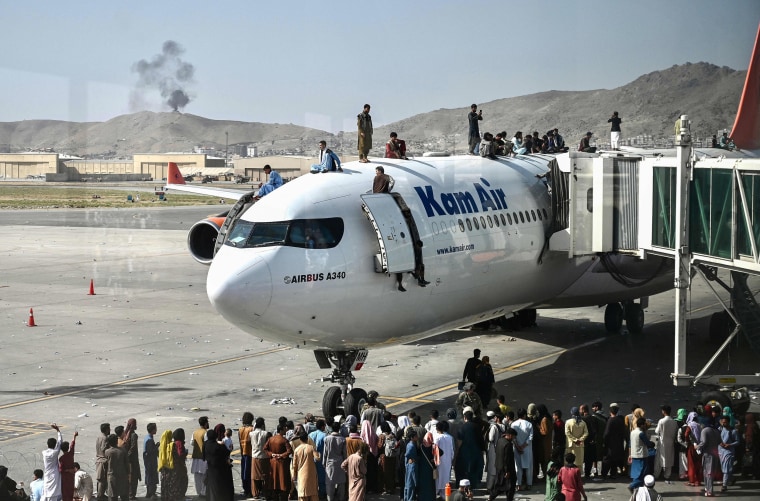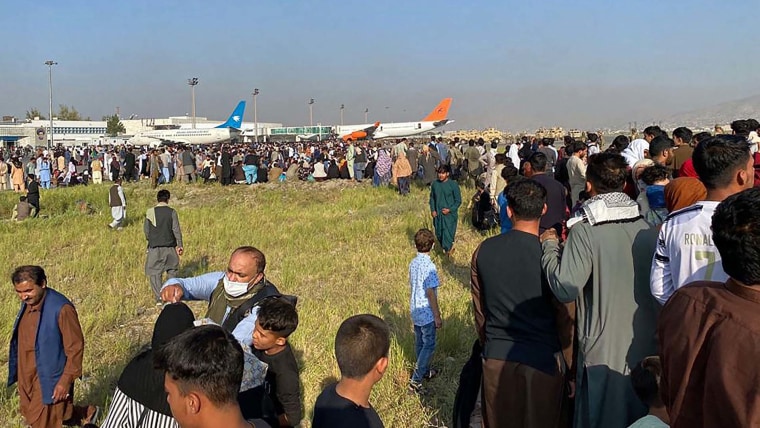
Evacuation flights at Kabul airport resumed Monday, hours after desperate Afghans surrounded passenger jets and tried to force themselves onto a plane overnight as panic spread after the Taliban took control of the capital 20 years after having been toppled by U.S. forces.
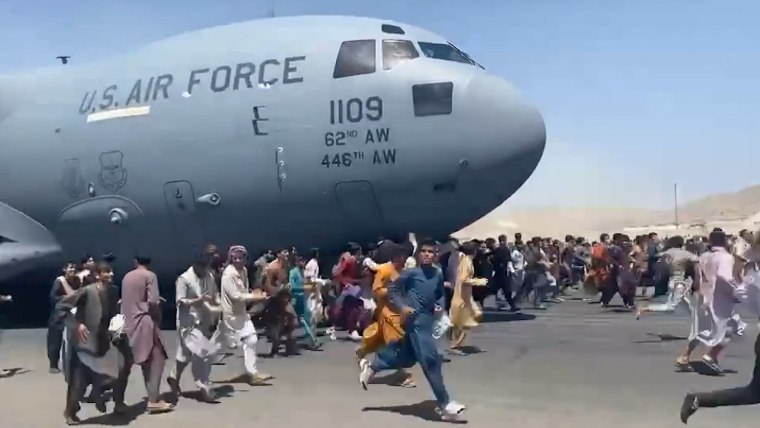
A video showed a U.S. military aircraft trying to take flight as dozens of Afghans sprinted alongside, apparently in an attempt to stop it from taking off without them. Some even climbed aboard, clinging to the outside as the aircraft gained speed.
Meanwhile, on the other side of the airport, separated by a row of barbed wire, the U.S. rushed to evacuate American diplomats. State Department spokesperson Ned Price said late Sunday that all embassy personnel had been safely evacuated to premises at the airport, whose perimeter is secured by the U.S. military.
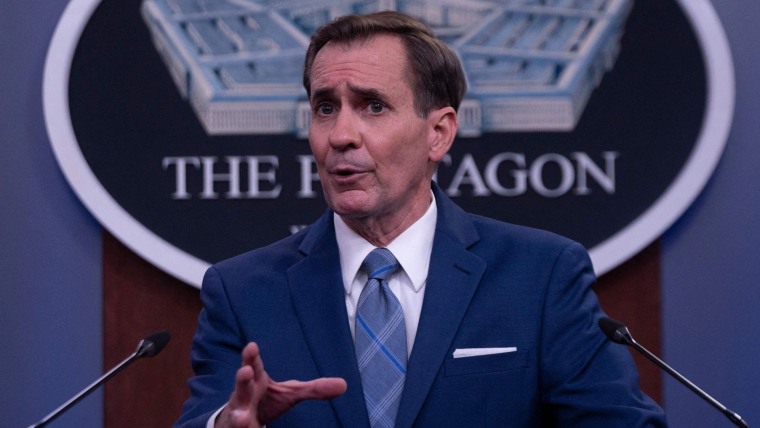
Defense Department press secretary John Kirby said Monday that 1,000 more troops would be deployed to Kabul, eventually bringing the total force there to more than 6,000. About 2,500 U.S. troops are on the ground.
Kirby also confirmed two incidents in which U.S. troops fired on armed people at the airport, resulting in the deaths of two of them. Later, Kirby addressed the situation at the airport during a news conference by saying preparations were made to "examine what a noncombatant evacuation would look like."
"It's not a perfect process," Kirby said. "Plans aren't always perfectly predicted."
A U.S. official told NBC News that in the previous 24 hours, initial reports indicated that assailants fired into the crowd at the airport and that U.S. forces returned fire. The official said reports indicated that the gunmen were killed.
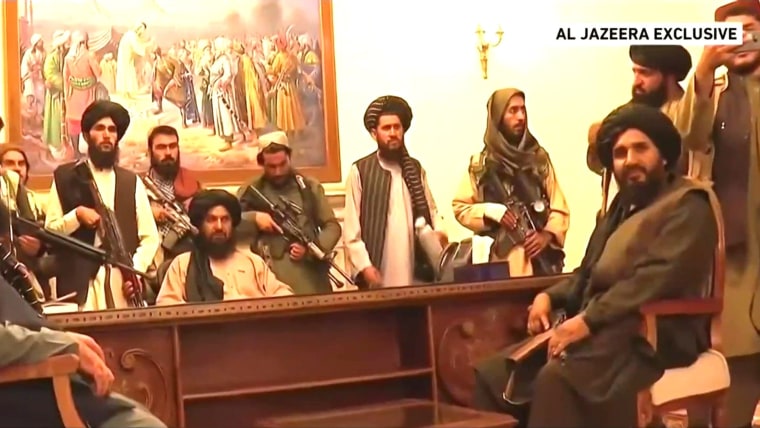
The U.S. military suspended operations at Kabul airport for several hours Monday because chaos on the runways meant it was unsafe for planes to land or take off, three U.S. officials said. They resumed hours later, with C-17s landing on the military side of the airport.
Officials said Monday that the government is prepared to take more than 20,000 Afghans who are candidates for Special Immigrant Visas, or SIVs, with them to U.S. bases. A total of 700 people have left the country since Saturday.
"Our military embrace the opportunity to recognize their contributions to combined operations in Afghanistan by welcoming them into the U.S.," said the Pentagon's director for defense intelligence, Garry Reid, adding that officials are working to create capacity to support refugee relocation at temporary sites.
"At this point, we're looking to establish 22,000 spaces," Reid said. "We can expand if we need to."
Civilian flights stopped Sunday because of people on the runways and a radar issue, the officials said, adding that the intention was to reopen the civilian side, too, but that the radar issue needed to be fixed first.
Speaking on NBC News' "TODAY," national security adviser Jake Sullivan appeared to try to play down concerns surrounding dramatic scenes of U.S. Embassy staff members' being evacuated to Kabul's airport.
"To be fair, the helicopter has been the mode of transport from our embassy to the airport for the last 20 years," he said.
Related

Bill Roggio, a senior fellow at the Foundation for Defense of Democracies, said that he was shocked by the scenes at the Kabul airport and that the U.S. should have anticipated the chaos.
"We're told this is a responsible exit when we're watching what's happening — the tarmac where U.S. air forces transport planes is being overrun with civilians. That airport isn't secure," he said.
President Joe Biden said Monday that he stood by his decision to withdraw, adding that the U.S. mission for going in was "never supposed to be nation-building."
Biden admitted that the situation deteriorated quicker than his administration had anticipated after it inherited a withdrawal deal negotiated by former President Donald Trump.
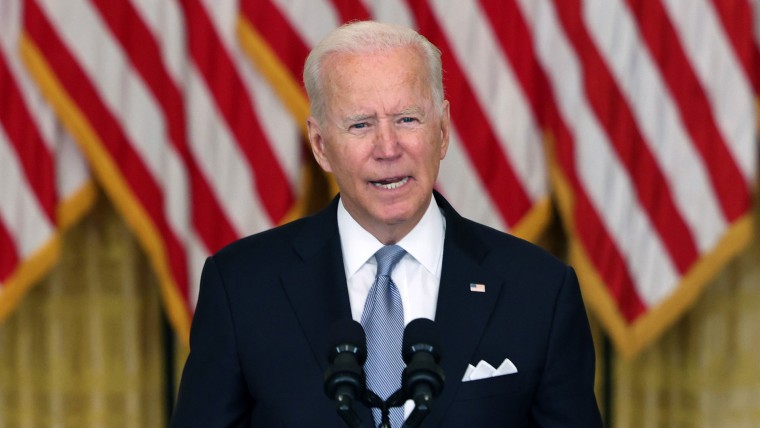
"If anything, the developments of the past week reinforced that ending U.S. military involvement in Afghanistan now is the right decision," Biden said. "American troops cannot and should not be fighting in a war, and dying in a war, the Afghan forces are not willing to fight for themselves."