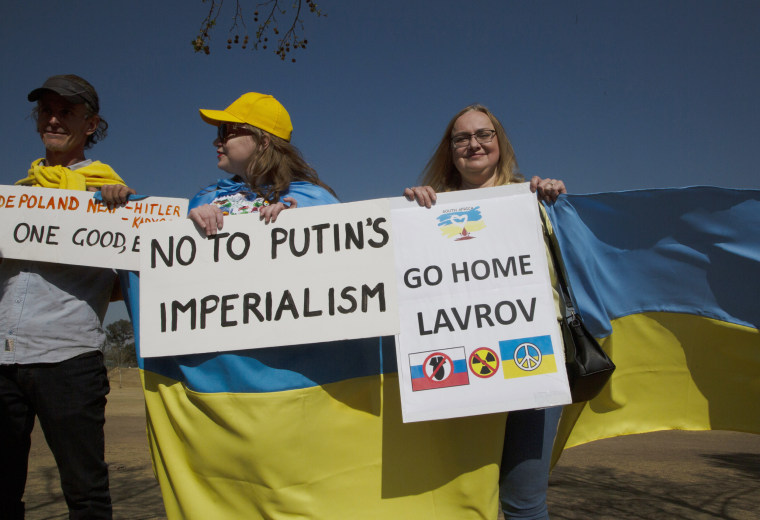
As China and Russia work to curtail American and Western influence on the global stage, the bloc of developing countries known as BRICS is debating a major expansion to increase its power and diminish the dominance of the U.S. dollar.
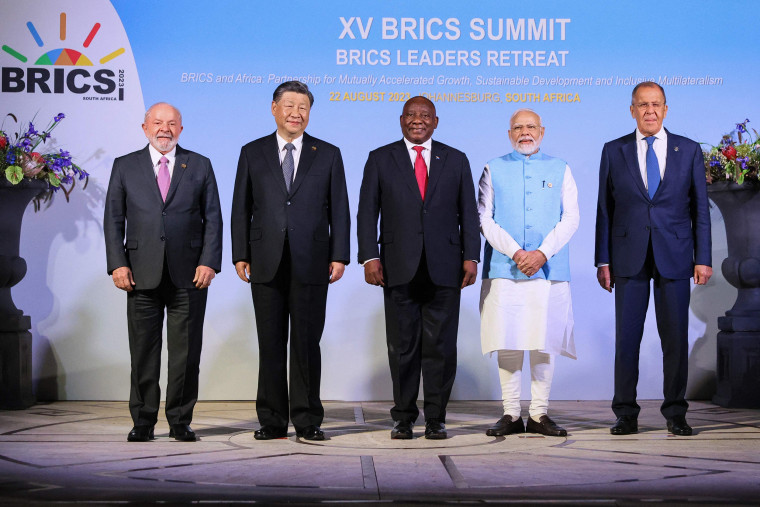
Yet the three-day summit of the BRICS nations — Brazil, Russia, India, China and South Africa — is also exposing deep divisions among some of the members about whether, in the course of increasing their own global clout, they are willing to align themselves even more closely with an ascendant and assertive China.
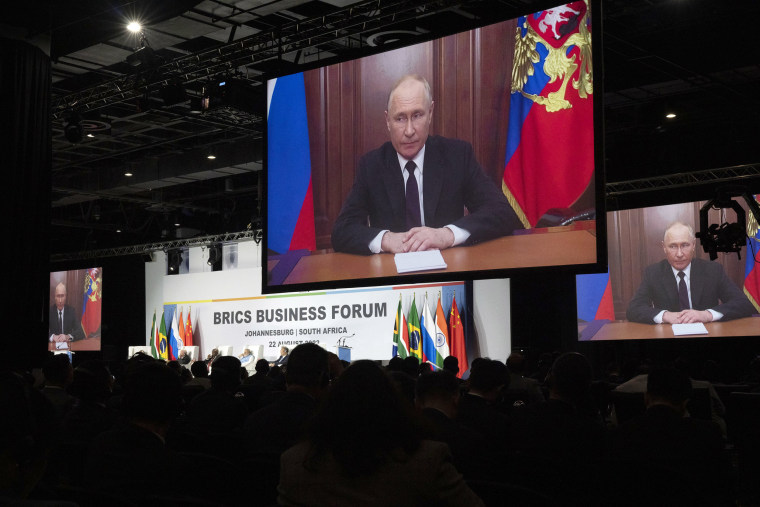
The leaders of the bloc have converged on Johannesburg for the summit, with the exception of Russian President Vladimir Putin. He faces war crimes charges from the International Criminal Court and could have been arrested in South Africa, an ICC member, so he is attending virtually instead.
Chinese President Xi Jinping, who flew to South Africa during a tumultuous period for his nation’s economy, surprised delegates Tuesday by skipping a business forum where he was scheduled to speak.
Instead, Wang Wentao, China’s commerce minister, took the stage to read Xi’s prewritten speech, in which his leader insisted the summit was “not an exercise of asking countries to take sides, nor an exercise of creating bloc confrontation.”
“Hegemonism is not in China’s DNA,” the speech said.
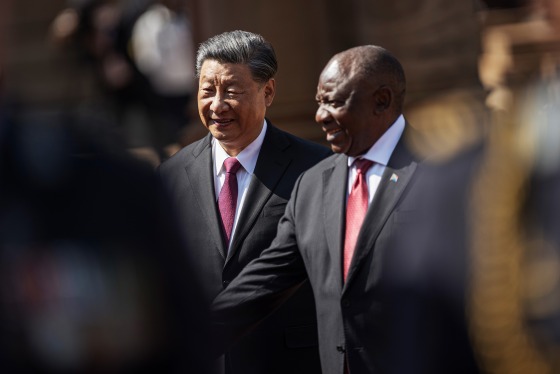
China’s government offered no explanation for Xi’s unexpected absence from the forum. But by Wednesday, he was back in person at the summit, urging members to “let more countries join the BRICS family and pool wisdom to make global governance more fair and reasonable.”
Already, the five members of BRICS collectively make up some 40% of the global population and more than 30% of the global economy, according to the International Monetary Fund. As it fashions itself into an alternative to the U.S.-dominated G7 and other Western-led international groupings, BRICS has become a major platform for developing nations in the Global South that have long complained they’ve been left behind.
Yet as Saudi Arabia, Argentina, Indonesia and more than a dozen others seek to join BRICS, India and Brazil have voiced concerns. Both are democracies with close U.S. ties who worry an expanded BRICS could dilute their own influence in the elite club while leaving China — the group’s most powerful member — at the helm of a powerful anti-Western axis.