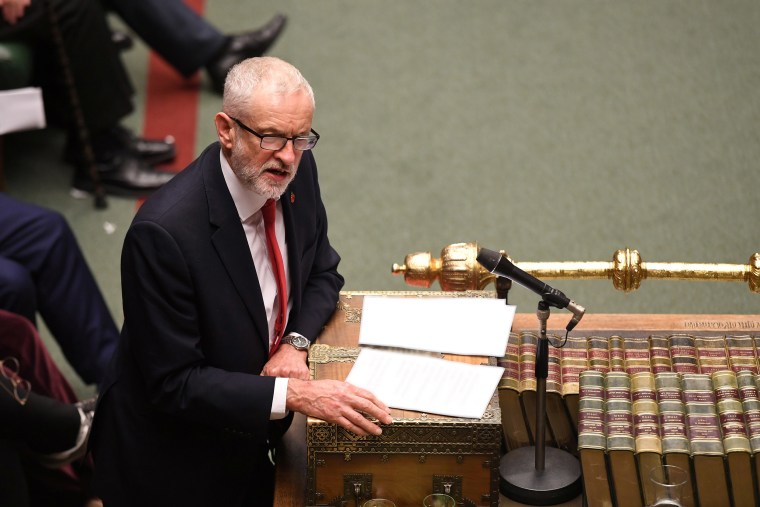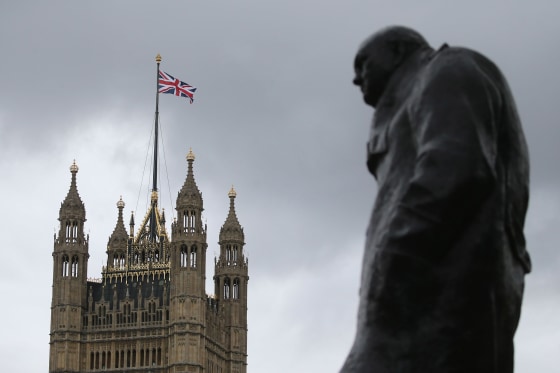
LONDON — Lawmakers quitting in fear of violence, claims of endemic racism infecting the major parties, and a prime minister directing populist vitriol against his colleagues.
Britain is now headed for its first December nationwide elections in almost 100 years. But instead of bringing yuletide cheer, the contest is shaping up to be a toxic brawl centered around Brexit.
"This has the potential to be the angriest election we have had in Britain for a long time," said Sunder Katwala, director of British Future, a think tank that focuses on issues of identity. "Britain is discovering that it is a more divided country than it ever realized."
The Dec. 12 poll is being billed as an extraordinary vote, one in which the winner will not only govern for a few years but could also hold the power to set Britain's geopolitical course for decades to come.
If Prime Minister Boris Johnson can achieve a convincing victory, as polls suggest he might, he would have the power to drive through his hard-line Brexit plan.
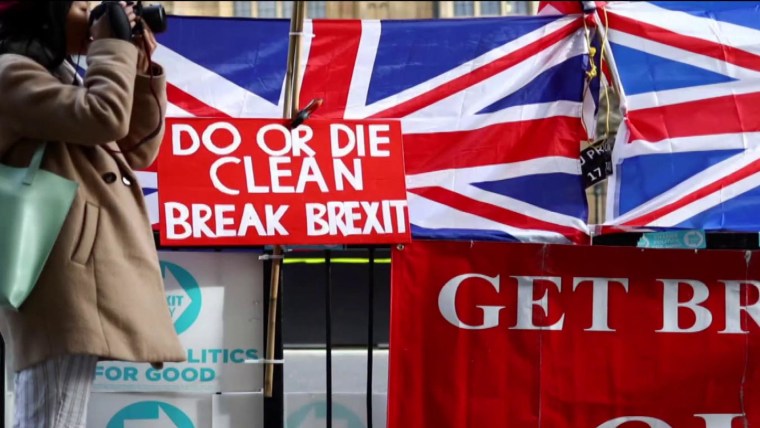
But if the opposition Labour Party and others can at least stop him from gaining a majority, they might be able to alter Brexit or cancel it altogether.
Indeed, there is every possibility that the public might elect a Parliament just as deadlocked as this one.
Brexit has sparked the country's biggest crisis since World War II, as politicians have struggled to translate the 2016 referendum to leave the European Union into reality.
It has created bitter divisions, upended centuries-old norms, and contributed a hostile atmosphere that has already set the tone for this upcoming election.
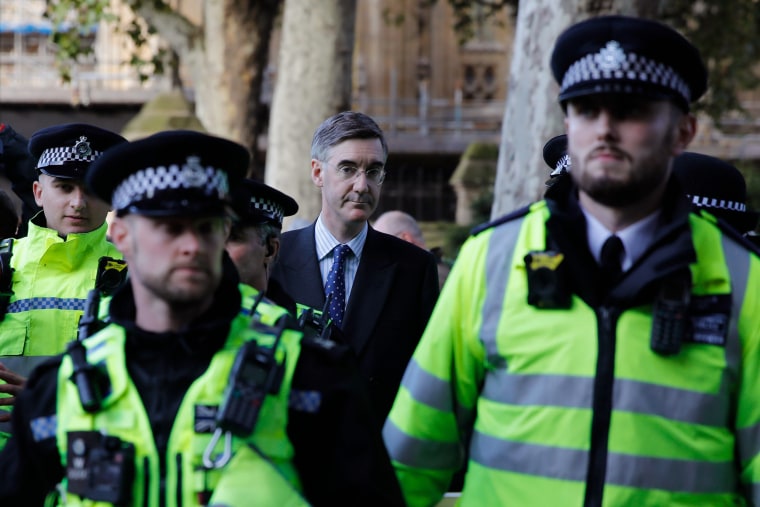
Daily protests outside Parliament have descended into abuse yelled at legislators, some of whom have required police escorts in and out of the building.
Senior Conservative Jacob Rees-Mogg, whose upper class persona and stalwart Brexiteer credentials have become a lightning rod for critics, was guarded by officers as he walked home with his 12-year-old son.
Diane Abbott, the U.K.'s first black female member of Parliament, also required a police escort outside the building.
The abuse is online, too, with lawmakers suffering a deluge of death and rape threats — with Abbott receiving more abuse on social media than any of her colleagues, according to Amnesty International. Most of the victims are women, although men are not immune.
"The tone is going to be very unpleasant. It's going to be very nasty particularly on social media," said Anand Menon, director of the U.K. in a Changing Europe think tank.
For some, this violent intimidation has become so distressing that they are walking away from their careers.
Liberal Democrat Heidi Allen announced Tuesday that she would be standing down at the election because of the sheer level of this "dehumanizing" abuse.
"I am exhausted by the invasion into my privacy and the nastiness and intimidation that has become commonplace," she wrote in an open letter to her constituents.
"Nobody in any job should have to put up with threats, aggressive emails, being shouted at in the street, sworn at on social media, nor have to install panic alarms at home," she said.

Lawmakers do not need to imagine what happens when these threats become reality. In June 2016, days before the Brexit referendum, Labour lawmaker Jo Cox was murdered in the street by a Nazi-supporting terrorist. He shouted "Britain first" during the killing and called Cox a "traitor" at trial.