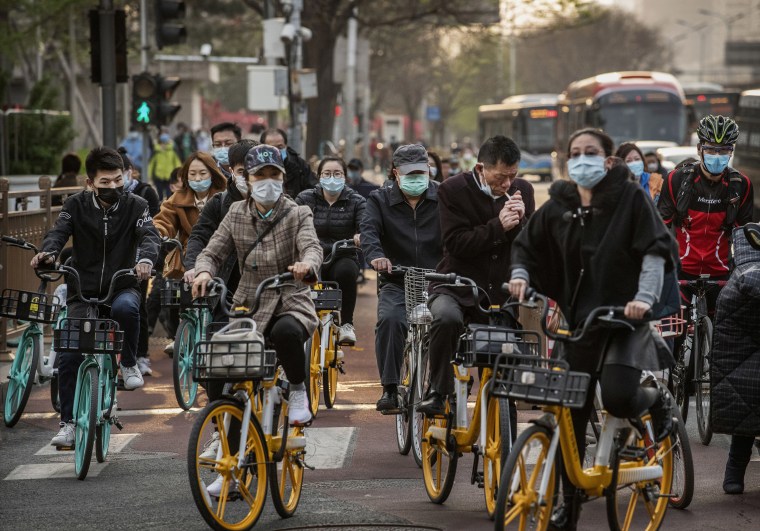
China's population growth is slowing and is close to a standstill — throwing into jeopardy its global economic and geopolitical ambitions, experts warn.
The world's second-largest economy reported an increase of 72 million people in the last 10 years in the once-a-decade census, to a total of 1.1411 billion.
But the National Bureau of Statistics said annual growth over the last decade averaged 0.53 percent, down 0.04 percent in the previous decade. The slowdown bolsters evidence of what economists refer to as a demographic time bomb, where many Chinese people could grow old before they grow rich.
Any slowdown is politically sensitive for the ruling Communist Party, which garners much of its legitimacy from a booming economy and social prosperity. For many, having the largest population and standing army in the world are a source of everyday national pride.
A dwindling population could affect China's economic domination, disturb social structures and halt foreign policy goals to become a global superpower.
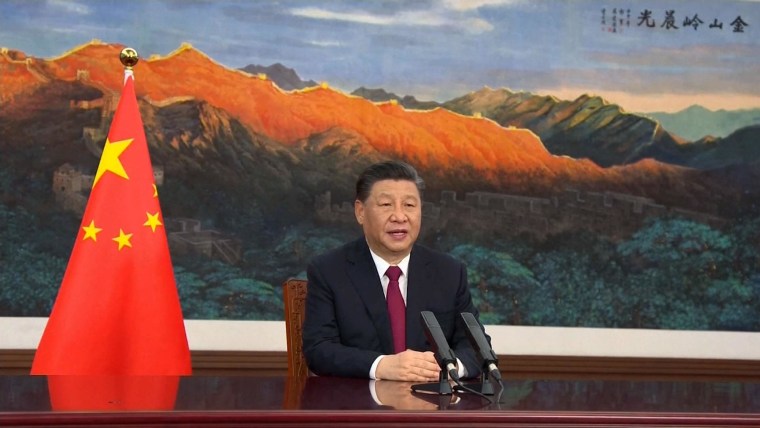
The report said President Xi Jinping hailed the census, in which more than 1 billion Chinese citizens participated, as "a major survey of national conditions and strength in the new era and a major event for the Party and the country."
Download the NBC News app for breaking news and politics
The highly-anticipated census, which saw officials conduct door-to-door data collection, was initially due to be published in early April. Instead it was delayed as it required "more preparation work," China's National Bureau of Statistics told The Financial Times newspaper.
NBC News did not receive a reply to a request for comment from the National Bureau of Statistics on the report's delay.
Chinese state media and official bodies pushed back after the newspaper reported the census was set to show a population decline for the first time since a famine that killed millions four decades ago.
Speaking ahead of the census release, Yi Fu-Xian, a senior reproductive scientist at the University of Wisconsin-Madison, said a population decline hitting sooner than expected would impact China's "economic, social, science and technology, national defense, foreign affairs and other policies."
It would also have geopolitical implications if neighboring India quickly surpassed China as the world's most populous country, he added, causing Beijing to lose face and be overtaken by a rival.
"The Chinese authorities have so far been afraid to publish the main data of the census, probably because the data do not match expectations. The census results will shock the world," Yi, author of "Big Country with an Empty Nest," said.
With China at risk of entering an irreversible population slide, policymakers are under pressure to come up with family-planning incentives and arrest the falling birth rate.
In an encouraging sign for Chinese policymakers, the proportion of people 14 and under increased to 17.95 percent — an increase from 16.6 percent a decade ago, a low figure caused by the country's decades-old one-child policy, which was revoked in 2016.
However, despite an increase in young people, the number of older people also grew to 18.7 percent of the total, up from 13.26 percent a decade ago and about 10 percent in 2000.
Any future reduction in the proportion of young people could add increased burden to China's working-age population and weigh on productivity.
Kent Deng, professor of economic history at the London School of Economics, said China's population had shown a "clear trend" of decline at a rate between 3 and 4 percent per year over the last 50 years.