HONG KONG — It was Day 7 of the freediving world championship, streamed live online from Cyprus. One by one, women competing in the constant weight category used bifins or monofins to dive to a targeted depth and back to the surface, all in a single breath. Onscreen next to each diver’s name was her nationality and national flag.
But as Mia Hou of Taiwan took her turn, the red, white and blue Taiwanese flag — which had appeared earlier in the livestream — had disappeared. Organizers had removed the flag without warning after authorities in China, which claims the self-ruling island of Taiwan as its territory, stopped the livestream on platforms in the mainland.
The diving association representing Taiwan protested the decision, but was told the flag could not be restored in accordance with International Olympic Committee rules. In the following days, athletes from 10 countries, including the United States, asked that their flags be removed as well, arguing that sports should be politically neutral.
The International Association for the Development of Apnea, which held the event last month, later apologized to Taiwan, saying “the stop of the stream by the Chinese authorities took us by surprise and the team was not prepared to deal with it on such short notice.”
The freediving incident is part of China’s intensifying international pressure campaign over Taiwan, and an indication of Beijing’s growing assertiveness about its claims over the island off its eastern coast. It comes as tensions between China and Taiwan ratchet up, with Beijing sending scores of warplanes toward the island, and Taiwanese officials trying to consolidate international support. While experts say outright war is still unlikely for now, it is clear that the conflict between the two sides goes beyond military posturing, and is making itself felt far from the Taiwan Strait, drawing in countries and organizations around the world.
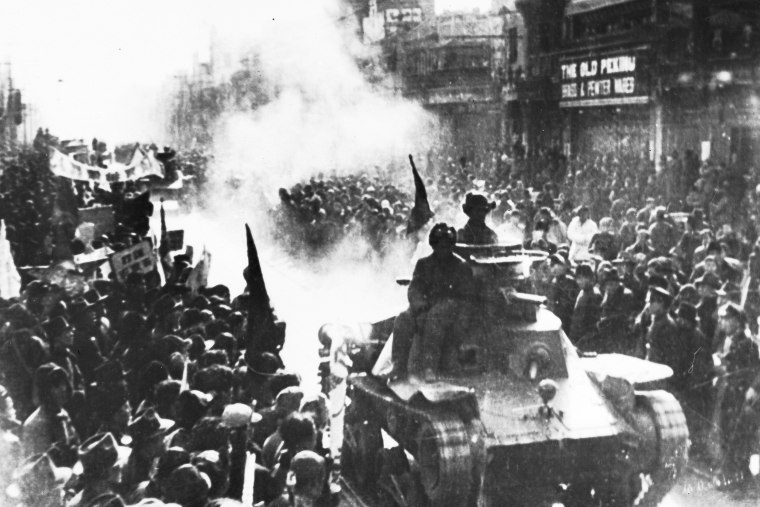
The dispute goes back to 1949, when Mao Zedong’s Communist Party won China’s civil war and established the People’s Republic of China. The defeated Nationalists fled to Taiwan, officially known as the Republic of China, and claimed they were the only legitimate Chinese government.
“What has shifted in recent years is the fact that finally Beijing has sufficient capabilities to act upon its threat.”
Most countries today, including the U.S., have full diplomatic ties with China rather than Taiwan, and do not recognize Taiwan as a sovereign state. But the island, now a democracy, fiercely opposes the “reunification” with China that its leader, Xi Jinping, insists will be achieved, peacefully or not. And while China pressures Taiwan in various ways, the military strides it has made in recent years put it in a stronger position than ever.
“Beijing has been threatening war against Taiwan for decades,” said J. Michael Cole, a senior fellow with the Global Taiwan Institute who is based in Taipei, the Taiwanese capital. “What has shifted in recent years is the fact that finally Beijing has sufficient capabilities to act upon its threat.”
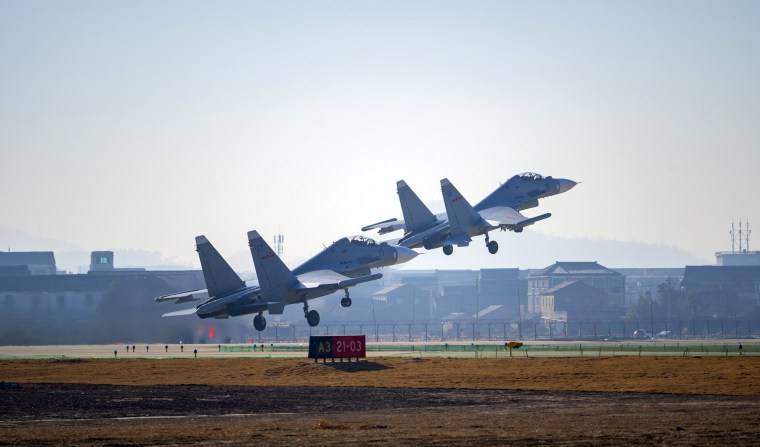
China has long sent warplanes near Taiwan, home to 23.5 million people about 100 miles from the Chinese mainland, to exhaust the island’s air force, test its defenses or otherwise express its displeasure with developments in Taiwan or elsewhere. But the number of military sorties jumped starting last year, buzzing Taiwan’s self-declared buffer zone almost daily without actually entering its airspace.
Chinese military activity further escalated over a four-day period in early October that coincided with the country’s National Day, with a total of 149 Chinese warplanes appearing in the skies near Taiwan, compared with 380 in all of 2020. The U.S. criticized China’s actions as “destabilizing,” while China said Taiwan was an internal matter and its incursions were necessary to protect national sovereignty.
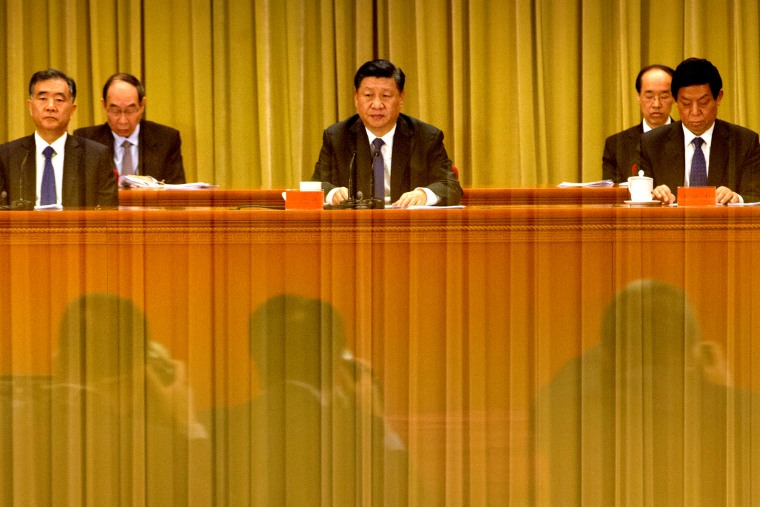
“The Taiwan question arose out of the weakness and chaos of our nation, and it will be resolved as national rejuvenation becomes a reality,” Xi said in a speech this month.
Taiwan Defense Minister Chiu Kuo-cheng told lawmakers this month that military tensions with China were the worst in more than four decades, and that China would be able to mount a full-scale invasion by 2025.
Experts say China’s recent military maneuvers may be aimed less at Taiwan than at the broader international community, which has been showing more robust support for the island.
“Beijing is trying to impress upon everyone that they are not going to get pushed around, that they are not going to tolerate Taiwan moving farther away,” said Shelley Rigger, a political science professor at Davidson College in North Carolina and the author of “Why Taiwan Matters.”
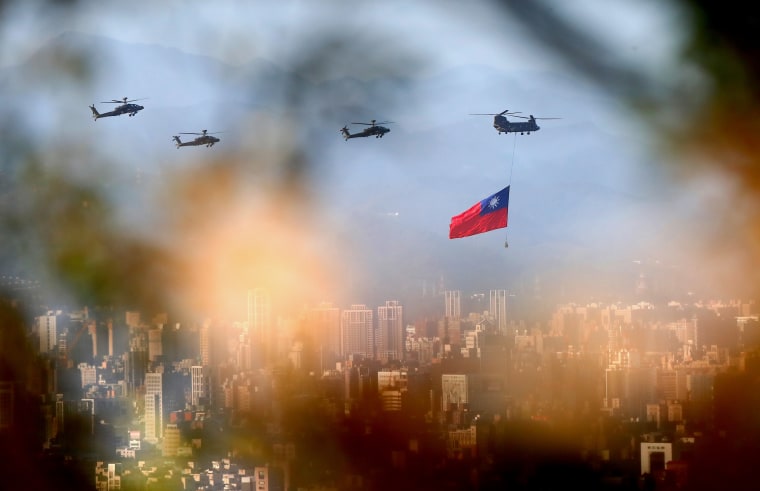
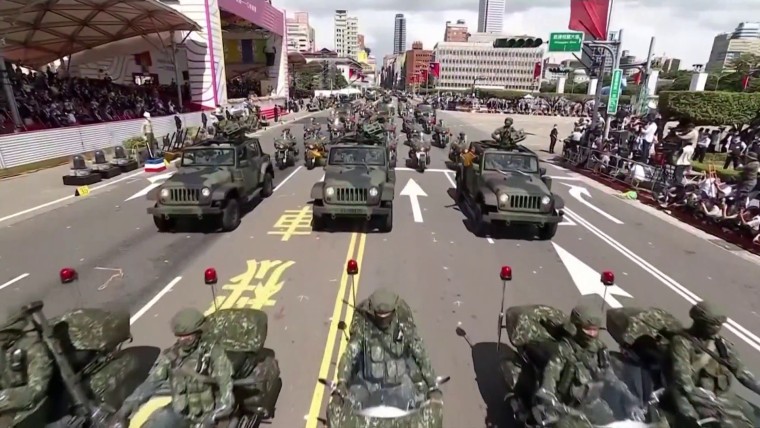
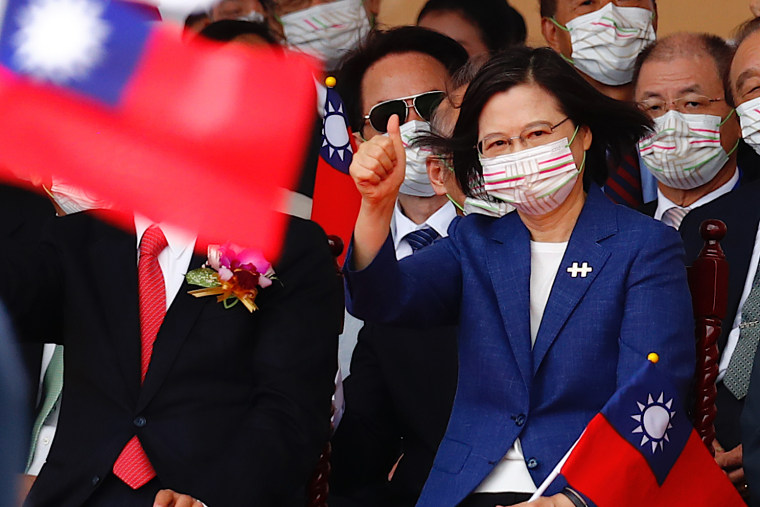
Taiwan President Tsai Ing-wen has described the island as being on the front lines of a global ideological battle, writing in Foreign Affairs this month that “if Taiwan were to fall, the consequences would be catastrophic for regional peace and the democratic alliance system.” At Washington’s urging, she has pushed to increase defense spending and modernize the Taiwanese military, the results of which were on display this month at a military parade for Taiwan’s National Day that included homegrown missiles.
Rigger said Tsai, who some feared Beijing would find too provocative when she took office in 2016, had been a prudent leader.
“Her message all along has been, ‘We are not going to give Beijing a pretext for military action, but we are also not surrendering by any means,’” Rigger said.
What is more troubling for Beijing, Rigger said, is the unpredictability of Washington, under not only the Trump administration but President Joe Biden as well. At a news conference last week, Foreign Ministry spokesman Zhao Lijian said the U.S. was “stoking geopolitical confrontation” by selling Taiwan arms, landing U.S. military aircraft on the island and sending warships through the Taiwan Strait.