SHENZHEN, China — On the long list of disputes between the United States and China, electric vehicles enjoy an increasingly prominent role.
Growing stars of the auto world, EVs are also now the subject of intense commercial competition and national security concerns for the world’s two largest economies.
And this metropolis known as China’s Silicon Valley is at the heart of the country’s bid for dominance in the lucrative global market.
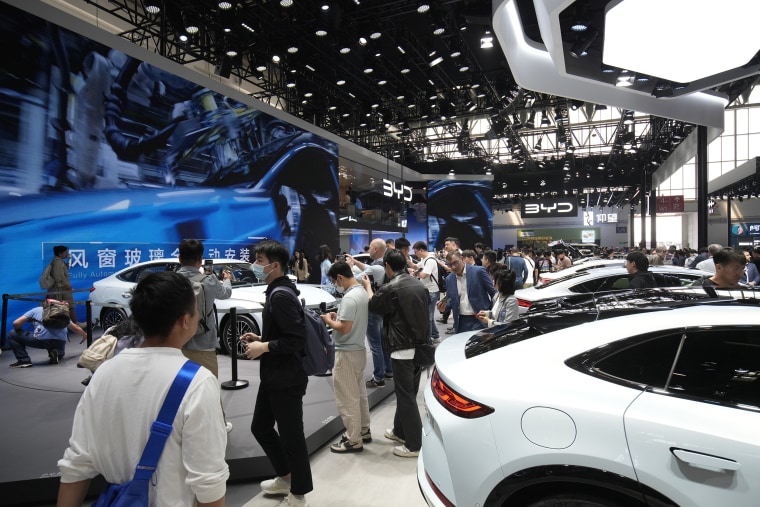
Chinese companies such as BYD, the biggest global rival to America’s Tesla, are forcing Western automakers to change their approach to electric vehicles if they want to remain competitive in a growing industry.
“They’re not ready,” said Stella Li, chief executive of BYD Americas. “For BYD, we are ready. We are ready for technology, and we are more ready on supply chain,” she told NBC News in an exclusive interview in April at BYD headquarters in the southern city of Shenzhen, where SUVs, sedans and other gleaming models are displayed in the cavernous lobby.
Despite lower price tags, Chinese EVs often have more powerful batteries and more advanced technology.
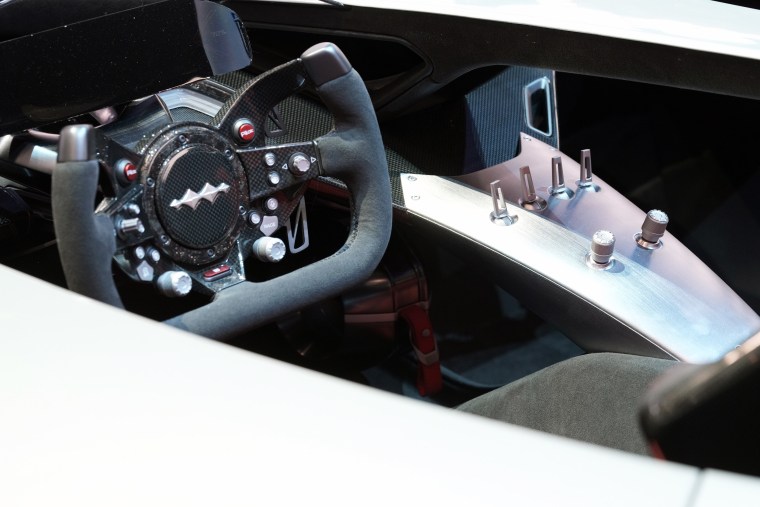
But they are not available in the U.S., where they face high trade barriers and allegations that Chinese government subsidies have given them an unfair advantage. The Alliance for American Manufacturing, an advocacy group, says the introduction of Chinese cars to the U.S. market would be an “extinction-level event” for the U.S. auto industry.
China says its edge in EVs comes from “constant innovations,” a well-established supply chain system and market competition. But U.S. officials and others have raised concerns that years of government support for the industry have created overcapacity, raising the risk that excess Chinese products could flood overseas markets and undercut domestic production.
‘A real threat to the U.S.’
BYD is a privately owned company that began as a battery manufacturer in 1995. The company, whose name stands for Build Your Dreams, controls most of its own low-cost EV supply chain, from basic components to the ships that transport its vehicles overseas.
In the last quarter of 2023, BYD surpassed Tesla as the world’s top EV maker by sales, though Tesla reclaimed the title in the first quarter of this year when BYD reported a 43% drop in sales compared with the previous quarter.
The rise of BYD and the Chinese EV industry in general has been aided by more than a decade of strong support from Beijing in the form of subsidies, tax breaks and consumer incentives — in line with what the ruling Communist Party has billed as a larger strategy to fulfill its global climate commitments but what industry experts widely view as a competitive means to build a Chinese auto industry.
The competition among hundreds of Chinese EV makers has spurred rapid innovation.
“What the Chinese have been able to do in the past 10 to 12 years in terms of quality of the vehicles is pretty amazing,” said Mark Fields, former chief executive of Ford. “The designs have improved a lot, the quality has improved a lot.”
This year, up to 45% of the cars on Chinese roads could be electric vehicles, compared with 25% in Europe and about 11% in the U.S., according to a report by the International Energy Agency.
All this could add up to trouble for U.S. automakers struggling to catch up.
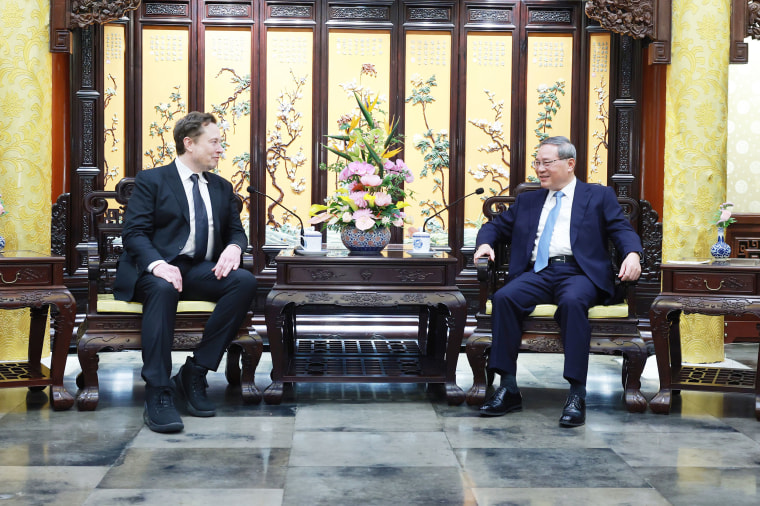
Even Tesla CEO Elon Musk, who made a surprise visit to Beijing last week, has said that without trade barriers Chinese EV makers would “demolish” their competitors.
Chinese EVs tend to be smaller, cheaper and more accessible to the masses — BYD’s Seagull, a small all-electric hatchback, starts at less than $10,000. In the U.S., by contrast, EV makers have emphasized larger, more luxurious models targeted at wealthier buyers, though Musk said in April that the company would begin production of new affordable EV models by early next year.
With sales slowing down at home, Fields said, Chinese automakers are looking for new markets for their lower-priced inventory, including eventually the U.S.