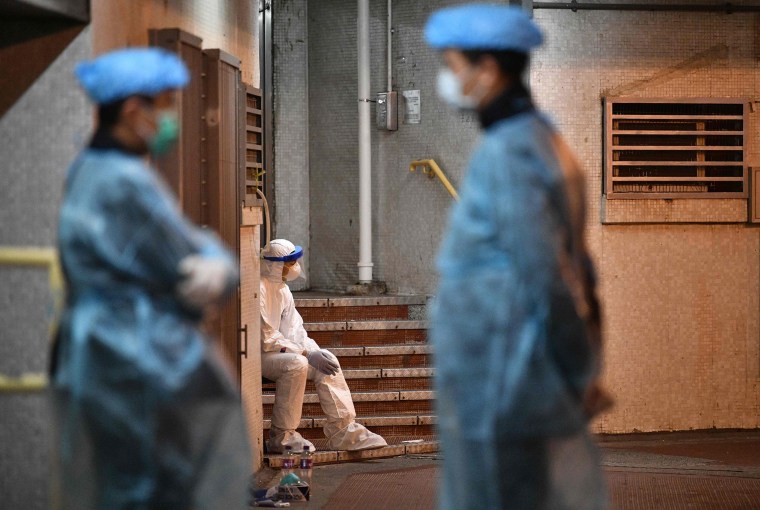
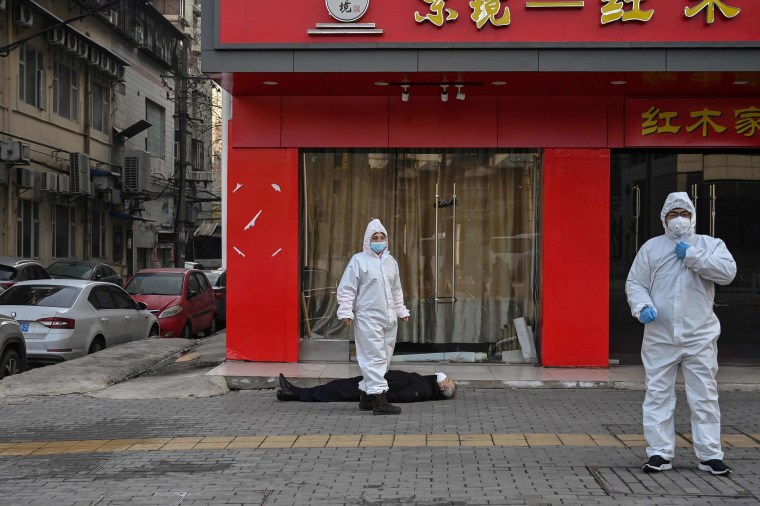
The coronavirus outbreak has killed almost 1,400 people in China, spread to over two dozen countries and created a global health crisis. It is also the biggest challenge yet facing President Xi Jinping since he became leader of China in 2012.
Some say it may be the greatest test China has faced since hundreds of protesters were killed by government forces in Beijing's Tiananmen Square in 1989.
“There was no internet then and the government could easily blockade information," said Zhang LiFan, an independent historian based in Beijing. "Times have changed now. Belief in official propaganda is less and less as people can now exchange more information."
Xi is without question China's most dominant ruler in decades, amassing such power that he has few real domestic political rivals in the authoritarian one-party state.
But that singular power also makes it hard for him to escape blame when it comes to crises like COVID-19, the name of the disease, which has spread from its suspected origin, a food market in the central city of Wuhan, across China and to 25 countries, from the United States to Australia.
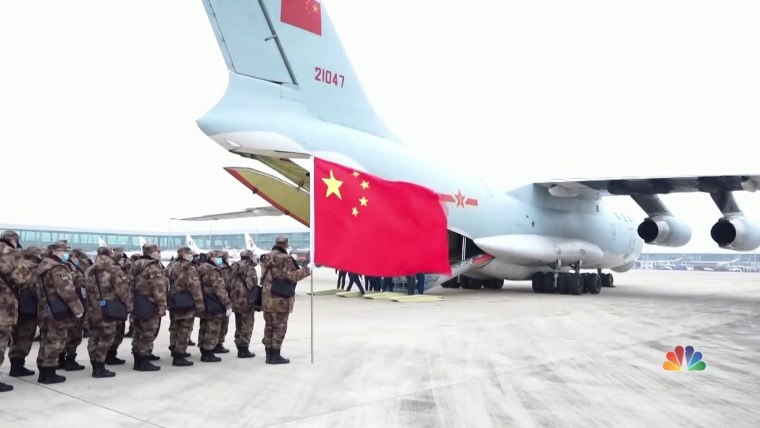
The epidemic is the latest in a string of challenges for Xi and what human rights groups call the repressive system of government he has built around himself.
In the past year China has been rocked by violent protests in Hong Kong, international criticism for its treatment of Uighur Muslims, soaring pork prices after an outbreak of African swine fever, and a rolling tit-for-tat trade war with President Donald Trump.
Full coverage of the coronavirus outbreak
That's not to say that Xi — who has declared a "people's war" on the virus — hasn't won praise from some leaders abroad. Trump said that China is "working really hard and I think they’re doing a very professional job," and there have been glowing words from the World Health Organization itself.
"The Chinese government is to be congratulated for the extraordinary measures it has taken to contain the outbreak," said WHO Director-General Tedros Adhanom Ghebreyesus. He went on to praise China's response as "very impressive, and beyond words."
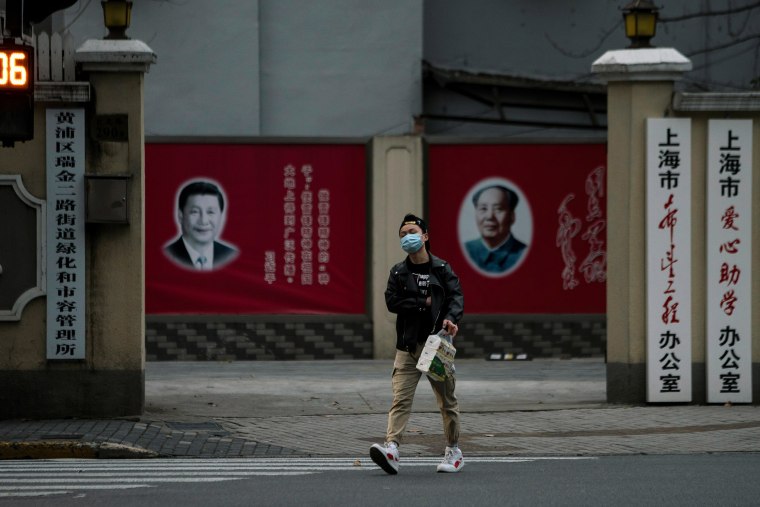
The current crisis is different from the SARS epidemic of 2002-03, the severe acute respiratory syndrome that killed nearly 800 people and which China kept largely under wraps for months.
This time officials have released details to locals and the outside world, including a daily tally of the number of deaths and new infections.
But some experts say the praise and increased transparency masks the reality that China may have tried to hush up the initial spread of the virus — which may have made it harder to contain.
The regime has been releasing information while going to great lengths to suppress transparency elsewhere, according to Steve Tsang, professor at the China Institute at London's SOAS university.
Download the NBC News app for breaking news
"They are managing the dissemination of information very, very carefully," Tsang said, citing the claim in early January that there were no new cases for a week. "Now we know there has been a cover-up."
Even in the country's heavily censored online spaces, simmering anger against the government reached a boil last week when Li Wenliang, one of the first doctors to try to raise the alarm, died after contracting the virus himself. Li was reprimanded by police for his efforts.
Many on social media have avoided banned words, instead making their feelings known with thinly veiled references to Chernobyl, the nuclear meltdown in Ukraine in 1986 that was initially covered up by the Soviet Union, and quotes from "Les Miserables."