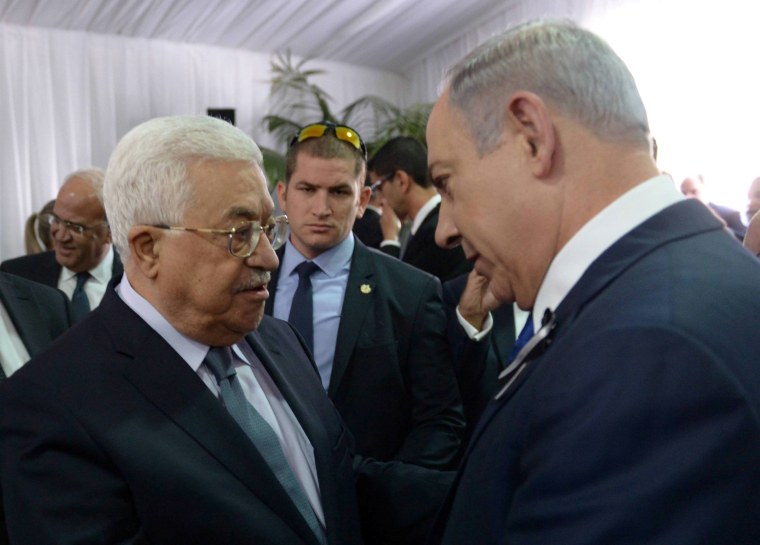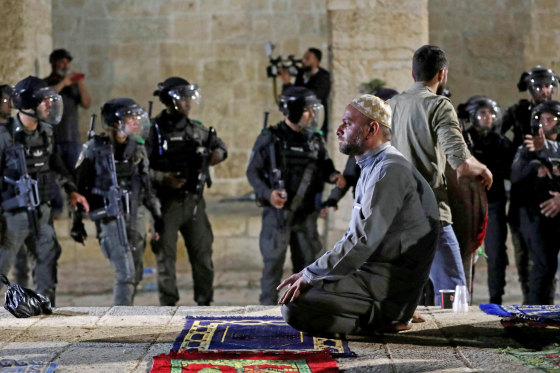
Tensions have been simmering for over a month, but this week they boiled over as violence exploded between Israel and the Palestinians.
Thousands of rockets have been fired from Gaza and while Israel initially responded with airstrikes, on Thursday its artillery began targeting positions in the blockaded Palestinian enclave.
But what prompted the latest escalation of violence?
Roots of the current crisis
Tensions started to brew at the start of Islam’s holy month of Ramadan in mid-April when Israeli police put up barriers at the Damascus Gate on the north side of Jerusalem’s walled Old City, where Muslim worshippers gather after their evening prayers at the Al-Asqa Mosque.
Thousands of Palestinians descended on the area to protest the policy, with dozens hurt in clashes with police and nationalist Israelis that saw crowds hurl firecrackers, stones and other objects while police responded with stun grenades and water cannons.
Elsewhere, in the east Jerusalem neighborhood of Sheikh Jarrah, tensions were high over a long-running legal case that left four Palestinian families facing eviction from their homes on land claimed by Jewish settlers. The case was set to be heard by Israel’s Supreme Court, although the hearing was postponed as protests grew.
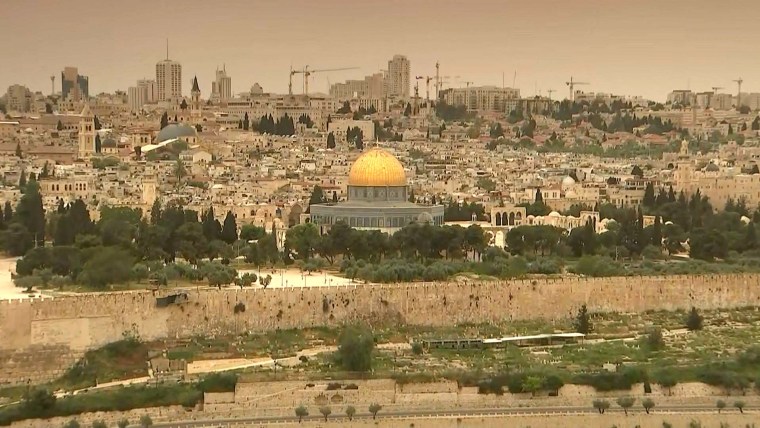
Clashes then took place in and around the Al-Aqsa Mosque, the third holiest shrine in Islam, which sits in a compound sacred to both Muslims and Jews, and led the Palestinian militant group Hamas, which rules over the Gaza Strip, to threaten that Israel would pay a heavy price.
On Monday, it began firing rockets toward Jerusalem. Israel initially responded with bombardments of the tiny, impoverished Gaza, home to 2 million Palestinians, but on Thursday tanks within Israel’s borders began joining the attacks on positions in the enclave as Hamas rockets continued to strike.
Flashpoint Jerusalem
After the creation of the state of Israel in 1948, east Jerusalem was controlled by Jordan, while the west of the city was controlled by Israelis.
This changed after Israel captured the eastern part of the city during the Six-Day War in 1967, when it also took the Golan Heights, the West Bank and the Sinai Peninsula, although this was later returned to Egypt.
East Jerusalem, the West Bank, the Golan Heights and Gaza are still considered occupied territory under United Nations Security Council resolutions. Israeli settlements in occupied territory are also considered illegal by most nations.
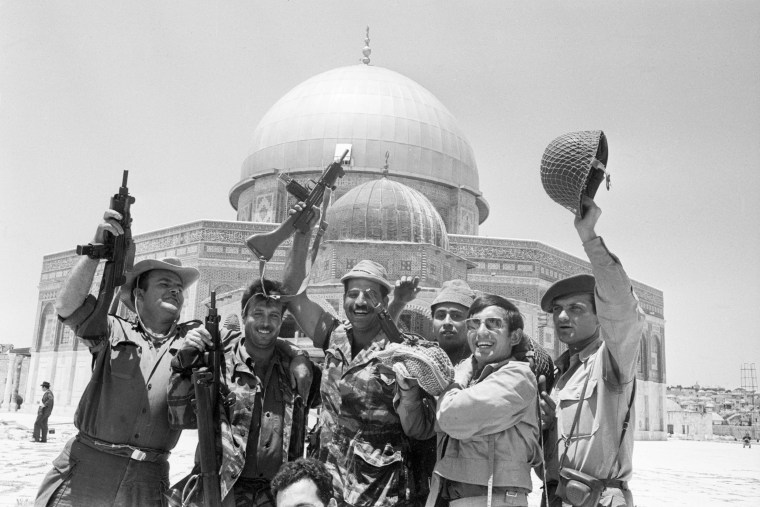
Within the walls of Jerusalem’s Old City is a sprawling plateau, which Jews call the Temple Mount, the holiest site in Judaism and historically known as the site of the two biblical temples. The walled plateau, which Muslims refer to as the Noble Sanctuary, is also home to the Al-Aqsa Mosque and the Islamic Dome of the Rock shrine and is also venerated in Christianity.
Israel sees all of Jerusalem as its eternal and indivisible capital, while the Palestinians want the eastern section as a capital of a future state.
So former President Donald Trump's decision to move the U.S. Embassy from Tel Aviv to Jerusalem in 2018 enraged Palestinians, some of their Western allies and Muslims across the world, and left many Arabs afraid they will eventually be forced out of the city.
Evictions in east Jerusalem
Anger over the long-running legal case involving the homes of the four Palestinian families on land claimed by Jewish settlers has added to tensions in the city.
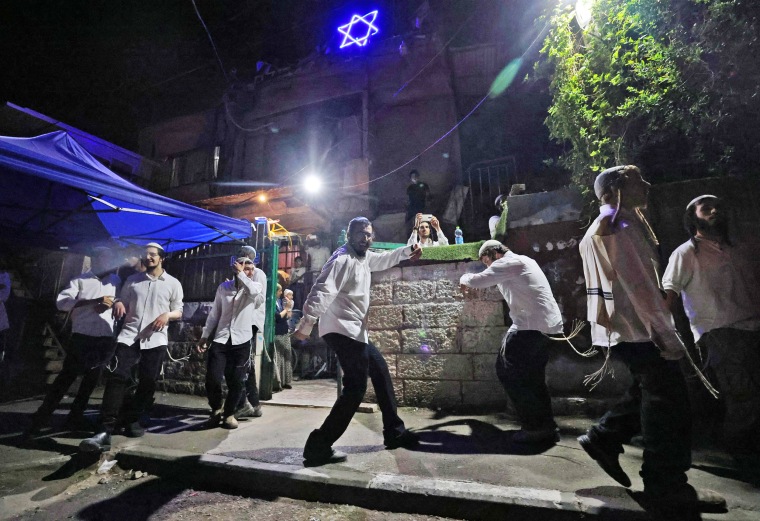
Palestinian families have lived in the Sheikh Jarrah neighborhood for decades, but the settler groups claim the land the houses were built on was originally owned by Jewish organizations before 1948.
Israel has tried to portray the case as a real estate dispute between private parties, but the treatment of the homeowners has drawn international criticism.
Download the NBC News app for breaking news and politics