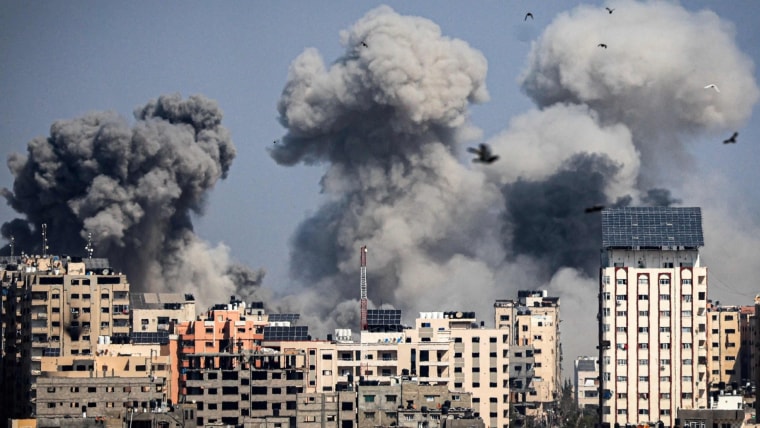
GAZA CITY, Gaza — After days of devastating Israeli bombardment of the Gaza Strip, residents of the besieged enclave say there is no way to escape death.
The airstrikes are in retaliation for the brutal terrorist attacks by Hamas, the militant group that is considered a terrorist organization by several countries. Hamas controls the Palestinian enclave, where 2.2 million people live in about 140 square miles — making it one of the most densely populated places in the world.
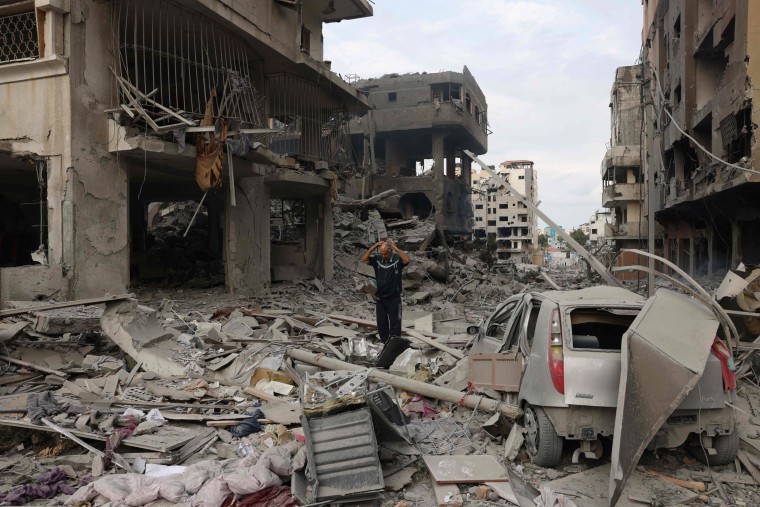
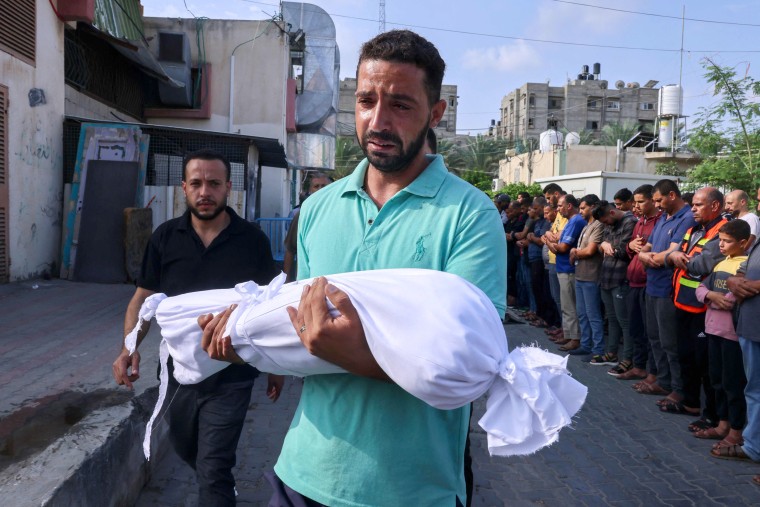
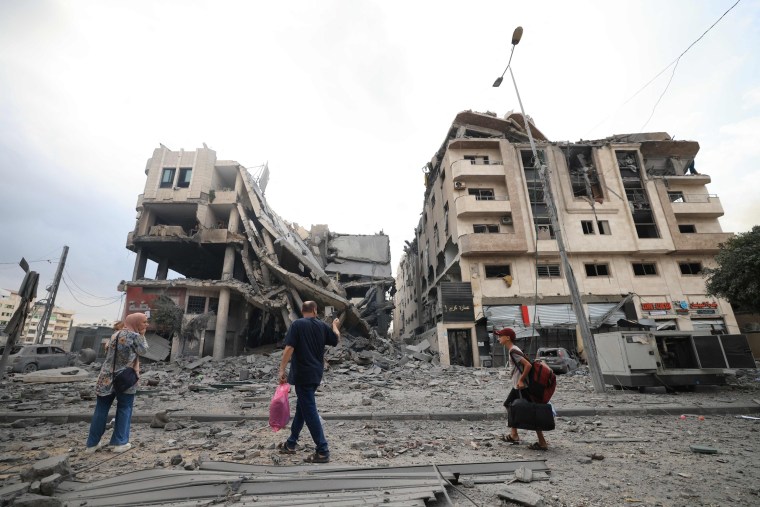
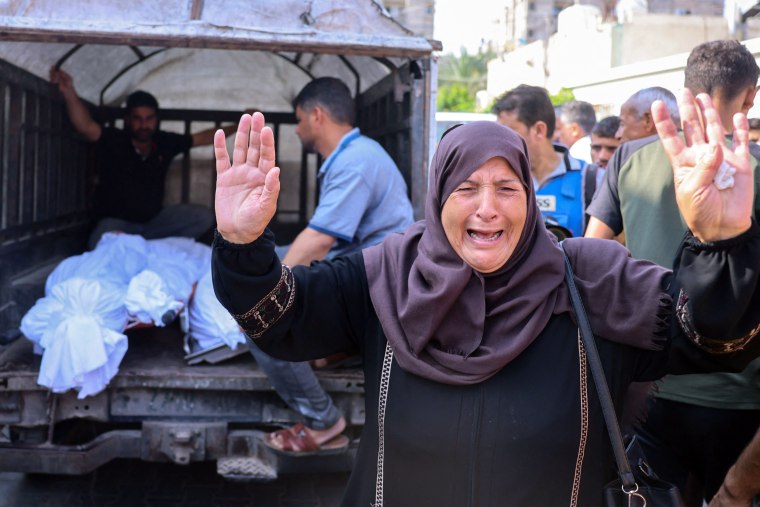
Schools have been flattened, walls blown off houses and entire families buried under tons of concrete. Residents are scrambling to rescue relatives from the rubble as smoke and dust from the relentless bombing make it difficult to breathe.
“It’s all collateral damage. We are all civilians, normal doctors, nurses, teachers, students. We’re not Hamas,” Mohamed Mughisib, a Palestinian doctor and a deputy coordinator with Doctors Without Borders, said in a telephone interview from Gaza.
“It’s the children who are dying,” he said.
Hamas, which took control of Gaza after elections in 2006, considers itself a freedom-fighting movement against occupation, but it is divisive among Palestinians because of its use of violence. Since 2007, Israel has had blockades by land, air and sea in Gaza, also enforced by Egypt, and critics say it has allowed Hamas to fill a power vacuum there.
With the Egyptian border also damaged by airstrikes, Nowar Diab, 20, said, there is nowhere to flee from the barrage of missiles.
“My safety is not guaranteed, because I’m in a house that can be bombed any moment,” she said. “People think that we can protect ourselves. This is impossible. This is really impossible. We can’t leave, and we can’t escape,” she said. “This is a literal prison.”
The population in the Gaza Strip is overwhelmingly young, with 7 out of 10 residents under age 30.
The Israel Defense Forces say 1,200 people have been killed and more than 2,700 have been injured since Hamas’ surprise attack Saturday, the deadliest incursion into Israeli territory in 50 years. The status of scores of people, including children, kidnapped by Hamas in Israel remains unknown. Nearly 1,100 people in Gaza have been killed in Israel’s retaliation and 5,000 have been injured, the health ministries in Gaza and the West Bank said Wednesday.
On Monday, a spokesperson for the military wing of Hamas said it would kill one civilian hostage every time Israel targets civilians in their homes in Gaza “without warning.”
Prime Minister Benjamin Netanyahu has promised a devastating response to the attack, saying, “What we will do to our enemies in the coming days will reverberate with them for generations.”
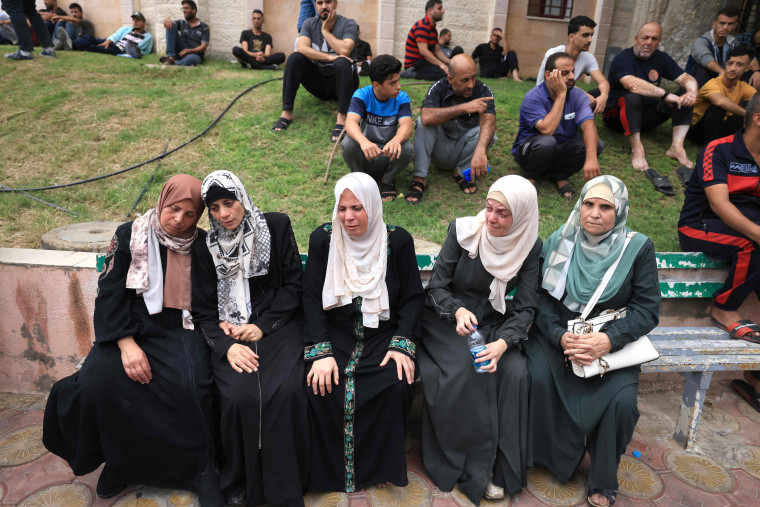
Anticipating a full-scale war, Suhaib Abu Haleina, who lives near the border in the Gazan city of Beit Lahiahad, sought refuge with her family at schools run by the United Nations Relief and Works Agency, the U.N. body charged with supporting Palestinians.
“The children were terrified and afraid,” she said of the Israeli government’s bombardment. “They were terrified, terrified, and tired, as well.”
The relief agency said Wednesday that more than 175,000 internally displaced people were sheltering in 88 schools across the Gaza Strip, a number that is expected to increase. Twenty of its schools have been affected by the Israeli airstrikes, the agency said, and nine of its personnel have been killed.
While the last few days have brought a big escalation in the conflict, life has been difficult for many in Gaza for years.
“I carried water in 2008, more than 10 years ago, when my son was not born, and now my son is the one who carries water in 2023,” said Haleina, who comes from a family of farmers.
Amid heavy bombing in Gaza of what Israel says are military targets, hundreds of residential buildings, mosques and medical facilities have been destroyed.

“Everyone freezes, starts shaking and tries to find their moms or sisters or brothers to hang on tight,” Gaza resident Ahmad Alghari said. “Sometimes we jump when we hear the sound of a bomb. Most people are like zombies.”